
Scientists just found a way to tell if quantum computers are wrong
- Date:
- December 1, 2025
- Source:
- Swinburne University of Technology
- Summary:
- Researchers unveiled a new technique that validates quantum computer results—especially those from GBS devices—in minutes instead of millennia. Their findings expose unexpected errors in a landmark experiment, offering a crucial step toward truly reliable quantum machines.
- Share:
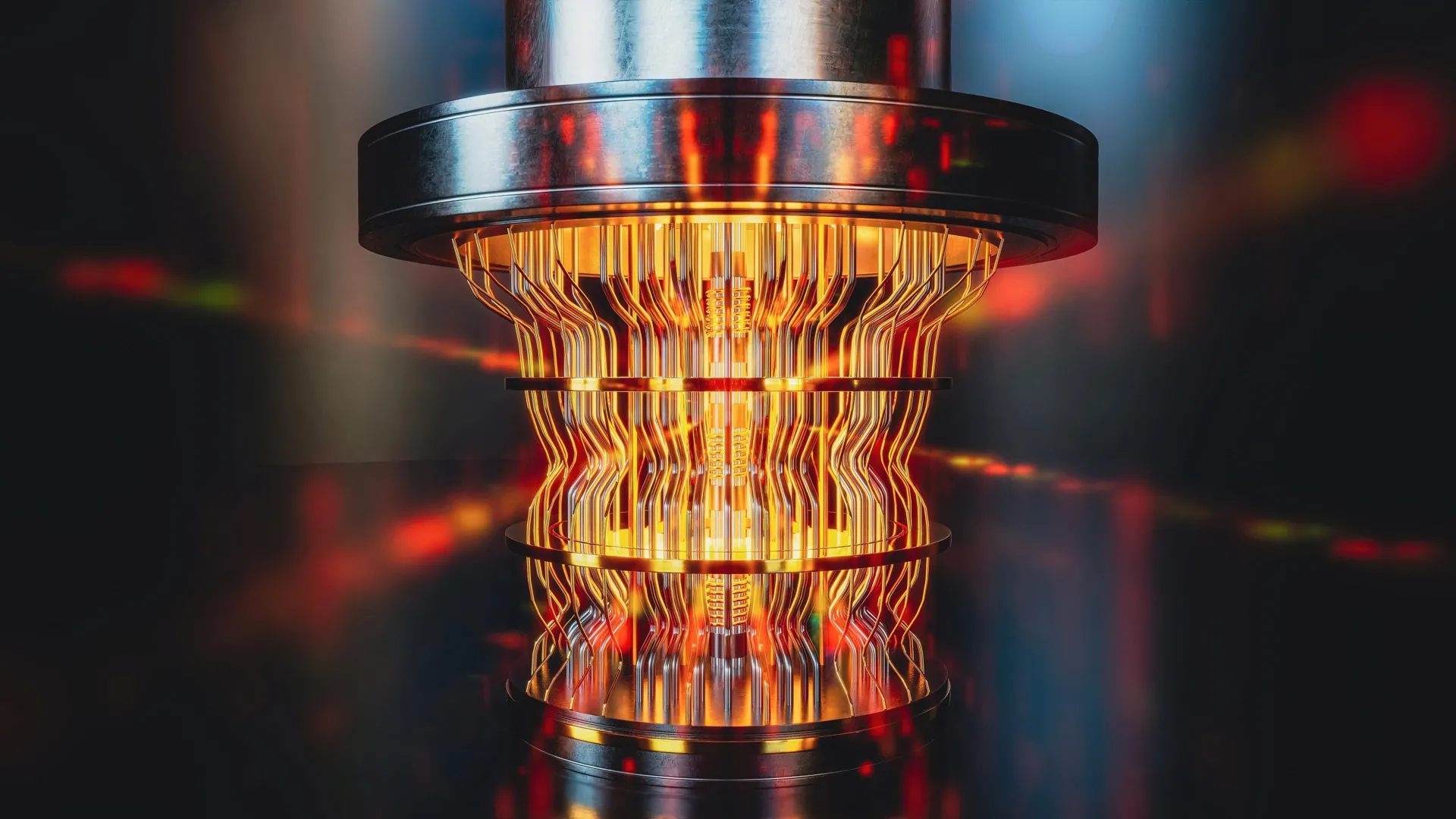
Quantum computing is often described as a future technology capable of handling problems that traditional computers cannot touch. Researchers expect major breakthroughs in physics, medical research, cryptography and several other fields as these machines mature.
As competition intensifies to create the first reliable, large-scale commercial quantum computer, a critical issue has become harder to ignore. If these devices produce answers to problems considered impossible for classical machines, how can anyone confirm that the results are correct?
A recent study from Swinburne University sets out to address this dilemma.
Why Quantum Answers Are Difficult to Check
"There exists a range of problems that even the world's fastest supercomputer cannot solve, unless one is willing to wait millions, or even billions, of years for an answer," says lead author, Postdoctoral Research Fellow from Swinburne's Centre for Quantum Science and Technology Theory, Alexander Dellios.
"Therefore, in order to validate quantum computers, methods are needed to compare theory and result without waiting years for a supercomputer to perform the same task."
The research team developed new techniques to confirm whether a particular type of quantum device, known as a Gaussian Boson Sampler (GBS), is producing accurate results. GBS machines rely on photons, the basic particles of light, to generate probability calculations that would require thousands of years for even the fastest classical supercomputer to complete.
New Tools Reveal Hidden Errors in Advanced Quantum Experiments
"In just a few minutes on a laptop, the methods developed allow us to determine whether a GBS experiment is outputting the correct answer and what errors, if any, are present."
To demonstrate their approach, the researchers applied it to a recently published GBS experiment that would take at least 9,000 years to reproduce using current supercomputers. Their analysis showed that the resulting probability distribution did not align with the intended target and revealed extra noise in the experiment that had not been evaluated before.
The next step is determining whether reproducing this unexpected distribution is itself computationally difficult or whether the observed errors caused the device to lose its 'quanutmness'.
Progress Toward Reliable, Commercial Quantum Machines
The outcome of this investigation may shape the development of large-scale, error-free quantum computers suitable for commercial use, a goal Dellios hopes to help lead.
"Developing large-scale, error-free quantum computers is a herculean task that, if achieved, will revolutionize fields such as drug development, AI, cyber security, and allow us to deepen our understanding of the physical universe.
"A vital component of this task is scalable methods of validating quantum computers, which increase our understanding of what errors are affecting these systems and how to correct for them, ensuring they retain their 'quantumness'."
Story Source:
Materials provided by Swinburne University of Technology. Note: Content may be edited for style and length.
Journal Reference:
- Alexander S Dellios, Margaret D Reid, Peter D Drummond. Validation tests of Gaussian boson samplers with photon-number resolving detectors. Quantum Science and Technology, 2025; 10 (4): 045030 DOI: 10.1088/2058-9565/adfe16
Cite This Page: