
Electrons stop acting like particles—and physics still works
Even when electrons stop acting like particles, quantum materials can still unlock powerful topological states.
- Date:
- January 15, 2026
- Source:
- Vienna University of Technology
- Summary:
- Physicists have long relied on the idea that electrons behave like tiny particles zipping through materials, even though quantum physics says their exact position is fundamentally uncertain. Now, researchers at TU Wien have discovered something surprising: a material where this particle picture completely breaks down can still host exotic topological states—features once thought to depend on particle-like behavior.
- Share:
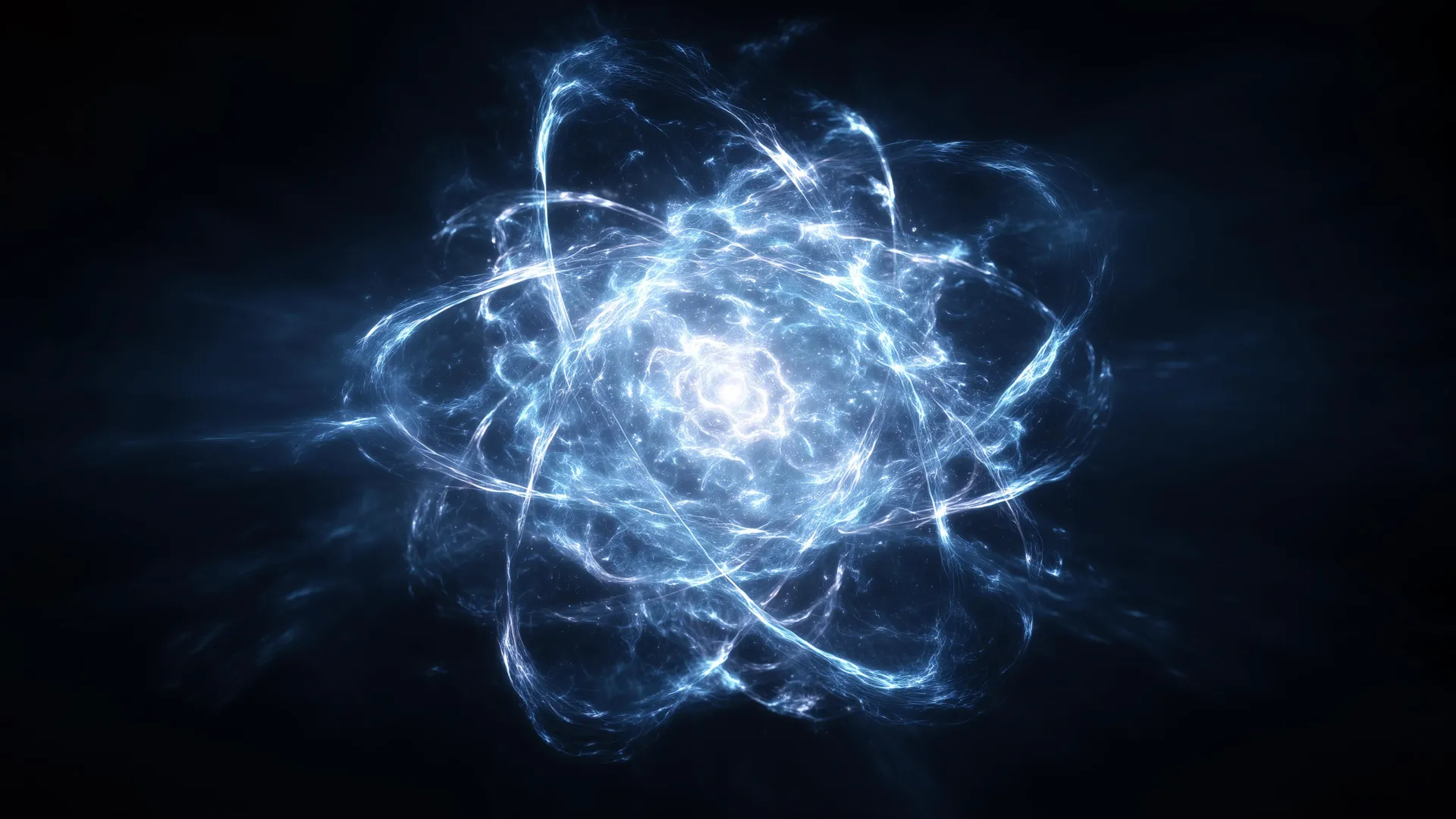
Quantum physics shows that particles do not behave like solid objects with fixed locations. Instead, they act more like waves, which means their exact position in space cannot be precisely known. Even so, in many everyday situations, scientists can still describe particles in a familiar, classical way. They picture them as tiny objects moving through space with a specific speed.
This approach works well when explaining how electricity flows through metals. Physicists often describe electric current as electrons speeding through a material, pushed or redirected by electromagnetic forces as they move.
Why the Particle Picture Usually Works
Many modern theories also rely on this particle-based view, including the idea of topological states of matter. These states are so important that their discovery was recognized with the Nobel Prize in Physics in 2016. Despite their advanced mathematics, these theories still assume electrons behave like particles with defined motion.
However, researchers have found that this picture does not apply to every material (see publication below). In some cases, electrons no longer behave like individual particles with a clear position or a single, well-defined velocity.
Topology Without Particles
Scientists at TU Wien have now demonstrated that even when the particle picture fails, materials can still display topological properties. Until now, these properties were thought to depend on particle-like behavior.
This finding reveals something unexpected. Topological states are not limited to systems where electrons act like particles. Instead, these states turn out to be far more universal, bringing together ideas that once seemed incompatible.
When the Particle Picture No Longer Makes Sense
"The classical picture of electrons as small particles that suffer collisions as they flow through a material as an electric current is surprisingly robust," says Prof. Silke Bühler-Paschen from the Institute of Solid State Physics at TU Wien. "With certain refinements, it works even in complex materials where electrons interact strongly with one another."
There are, however, extreme cases where this description breaks down entirely. In these situations, the charge carriers lose their particle-like nature. This behavior appears in a compound made of cerium, ruthenium and tin (CeRu₄Sn₆), which researchers at TU Wien studied at extremely low temperatures.
"Near absolute zero, it exhibits a specific type of quantum-critical behavior," says Diana Kirschbaum, first author of the current publication. "The material fluctuates between two different states, as if it cannot decide which one it wants to adopt. In this fluctuating regime, the quasiparticle picture is thought to lose its meaning."
Topology Explained With Rolls and Donuts
At the same time, theoretical work suggested that this same material should host topological states. "The term topology comes from mathematics, where it is used to distinguish certain geometric structures," explains Silke Bühler-Paschen.
"For example, an apple is topologically equivalent to a bread roll, because the roll can be continuously deformed into the shape of an apple. A roll is topologically different from a donut, however, because the donut has a hole that cannot be created by continuous deformation."
Physicists use similar ideas to describe states of matter. Properties such as particle energy, velocity, and even the orientation of spin relative to motion can follow strict geometric patterns. These patterns are remarkably stable. Minor imperfections in a material do not erase them, just as small changes in shape cannot transform a donut into an apple.
This stability makes topological effects especially appealing for technologies like quantum data storage, advanced sensors, and methods of guiding electric currents without using magnetic fields.
A Theory That Should Not Have Worked
Although topology may sound abstract, past theories still depended on the assumption that particles have well-defined motion. "These theories assume that one is describing something with well-defined velocities and energies," explains Diana Kirschbaum.
"But such well-defined velocities and energies do not seem to exist in our material, because it exhibits a form of quantum-critical behavior that is considered to be incompatible with a particle picture. Nevertheless, simple theoretical approaches that ignore these non-particle-like properties had previously predicted that the material should show topological characteristics."
This created a puzzling contradiction between theory and physical behavior.
Curiosity Leads to a Breakthrough
Because of this conflict, Bühler-Paschen's team was initially reluctant to pursue the theoretical prediction further. Over time, curiosity won out, and Diana Kirschbaum began looking for experimental signs of topology.
At temperatures less than one degree above absolute zero, she observed a clear signal. The material displayed a spontaneous (anomalous) Hall effect, a phenomenon normally caused when charge carriers are deflected by a magnetic field.
In this case, however, the deflection appeared without any external magnetic field at all. Instead, it arose from the material's topological properties. Even more striking, the charge carriers behaved as if they were particles, despite strong evidence that the particle picture should not apply.
"This was the key insight that allowed us to demonstrate beyond doubt that the prevailing view must be revised," says Silke Bühler-Paschen.
"And there is more," adds Diana Kirschbaum. "The topological effect is strongest precisely where the material exhibits the largest fluctuations. When these fluctuations are suppressed by pressure or magnetic fields, the topological properties disappear."
A Broader View of Topological Matter
"This was a huge surprise," says Silke Bühler-Paschen. "It shows that topological states should be defined in generalized terms."
The researchers describe the newly identified phase as an emergent topological semimetal. They worked with collaborators at Rice University in Texas, where Lei Chen (co-first author of the publication), part of Prof. Qimiao Si's research group, developed a theoretical model that successfully links quantum criticality with topology.
"In fact, it turns out that a particle picture is not required to generate topological properties," says Bühler-Paschen. "The concept can indeed be generalized -- the topological distinctions then emerge in a more abstract, mathematical way. And more than that: our experiments suggest that topological properties can even arise because particle-like states are absent."
New Paths to Discover Quantum Materials
The discovery also has practical importance. It suggests a new way to search for topological materials by focusing on systems that exhibit quantum-critical behavior.
"We now know that it is worthwhile -- perhaps even particularly worthwhile -- to search for topological properties in quantum-critical materials," Bühler-Paschen says. "Because quantum-critical behavior occurs in many classes of materials and can be reliably identified, this connection may allow many new 'emergent' topological materials to be discovered."
Story Source:
Materials provided by Vienna University of Technology. Note: Content may be edited for style and length.
Journal Reference:
- D. M. Kirschbaum, L. Chen, D. A. Zocco, H. Hu, F. Mazza, M. Karlich, M. Lužnik, D. H. Nguyen, J. Larrea Jiménez, A. M. Strydom, D. Adroja, X. Yan, A. Prokofiev, Q. Si, S. Paschen. Emergent topological semimetal from quantum criticality. Nature Physics, 2026; DOI: 10.1038/s41567-025-03135-w
Cite This Page: