
South Australia’s koala boom could end in mass starvation
- Date:
- June 8, 2026
- Source:
- University of Technology Sydney
- Summary:
- South Australia’s koala population has grown so large that it may be heading toward a self-made disaster, with forests struggling to support the animals. Researchers say targeted fertility control could prevent widespread starvation and habitat collapse before it’s too late.
- Share:
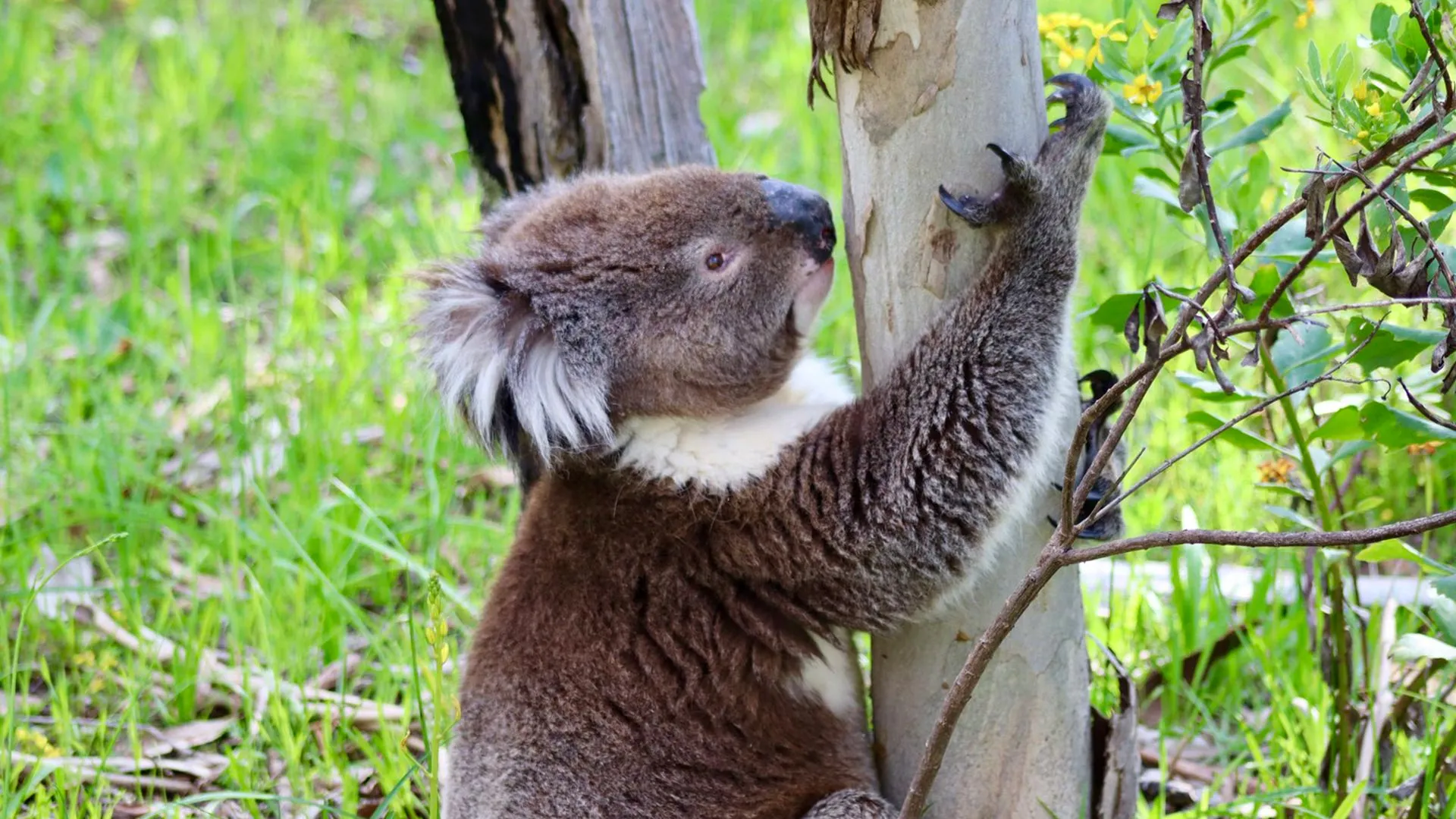
South Australia is home to a booming koala population, but researchers warn that this apparent conservation success could eventually turn into a serious problem. A new study has provided the first comprehensive estimate of koala numbers in the region and identified a humane, cost effective strategy to keep the population at sustainable levels.
The research, published in Ecology and Evolution, was led by Dr. Frédérik Saltré, who serves as both a Research Scientist at the Australian Museum and a Senior Lecturer in Ecology and Biogeography at the University of Technology Sydney (UTS). The project also involved scientists from Flinders University and the University of Wollongong.
South Australia's Growing Koala Population
The study estimates that the koala population in South Australia's Mount Lofty Ranges now accounts for about 10% of all koalas in Australia. While that may sound like positive news, researchers say the population has already reached levels that could threaten its long term survival.
According to the team's projections, the population could increase by another 17% to 25% over the next 25 years if no action is taken. Continued growth could place increasing pressure on food resources, native vegetation, and the broader ecosystem.
"Koalas are in steep decline across much of eastern Australia, but in South Australia's Mount Lofty Ranges, the opposite problem is happening: a booming koala population. This should be good news, but these numbers are concerning.
"Many areas now have koala densities far beyond what the ecosystem can sustain, creating a growing risk of severe over browsing that could rapidly damage the very forests koalas rely on for food. In the next few decades, following this trajectory, there will almost certainly be a terrible situation of mass koala starvation and death," Dr. Saltré said.
Computer Modeling Reveals Future Risks
To better understand the situation, researchers combined advanced spatial modeling with thousands of citizen science observations. Their analysis showed that koala densities in many parts of the Mount Lofty Ranges already exceed sustainable levels.
The findings highlight a difficult challenge for conservation managers. Traditional approaches such as culling and relocation are often controversial or considered unsuitable for a species that holds a special place in Australia's wildlife heritage.
"We are faced with a difficult conservation dilemma, because traditional methods of population management, like culling or relocation, either raise ethical concerns from the public or are not appropriate for such an iconic native animal.
"How do we manage a species that is now threatened by its own abundance, and do so in a way that protects both animal welfare and long-term ecosystem health?" Dr. Katharina Peters, co-author of the study at the University of Wollongong said.
Fertility Control Offers a Humane Solution
The researchers evaluated several population management options using computer simulations. Their results suggest that a targeted fertility control program could effectively stabilize koala numbers.
The most effective strategy involved sterilizing about 22% of adult female koalas each year in areas with the highest population densities rather than applying the approach across the entire region. The team estimates the program would cost approximately $34 million over a 25 year period.
"The novelty lies in the proactivity of the approach: instead of spending money on a conservation plan without knowing whether it will succeed, we use computer simulations to identify in advance which strategies are most likely to work -- optimizing both costs and taxpayer investmen," said Dr. Frédérik Saltré.
Preparing for Future Conservation Challenges
The researchers say proactive, evidence based planning will become increasingly important as climate change continues to alter habitats and shift species distributions. They argue that scientific forecasting tools can help decision makers balance ecological needs with public concerns, particularly when managing well known and highly valued species.
The study also builds on earlier Australian Museum research that successfully sequenced roughly 20,000 koala genes. That work has expanded opportunities for medical research, improved understanding of koala evolution, and provided new insights into how the species can be conserved in the future.
Story Source:
Materials provided by University of Technology Sydney. Note: Content may be edited for style and length.
Journal References:
- Frédérik Saltré, Katharina J. Peters, Daniel J. Rogers, Joël Chadoeuf, Vera Weisbecker, Corey J. A. Bradshaw. Balancing High Densities and Conservation Targets to Optimise Koala Management Strategies. Ecology and Evolution, 2026; 16 (1) DOI: 10.1002/ece3.72470
- Frédérik Saltré, Katharina J. Peters, Daniel J. Rogers, Joël Chadoeuf, Vera Weisbecker, Corey J. A. Bradshaw. Balancing High Densities and Conservation Targets to Optimise Koala Management Strategies. Ecology and Evolution, 2026; 16 (1) DOI: 10.1002/ece3.72470
Cite This Page: