
Forget the sperm race: Fertilization may depend on teamwork
Evolution has repeatedly turned sperm from solo competitors into microscopic teams built to win together.
- Date:
- August 6, 2026
- Source:
- Syracuse University
- Summary:
- Millions of sperm do not always compete alone—some species send them into action as coordinated teams. A sweeping evolutionary study found that this cooperation is widespread among arthropods and has repeatedly emerged and vanished over hundreds of millions of years. The discovery challenges the classic “fastest sperm wins” story and could influence future fertility research and pest-control strategies.
- Share:
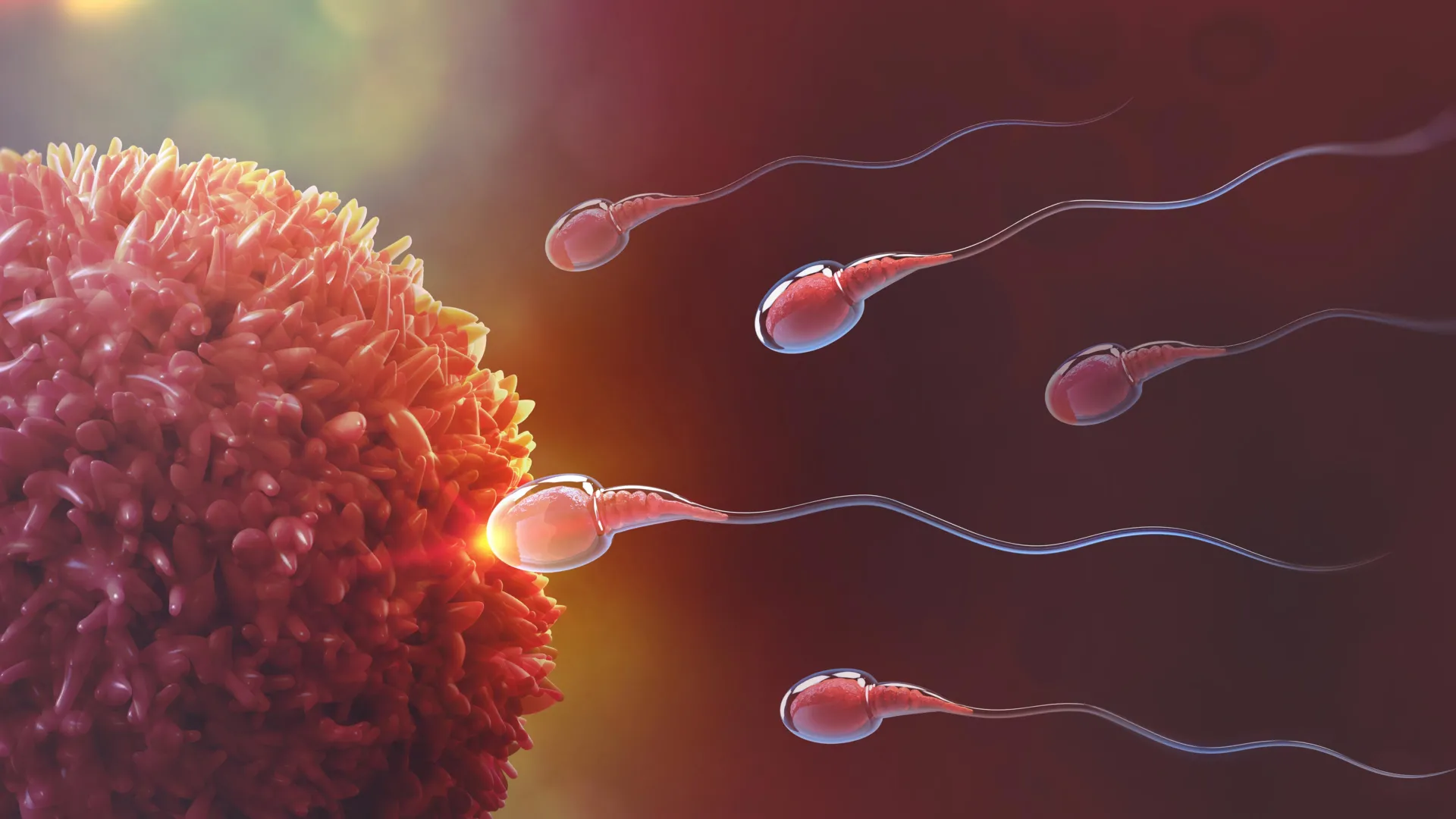
Fertilization is commonly portrayed as an intense contest in which millions of sperm race toward a single egg. New research from evolutionary biologists at Syracuse University, University of Siena, Italy, and University of Szeged, Hungary, points to a more complex picture. In some species, reproductive success may depend not only on competition, but also on sperm working together.
The researchers examined arthropods, the enormous group of animals that includes insects, spiders, crabs and centipedes. They investigated examples from across evolutionary history in which arthropod sperm joined into organized groups or structures that may help them reach and fertilize an egg. Known as sperm conjugation, this coordinated behavior is changing how scientists view both reproduction and evolution.
How Sperm Cooperation Works
Sperm conjugation can be compared to a rowing team moving in a coordinated way. Scientists first documented the phenomenon more than 100 years ago, but it was generally considered uncommon. The new study, published in Nature Communications, indicates that sperm cooperation occurs widely among arthropods and has evolved many separate times.
"Fertilization is often viewed as a competition among individual sperm, but in many species we see cells working together in ways that can influence reproductive success," says Steve Dorus, professor of biology at Syracuse University's College of Arts and Sciences (A&S) and co-author of the study.
In many species, this cooperation involves sperm-associated material (SAM). This membrane-enclosed substance can attach sperm to one another or create structures around them that arrange the cells into groups. The researchers suggest that SAM may have helped sperm conjugation emerge, possibly beginning as a mechanism for packaging or protecting sperm.
A single sperm cell must travel through a difficult and highly complex female reproductive tract. By moving or functioning in groups, sperm may gain advantages in mobility, organization or overall performance. In these cases, fertilization becomes a coordinated effort rather than a contest involving isolated cells.
This finding calls into question long-established assumptions about fertility. Scientists may need to look beyond the abilities of individual sperm and pay greater attention to how group behavior affects reproductive outcomes.
An Evolutionary Pattern of Gain and Loss
The repeated appearance and disappearance of sperm conjugation is one of the study's most notable findings. The strategy originated hundreds of millions of years ago, but different species have gained and lost it many times. The analysis also concluded that the common ancestor of all insects possessed conjugated sperm.
To trace this history, the team carried out a broad comparison of sperm structures across arthropods using decades of previously published research. They examined sperm characteristics from hundreds of species and placed those traits onto an evolutionary family tree. This allowed the scientists to estimate when various forms of sperm cooperation appeared and how frequently they vanished or returned.
The resulting timeline tracks sperm conjugation and sperm-associated material (SAM) across major animal lineages over the past 600 million years. It reveals a recurring pattern in which evolutionary innovations appeared, disappeared, and later emerged again.
"Evolution has effectively run the same experiment over and over again across different groups of arthropods," says R. Antonio Gomez, postdoctoral scholar in A&S' Department of Biology and lead author of the study. "That allows us to see not only when sperm cooperation emerges, but also when it disappears and reappears under different evolutionary conditions."
According to the researchers, this recurring pattern illustrates the experimental nature of evolution.
"Sperm are the most rapidly evolving cell type," says Scott Pitnick, Weeden Professor of Biology in A&S and senior author of the study. "They are shaped by the unique challenge of operating outside the body in the complex environment of the female reproductive tract."
Possible Implications for Fertility
Although the study centers on evolutionary biology, its findings could influence several other areas of research. One possibility is a broader understanding of fertility throughout the animal kingdom.
Pitnick describes fertilization as an obstacle course rather than a straightforward race. Sperm must navigate a complicated environment and interact with the female reproductive tract in many ways. Learning how sperm cooperate or depend on shared biological structures may eventually point scientists toward new ways of studying human reproductive difficulties.
A New Target for Pest Control
The research may also support new methods for controlling destructive pests. Scientists are investigating whether sperm conjugation or SAM could be disrupted to interfere with reproduction in harmful species. One potential target is the invasive spotted lanternfly, which has become an increasing agricultural concern in New York and other eastern states.
Spotted lanternfly sperm differ from the cooperative sperm found in many other arthropods. They do not join into coordinated groups. Instead, every sperm cell is surrounded by a thick layer of SAM.
"Their sperm are highly unusual," Pitnick says. "They do not have conjugation, but each individual sperm is completely embedded in this material, and we do not even know how they are motile."
Scientists still do not understand how these sperm move and function. That mystery could also create an opportunity. If SAM is essential for lanternfly reproduction, interfering with the material might offer a highly specific way to control the species.
Why Does Sperm Cooperation Evolve?
A central question remains unresolved: Why does sperm cooperation develop at all?
One possibility is that working together improves movement through the reproductive tract. Another is that grouped sperm help transport important molecules to particular locations. Confirming these ideas is difficult because sperm observed on glass slides often behave differently from sperm moving inside the much more complicated environment of the female body.
Future studies will attempt to observe sperm groups within actual reproductive systems. Researchers also hope to determine the specific benefits and possible costs associated with this cooperative behavior.
Cooperation and Competition Work Together
The findings point to a broader lesson about biology. Cooperation and competition are not necessarily opposing forces. They can operate together, and even microscopic cells may depend on a balance between the two.
"What makes this pattern so fascinating is that evolution keeps arriving at similar cooperative solutions in very different groups and across vast expanses of time," says Dorus. "These examples remind us that cooperation can be just as important as competition in shaping biological success."
By studying how sperm cells coordinate to overcome reproductive challenges, scientists are uncovering new details about evolution, fertility and the biological strategies that support life. The work also helps address a major gap in understanding how elaborate reproductive traits have emerged and changed over hundreds of millions of years.
Story Source:
Materials provided by Syracuse University. Note: Content may be edited for style and length.
Journal Reference:
- R. Antonio Gomez, Romano Dallai, David Mercati, Rita Sinka, Steve Dorus, Scott Pitnick. Pervasive convergent evolution of sperm conjugation across the Arthropoda tree of life. Nature Communications, 2026; 17 (1) DOI: 10.1038/s41467-026-73950-z
Cite This Page: