
Scientists discover oxygen tug of war inside plant cells
Scientists discovered that plant mitochondria can drain oxygen from chloroplasts, uncovering a hidden mechanism that may help plants cope with stress.
- Date:
- March 9, 2026
- Source:
- University of Helsinki
- Summary:
- Plants constantly juggle oxygen inside their cells, but scientists have now discovered a surprising twist in how that balance works. Researchers at the University of Helsinki found that mitochondria—the cell’s energy generators—can actively pull oxygen away from chloroplasts, the structures responsible for photosynthesis. This previously unknown interaction suggests mitochondria can effectively “drain” oxygen inside plant cells, altering photosynthesis and the production of reactive molecules that help plants respond to stress.
- Share:
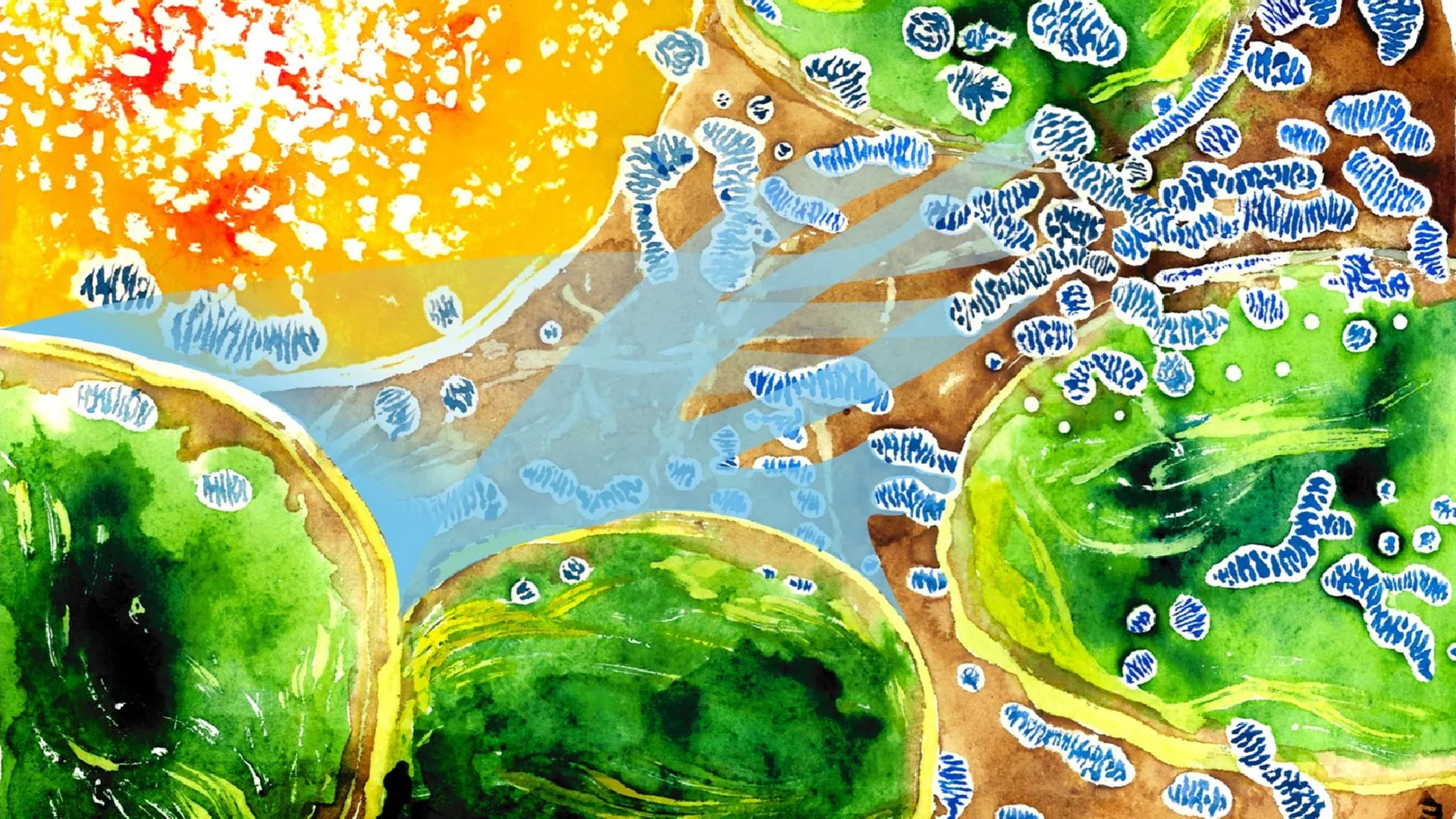
A team of researchers at the University of Helsinki has uncovered a previously unknown interaction inside plant cells. The study shows that plant mitochondria can draw molecular oxygen away from chloroplasts. This newly identified process helps explain how plants control oxygen levels within their tissues and could improve scientists' understanding of plant metabolism and how plants adjust to stressful conditions.
The research was led by Dr. Alexey Shapiguzov (PhD, Docent) at the University's Centre of Excellence in Tree Biology on the Viikki campus. The findings were published in the journal Plant Physiology.
Oxygen Plays a Critical Role in Plant Life
Oxygen is essential for many processes in plants, including metabolism, growth, immune responses, and the ability to adapt to stress. Earlier work from the University of Helsinki has also shown that oxygen plays an important role in activating wound healing in plants. Despite its importance, scientists still do not fully understand how plants regulate oxygen levels within their tissues.
Inside plant cells, oxygen is mainly influenced by two structures called organelles. Mitochondria use oxygen during cellular respiration to produce energy. Chloroplasts, in contrast, release oxygen as a byproduct of photosynthesis.
Although respiration and photosynthesis have been studied extensively, scientists have known much less about how oxygen moves between mitochondria and chloroplasts.
Studying Mitochondrial Activity in Arabidopsis
To investigate this question, researchers studied genetically modified versions of the model plant Arabidopsis thaliana. These plants carried defects in their mitochondria that activate alternative respiratory enzymes. As a result, the mitochondria consume oxygen at a higher rate.
The altered plants showed two notable characteristics:
- Higher mitochondrial respiration reduced oxygen levels within plant tissues.
- Chloroplasts became resistant to methyl viologen, a chemical that diverts electrons from photosystem I to oxygen and produces reactive oxygen species.
When the researchers exposed the plants to nitrogen gas to create low oxygen conditions, the transfer of electrons to oxygen dropped sharply. This result suggested that methyl viologen no longer had enough of the substance it needs to function: oxygen.
Mitochondria Can Draw Oxygen From Chloroplasts
The experiments revealed a previously unrecognized interaction within plant cells. When mitochondria increase their oxygen consumption under stress, they can lower the amount of oxygen available inside chloroplasts.
This process effectively creates an internal oxygen drain that alters photosynthesis and the metabolism of reactive oxygen species. Such changes may help plants adapt to shifting environmental conditions.
According to Dr. Shapiguzov, "to our knowledge, this is the first evidence that mitochondria influence chloroplasts through intracellular oxygen exchange." The discovery provides new insight into how plants coordinate energy production and respond to stress.
New Clues About Plant Stress and Resilience
Understanding how respiration and photosynthesis interact through oxygen exchange offers a clearer picture of plant energy metabolism. It may also help scientists better predict how plants respond to environmental changes such as day and night cycles or flooding.
The newly discovered interaction could also lead to improved methods for measuring and imaging plant physiology. These tools may prove useful for plant breeding and for detecting stress in crops at an early stage.
Story Source:
Materials provided by University of Helsinki. Note: Content may be edited for style and length.
Journal Reference:
- Matleena Punkkinen, Bikash Baral, Olga Blokhina, Lucas León Peralta Ogorek, Minsoo Kim, Kurt Fagerstedt, Mikael Brosché, Lauri Nikkanen, Elizabeth Vierling, Ole Pedersen, Alexey Shapiguzov. Mitochondria affect photosynthesis through altered tissue levels of O2. Plant Physiology, 2026; 200 (2) DOI: 10.1093/plphys/kiaf648
Cite This Page: