
Microplastics found in 90% of prostate cancer tumors, study reveals
- Date:
- February 25, 2026
- Source:
- NYU Langone Health / NYU Grossman School of Medicine
- Summary:
- Researchers have detected microplastics in nearly all prostate cancer tumors examined in a new study. Tumor tissue contained about 2.5 times more plastic than nearby healthy prostate tissue. Scientists say this is the first Western study to directly measure plastic particles in prostate tumors. More research is needed, but the findings suggest microplastic exposure could play a role in cancer development.
- Share:
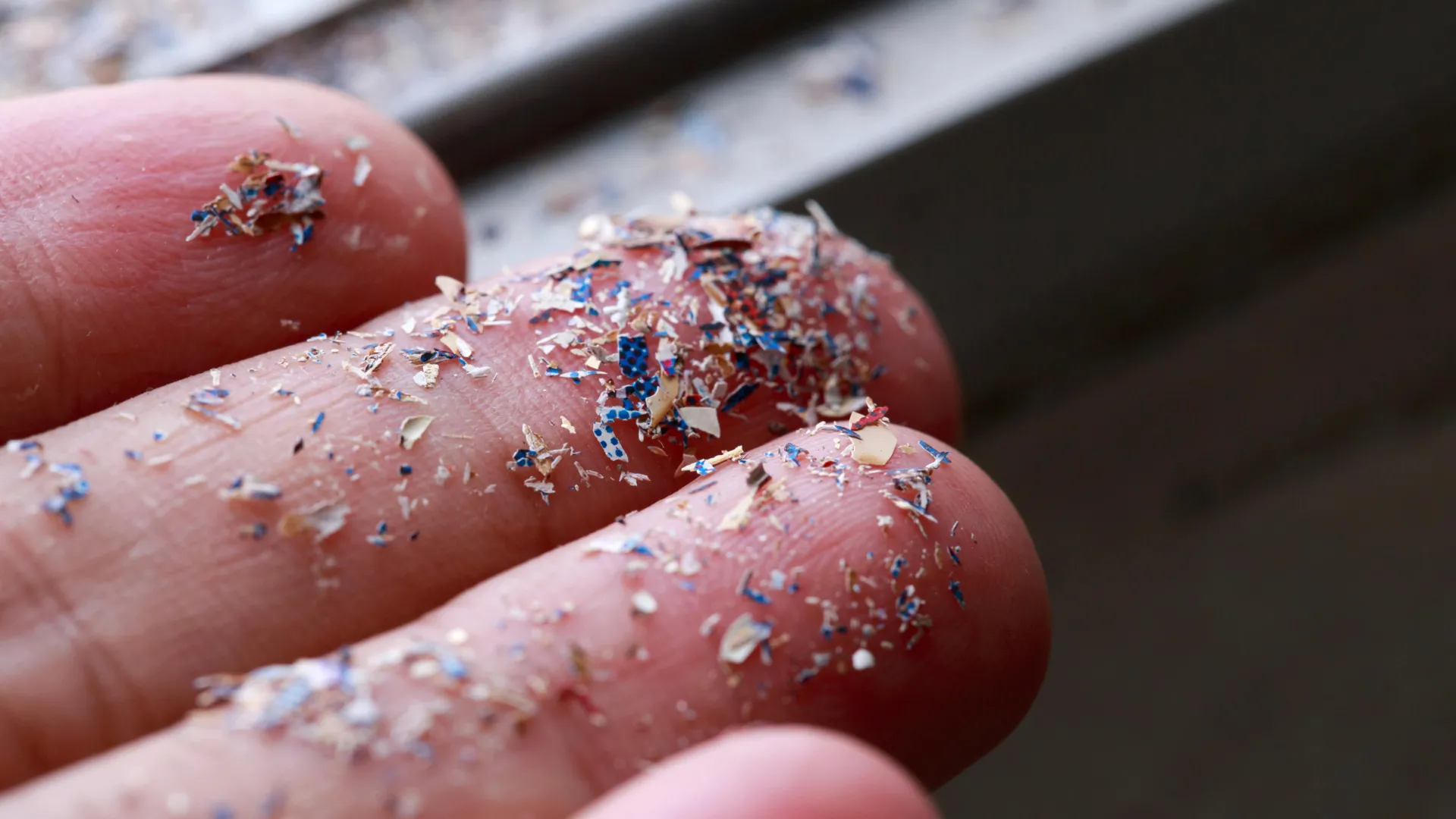
A new study has found tiny plastic particles in nine out of 10 men diagnosed with prostate cancer. Researchers also discovered that these microplastics were present at higher concentrations in cancerous tumors than in nearby noncancerous prostate tissue.
The investigation was carried out at NYU Langone Health, including its Perlmutter Cancer Center and Center for the Investigation of Environmental Hazards. The research team set out to explore whether exposure to microplastics could contribute to the development of prostate cancer, which the American Cancer Society identifies as the most common cancer among men in the United States.
How Microplastics Enter the Human Body
Plastic materials used in food packaging, cosmetics, and many everyday products can break down into microscopic fragments when heated, worn down, or chemically processed. These particles can enter the body through food, breathing contaminated air, or contact with the skin. Previous research has detected microplastics in nearly every organ, as well as in bodily fluids and even the placenta. Despite their widespread presence, scientists still do not fully understand how these particles may affect human health.
Higher Plastic Levels in Cancerous Tissue
The researchers examined prostate tissue collected from 10 patients undergoing surgery to remove the gland. Plastic particles were identified in 90% of tumor samples and in 70% of benign prostate tissue samples.
The difference in concentration was notable. On average, tumor samples contained about 2.5 times more plastic than healthy tissue (about 40 micrograms of plastic per gram of tissue compared with 16 micrograms per gram).
"Our pilot study provides important evidence that microplastic exposure may be a risk factor for prostate cancer," said study lead author Stacy Loeb, MD, a professor in the NYU Grossman School of Medicine's Departments of Urology and Population Health.
Loeb noted that earlier research had suggested possible links between microplastics and conditions such as heart disease and dementia, but there had been little direct evidence tying them specifically to prostate cancer.
The findings will be presented on Feb. 26 at the American Society of Clinical Oncology's Genitourinary Cancers Symposium. According to Loeb, this is the first Western study to measure microplastic levels in prostate tumors and compare them directly with levels in noncancerous prostate tissue.
Rigorous Testing to Prevent Contamination
To conduct the analysis, scientists first reviewed tumor and benign tissue samples under visual inspection. They then used specialized instruments to measure the quantity, chemical composition, and structure of microplastic particles. The team focused on 12 of the most common plastic molecules.
Because plastic is widely used in medical and laboratory equipment, researchers took extra precautions to prevent contamination. They replaced plastic tools with alternatives made from aluminum, cotton, and other nonplastic materials. All testing was performed in controlled clean rooms designed specifically for microplastic analysis.
Possible Role of Inflammation in Cancer Development
"By uncovering yet another potential health concern posed by plastic, our findings highlight the need for stricter regulatory measures to limit the public's exposure to these substances, which are everywhere in the environment," said study senior author Vittorio Albergamo, PhD.
Albergamo, an assistant professor in the NYU Grossman School of Medicine's Department of Pediatrics, said the team plans to further investigate how microplastics behave inside the body and whether they may contribute to cancer formation. One possibility under consideration is that the particles trigger a prolonged immune response (inflammation) within prostate tissue. Over time, chronic inflammation can damage cells and cause genetic changes that lead to cancer.
He emphasized that the study involved a small group of patients and that larger studies will be necessary to confirm the findings.
Prostate Cancer Statistics and Study Support
According to the Centers for Disease Control and Prevention, about one in eight men in the U.S. will be diagnosed with prostate cancer during their lifetime.
The research was funded by the U.S. Department of Defense.
In addition to Loeb and Albergamo, the NYU Langone team included Leonardo Trasande, MD, MPP; Trevor Johnson, PhD; Fang-Ming Deng, MD, PhD; Mark Strong, DO; David Wise, MD, PhD; José Alemán, MD, PhD; Zixuan Mo, BS; Mariana Rangel Camacho, BS; Nataliya Byrne, BA; Tatiana Sanchez Nolasco, MPH; Adrian Rivera, MPH; William Huang, MD; Herbert Lepor, MD; Wei Phin Tan, MD; and James Wysock, MD. Samir Taneja, MD, of Northwell Health in New York City also contributed to the study.
Loeb has consulted for pharmaceutical company Astellas, digital health company Savor Health, and men's health organization Movember, and has received research support from Endo USA Inc. She also participated in advisory boards for Endo USA, Blue Earth Diagnostics, Pfizer, Sumitomo Pharma, and Doceree. Wysock has consulted for medical equipment manufacturers Edap -- Focal One, and URO-1 Medical. Wise is a paid consultant for Pfizer, Bayer, K36, OncoC4, AstraZeneca, and Janssen Pharmaceuticals, and is an expert witness for Exxon Mobil. None of these activities are related to the current study. NYU Langone Health is managing the terms and conditions of these relationships in accordance with its policies and procedures.
Story Source:
Materials provided by NYU Langone Health / NYU Grossman School of Medicine. Note: Content may be edited for style and length.
Cite This Page: