
Tiny flaws in diamonds could unlock a quantum computing revolution
By treating qubits like individual molecules, scientists can now predict their behavior faster and more accurately
- Date:
- November 13, 2026
- Source:
- Princeton University
- Summary:
- Scientists have discovered a faster way to identify diamond-based materials that could power quantum computers and sensors at room temperature. The breakthrough has already revealed promising new quantum building blocks that could help unlock computing capabilities far beyond those of today's supercomputers.
- Share:
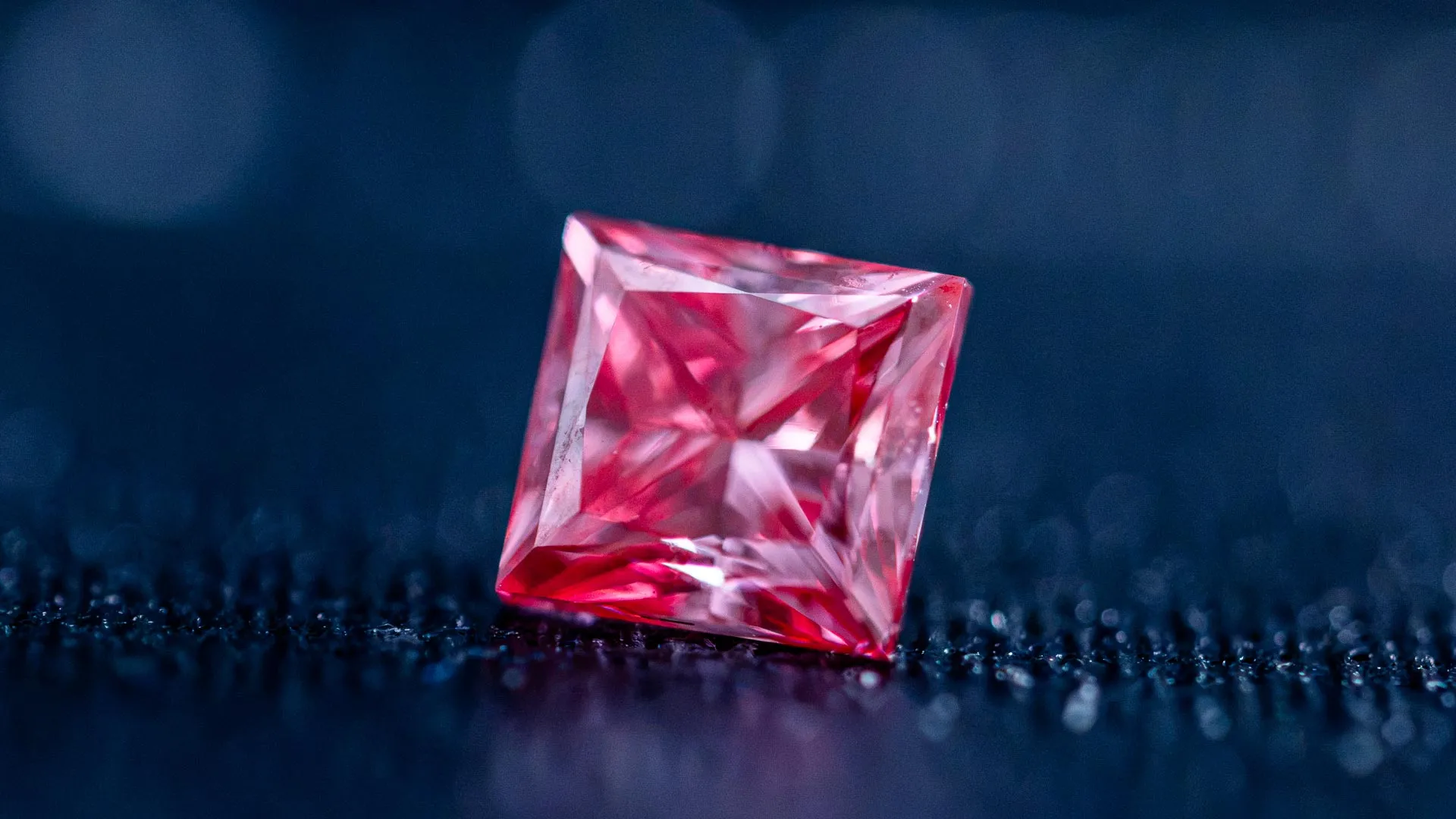
A new computational technique could accelerate the search for diamond materials capable of powering future quantum computers and highly sensitive sensors. Developed by a researcher at the U.S. Department of Energy's (DOE) Princeton Plasma Physics Laboratory (PPPL), the method makes it much easier to identify promising materials for quantum technology, potentially opening the door to advances across many areas of science.
The approach has already revealed new candidates for quantum computing and sensing applications. The findings were recently published in ACS Central Science and have attracted attention from other researchers in the field.
One of the biggest challenges in developing quantum technology is finding materials that can maintain delicate quantum states under practical conditions. Many candidates require extremely low temperatures to function reliably. Diamond materials stand out because certain quantum properties can remain useful even at room temperature.
This capability could help advance technologies that are important to national research priorities and the development of next-generation computing. Quantum sensors promise levels of sensitivity and precision beyond those of conventional instruments, while quantum computers could eventually solve certain extraordinarily complex problems much faster than today's most powerful supercomputers.
Why Imperfect Diamonds Could Be the Key to Quantum Computing
Although diamonds are made of carbon atoms, a flawless diamond crystal is not enough to create a useful quantum computing system. The key lies in tiny irregularities within the crystal structure.
These imperfections, known as defects, can occur when a carbon atom is absent from its normal position, when another element replaces a carbon atom, or when both changes occur together. The atoms surrounding these defects can form qubits, the basic units used to store and process quantum information in quantum computers and sensors.
Finding the most useful defects, however, has been difficult. Accurately modeling their quantum behavior traditionally requires enormous computational resources, making it challenging to evaluate large numbers of possible candidates.
A Simpler Way to Discover Better Diamond Qubits
Mark Martirez, a staff research scientist at PPPL, developed a way to dramatically reduce the complexity of these calculations. Instead of simulating a much larger diamond structure, he isolates a small region containing just 16 to 30 atoms around a defect.
By "carving out" this tiny atomic cluster and treating it like a separate molecule, Martirez can use powerful computational methods that chemists have spent decades refining. These established techniques make it possible to analyze the quantum properties of diamond defects much more efficiently without sacrificing the high level of accuracy needed for the calculations.
"Because we're treating the qubits as molecules, the cost of calculating these defects is equivalent to the cost of just modeling a simple molecule," Martirez said. "This method really opened the floodgates" in terms of how qubits can be assessed.
The new technique allows researchers to calculate how different qubits respond to laser light and microwave pulses far more quickly than before. Using this approach, the team identified promising defects involving boron and oxygen that could serve as new types of qubits.
New Diamond Defects Reveal a Spectrum of Quantum Colors
Light plays an important role in how scientists interact with diamond qubits. Researchers use lasers and microwave pulses to manipulate their quantum states and retrieve stored information.
Much of the previous work in this area has centered on a defect known as the nitrogen-vacancy center. This structure forms when a nitrogen atom takes the place of a carbon atom in a diamond crystal, while an adjacent position that would normally contain another carbon atom remains empty.
Under laser illumination, this type of defect can emit red light when it occupies a particular quantum state.
The newly investigated defects offer different optical properties. Oxygen defects can produce blue light, while those involving boron emit ultraviolet light.
These differences could make it possible to combine several types of qubits within a single quantum device. Because each type responds differently to light, researchers might be able to interact with one group of qubits without disturbing another.
"One could imagine, then, combining different qubits of different responses, so you can basically probe one qubit but not the other," Martirez said.
Beyond identifying new candidates, the findings suggest a broader change in how researchers approach quantum technology. Diamond qubits have traditionally been studied primarily through physics, but understanding their underlying chemistry could provide additional ways to design them.
Martirez believes that researchers could eventually engineer qubits for particular functions using principles similar to those applied when chemists create specialized molecules, including compounds designed for new medications.
How Quantum Chemistry Could Transform Future Research
The potential benefits extend well beyond the development of quantum computers themselves. Martirez sees an intriguing possibility in which advances made possible by quantum chemistry eventually lead to quantum technologies that help improve the field of chemistry.
In other words, quantum chemistry could develop the very tools needed to "enrich itself" in the coming decades.
A practical quantum system containing multiple qubits could make molecular calculations substantially more accurate. That would allow scientists to study increasingly complex chemical structures, including large biological molecules and proteins, with a level of detail that is difficult to achieve using conventional methods.
"We could describe larger molecules, biomolecules, proteins and everything like that in a more accurate way, and that could improve all the chemical-adjacent industries, such as pharmaceutical science and materials science. Even our fundamental understanding of molecular systems could be enriched."
Such improvements could have far-reaching implications for pharmaceutical development, materials research, and the fundamental study of how molecules behave.
Martirez also hopes the research will encourage more chemists to explore solid-state physics. Although building advanced quantum computers is often viewed as a challenge primarily for physicists, he argues that chemistry offers valuable expertise that could help accelerate progress.
"At this moment in time, there's a great emphasis on building the first state-of-the-art qubit computer," he said. "But it's not just physicists who should be participating in this research. Chemists have decades of developed intuition about chemical systems that could be easily translated into understanding defects in solids as well."
By bringing these disciplines together, scientists may be able to develop more effective ways to discover, understand, and eventually engineer the quantum materials needed for future technologies.
The research was funded through PPPL's Laboratory Directed Research and Development program under prime contract number DE-AC02-09CH11466, with additional support from the DOE Office of Science, Office of Fusion Energy Sciences.
Story Source:
Materials provided by Princeton University. Note: Content may be edited for style and length.
Journal Reference:
- John Mark P. Martirez. A Chemist’sGuide to Solid-State Qubits: DiamondColor Centers as Embedded Vacancy-Centered Molecules. ACS Central Science, 2026; 12 (10): 1578 DOI: 10.1021/acscentsci.6c00548
Cite This Page: