
The hidden tradeoff behind today’s most popular weight loss drugs
- Date:
- April 9, 2026
- Source:
- Vanderbilt University Medical Center
- Summary:
- Weight loss drugs and bariatric surgery may work differently, but they lead to surprisingly similar results inside the body. Both significantly reduce fat while also causing a modest loss of muscle, reshaping overall body composition. Since muscle helps protect against early death, this balance matters more than the number on the scale. The study suggests these treatments improve health—but not without trade-offs.
- Share:
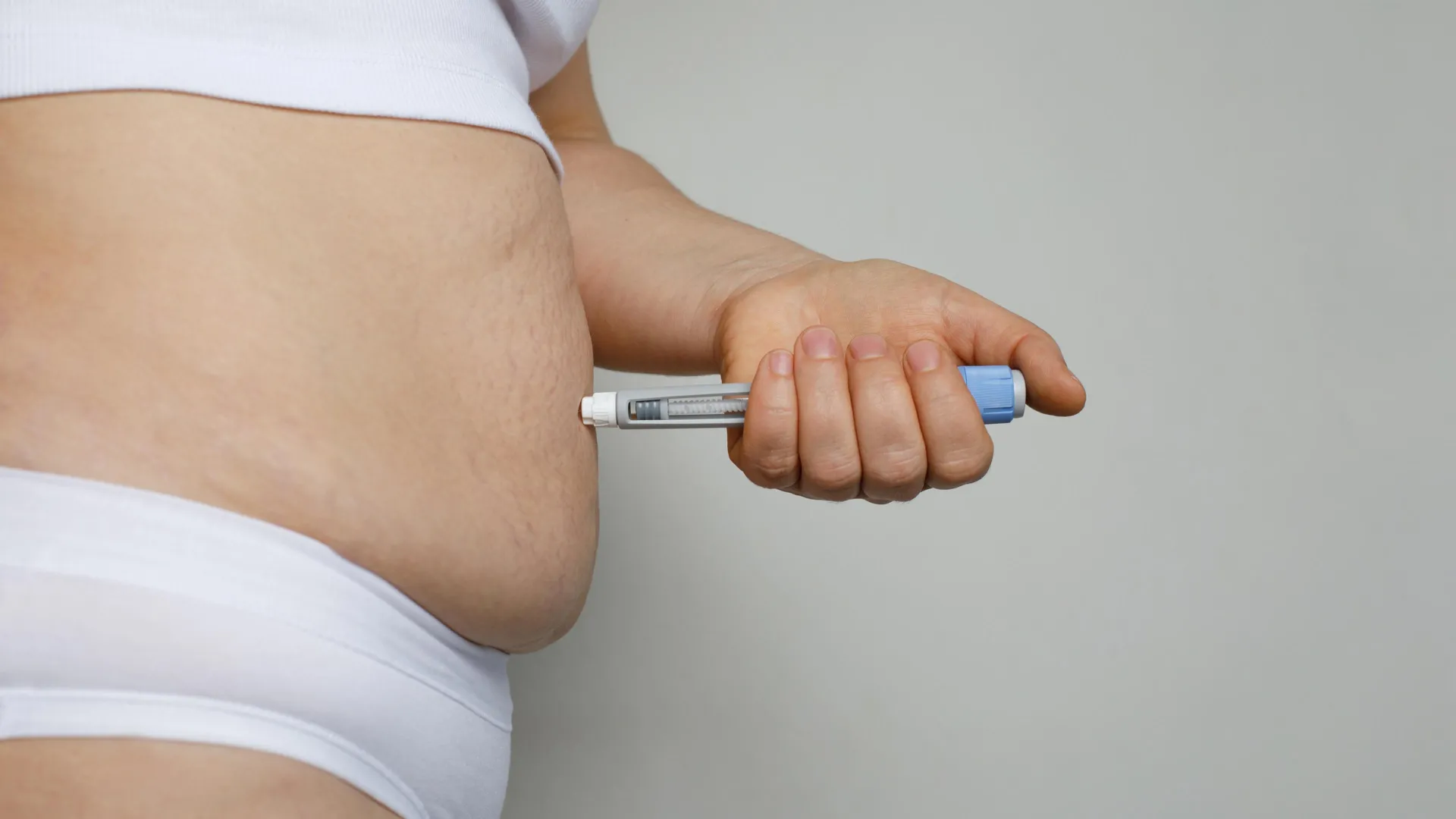
New research from Vanderbilt Health shows that both modern weight loss drugs and bariatric (weight loss) surgery can improve body composition in people with obesity. These treatments lead to a large drop in fat while also causing a smaller reduction in fat-free mass (including lean muscle).
This balance matters because body composition plays a major role in long-term health. A higher proportion of fat mass (FM) is linked to a greater risk of death from obesity-related conditions, including cardiovascular problems. In contrast, a higher proportion of fat-free mass (FFM) is associated with a lower risk of death.
Why Fat Loss and Muscle Preservation Matter
The findings highlight an important tradeoff. While reducing fat is beneficial, maintaining lean mass is also critical for overall health and survival. Understanding how these two components change with different treatments remains an active area of research.
The researchers noted that more studies are needed to better understand how FM and FFM shift after bariatric surgery or treatment with GLP-1 receptor agonist drugs in real-world clinical settings. Their findings were published in JAMA Network Open.
Study Design and Patient Data
The study was led by Danxia Yu, PhD, associate professor of Medicine in the Division of Epidemiology, and Jason Samuels, MD, assistant professor of Surgery.
Researchers conducted a retrospective analysis using electronic health records. The study included 1,257 patients between the ages of 18 and 65 who underwent bariatric surgery at Vanderbilt Health from 2017 to 2022. It also included 1,809 patients treated with the drugs semaglutide or tirzepatide from 2018 to 2023.
Individuals with a history of end-stage renal disease or congestive heart failure were excluded from the analysis.
To evaluate changes in body composition, the researchers used bioelectrical impedance analysis. This method estimates FM and FFM based on individual characteristics such as height, weight, age, race, gender, history of diabetes, and duration of GLP-1 treatment.
Key Findings Over 24 Months
Over a 24-month period, both treatment approaches produced similar patterns. Patients experienced substantial reductions in FM along with modest decreases in FFM. At the same time, the ratio of FFM to FM increased, indicating an overall improvement in body composition.
The study also found differences between men and women. Male patients tended to preserve fat-free mass more effectively over the long term compared to female patients.
Research Team and Funding
The first authors of the study were graduate student Zicheng Wang, MS, and postdoctoral fellow Lei Wang, PhD, both in Epidemiology.
Additional contributors included Xinmeng Zhang and You Chen, PhD (Biomedical Informatics and Computer Science); Brandon Lowery (Vanderbilt Institute for Clinical and Translational Research); Lauren Lee Shaffer, MS, and Quinn Wells, MD (Cardiovascular Medicine); and Charles Flynn, PhD, Brandon Williams, MD, Matthew Spann, MD, and Gitanjali Srivastava, MD (Surgery).
The research was supported in part by National Institutes of Health grants R01DK126721 and R01CA275864.
Story Source:
Materials provided by Vanderbilt University Medical Center. Note: Content may be edited for style and length.
Journal Reference:
- Zicheng Wang, Lei Wang, Xinmeng Zhang, Brandon D. Lowery, Lauren Lee Shaffer, You Chen, Quinn S. Wells, Charles R. Flynn, Brandon Williams, Matthew Spann, Gitanjali Srivastava, Jason M. Samuels, Danxia Yu. Body Composition Changes After Bariatric Surgery or Treatment With GLP-1 Receptor Agonists. JAMA Network Open, 2026; 9 (1): e2553323 DOI: 10.1001/jamanetworkopen.2025.53323
Cite This Page: