
Scientists reveal why human language isn’t like computer code
- Date:
- February 20, 2026
- Source:
- The University of Osaka
- Summary:
- Human language may seem messy and inefficient compared to the ultra-compact strings of ones and zeros used by computers—but our brains actually prefer it that way. New research reveals that while digital-style encoding could theoretically compress information more tightly, it would demand far more mental effort from both speaker and listener. Instead, language is built around familiar words and predictable patterns that reflect our real-world experiences, allowing the brain to constantly anticipate what comes next and narrow down meaning step by step.
- Share:
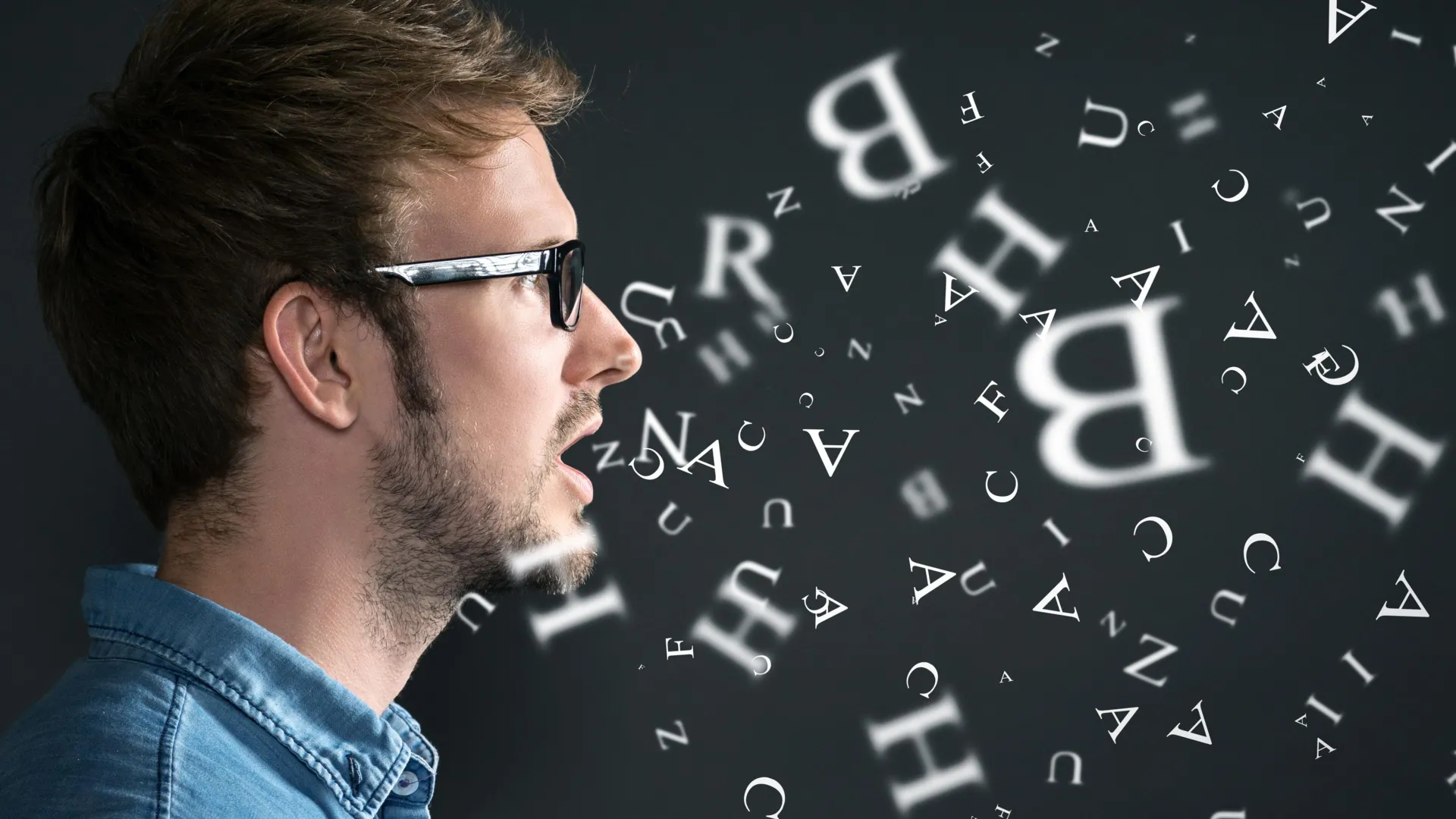
Human language is remarkably rich and intricate. Yet from the standpoint of information theory, the same ideas could theoretically be transmitted in a far more compressed format. That raises an intriguing question: why do people not communicate in a digital system of ones and zeros like computers do?
Michael Hahn, a linguist based in Saarbrücken, set out to answer that question with Richard Futrell from the University of California, Irvine. Together, they created a model explaining why human language looks the way it does. Their research was recently published in Nature Human Behaviour.
Human Language and Information Efficiency
Roughly 7,000 languages are spoken across the globe. Some are used by only a few remaining speakers, while others such as Chinese, English, Spanish and Hindi are spoken by billions. Despite their differences, all languages serve the same essential purpose. They communicate meaning by combining words into phrases, which are then arranged into sentences. Each part carries its own meaning, and together they create a clear message.
"This is actually a very complex structure. Since the natural world tends towards maximizing efficiency and conserving resources, it's perfectly reasonable to ask why the brain encodes linguistic information in such an apparently complicated way instead of digitally, like a computer," explains Michael Hahn. In theory, encoding speech as binary sequences of ones and zeros would be more efficient because it compresses information more tightly than spoken language. So why do humans not communicate like R2-D2 from Star Wars? Hahn and Futrell believe they have found the answer.
Language Is Built Around Real World Experience
"Human language is shaped by the realities of life around us," says Michael Hahn. "If, for instance, I was to talk about half a cat paired with half a dog and I referred to this using the abstract term 'gol', nobody would know what I meant, as it's pretty certain that no one has seen a gol -- it simply does not reflect anyone's lived experience. Equally, it makes no sense to blend the words 'cat' and 'dog' into a string of characters that uses the same letters but is impossible to interpret," he continues.
A scrambled form such as "gadcot" technically contains letters from both words, but it is meaningless to listeners. By contrast, the phrase "cat and dog" is instantly understandable because both animals are familiar concepts. Human language works because it connects directly to shared knowledge and lived experience.
The Brain Prefers Familiar Patterns
Hahn summarizes the findings this way: "Put simply, it's easier for our brain to take what might seem to be the more complicated route." Although natural language is not maximally compressed, it places far less strain on the brain. That is because the brain processes words in constant interaction with what we already know about the world.
A purely digital code might transmit information faster, but it would be detached from everyday experience. Hahn compares this to commuting to work: "On our usual commute, the route is so familiar to us that the drive is almost like on autopilot. Our brain knows exactly what to expect, so the effort it needs to make is much lower. Taking a shorter but less familiar route feels much more tiring, as the new route demands that we be far more attentive during the drive." From a mathematical perspective, he adds, "The number of bits the brain needs to process is far smaller when we speak in familiar, natural ways."
In other words, speaking and understanding binary code would require much more mental effort from both the speaker and the listener. Instead, the brain constantly estimates how likely certain words and phrases are to appear next. Because we use our native language daily over decades, these patterns become deeply embedded, making communication smoother and less demanding.
How Predictive Processing Shapes Speech
Hahn offers a clear illustration: "When I say the German phrase 'Die fünf grünen Autos' (Engl.: 'the five green cars'), the phrase will almost certainly make sense to another German speaker, whereas 'Grünen fünf die Autos' (Engl.: 'green five the cars') won't," he says.
When someone hears "Die fünf grünen Autos," the brain starts interpreting meaning immediately. The word "Die" signals certain grammatical possibilities. A German listener can instantly narrow the options, ruling out masculine or neuter singular nouns. The next word, "fünf," suggests something countable, excluding abstract ideas such as love or thirst. Then "grünen" indicates that the noun will be plural and green in color. At that point, the object could be cars, bananas or frogs. Only when the final word, "Autos," is spoken does the meaning fully settle into place. With each word, the brain reduces uncertainty until only one interpretation remains.
In contrast, "Grünen fünf die Autos" disrupts this predictable pattern. The expected grammatical signals appear in the wrong order, so the brain cannot easily build meaning from the sequence.
Implications for AI and Language Models
Hahn and Futrell were able to demonstrate these patterns mathematically. Their findings, published in Nature Human Behaviour, show that human language prioritizes reducing cognitive load over maximizing compression.
These insights may also inform improvements in large language models (LLMs), the systems behind generative AI tools such as ChatGPT or Microsoft's Copilot. By better understanding how the human brain processes language, researchers could design AI systems that align more closely with natural communication patterns.
Story Source:
Materials provided by The University of Osaka. Note: Content may be edited for style and length.
Journal Reference:
- Richard Futrell, Michael Hahn. Linguistic structure from a bottleneck on sequential information processing. Nature Human Behaviour, 2025; DOI: 10.1038/s41562-025-02336-w
Cite This Page: