
This tiny organism refused to die under Mars-like conditions
- Date:
- February 9, 2026
- Source:
- Indian Institute of Science (IISc)
- Summary:
- Baker’s yeast isn’t just useful in the kitchen — it may also be built for space. Researchers found that yeast cells can survive intense shock waves and toxic chemicals similar to those on Mars. The cells protect themselves by forming special stress-response structures that help them endure extreme conditions. This resilience could make yeast a powerful model for astrobiology and future space missions.
- Share:
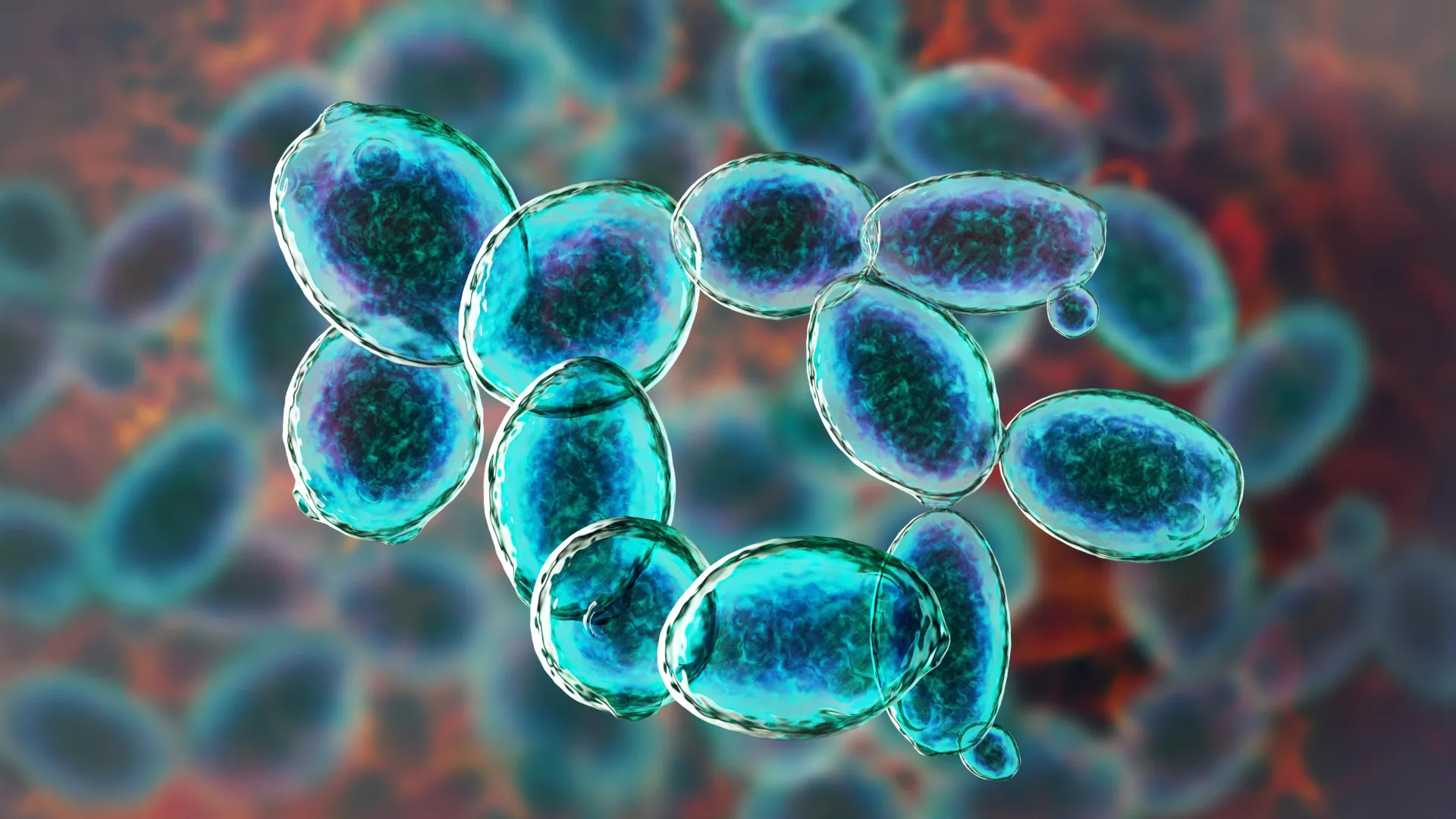
Baker's yeast (Saccharomyces cerevisiae) is best known for its role in baking, brewing, and modern biotechnology. Yet this everyday microorganism may also offer insight into a far bigger question: how life might endure the extreme conditions found beyond Earth.
Researchers from the Department of Biochemistry (BC) at the Indian Institute of Science (IISc), working with collaborators at the Physical Research Laboratory (PRL) in Ahmedabad, have discovered that yeast can survive environmental stresses similar to those on Mars. Their findings suggest that even simple life forms may be more resilient to extraterrestrial conditions than previously assumed.
Simulating Mars With Shock Waves and Toxic Soil
To test yeast survival, the research team subjected living cells to intense physical and chemical stress. The experiments included exposure to powerful shock waves comparable to those created by meteorite impacts on Mars, as well as perchlorate salts, which are toxic compounds known to exist in Martian soil.
The shock waves were generated using a High-Intensity Shock Tube for Astrochemistry (HISTA) located in Bhalamurugan Sivaraman's laboratory at PRL. These waves reached speeds of up to Mach 5.6. In addition, yeast cells were treated with 100 mM sodium perchlorate, either on its own or combined with shock wave exposure.
Overcoming Experimental Challenges
Setting up the experiments posed major technical difficulties. According to the researchers, exposing live yeast cells to shock waves at this intensity had never been done before.
"One of the biggest hurdles was setting up the HISTA tube to expose live yeast cells to shock waves -- something that has not been attempted before -- and then recovering yeast with minimum contamination for downstream experiments," explains lead author Riya Dhage, a project assistant in the lab of Purusharth I Rajyaguru, Associate Professor in BC.
How Yeast Survived Extreme Stress
Despite the harsh conditions, the yeast cells remained alive after exposure to shock waves, perchlorate salts, and even both stressors combined. While their growth slowed, survival rates remained high.
The researchers believe this resilience comes from the yeast's ability to form ribonucleoprotein (RNP) condensates. These are tiny structures without membranes that help cells protect and reorganize mRNA when under stress. Shock wave exposure caused yeast cells to form two types of RNP condensates known as stress granules and P-bodies. When exposed only to perchlorate salts, the cells formed P-bodies. Yeast strains that lacked the ability to create these structures were much less likely to survive.
Biomarkers for Life Under Alien Conditions
The findings suggest that RNP condensates could serve as biomarkers, or biological indicators, of cellular stress in extraterrestrial environments. This provides scientists with a potential tool for identifying how life responds to extreme conditions beyond Earth.
"What makes this work unique is the integration of shock wave physics and chemical biology with molecular cell biology to probe how life might cope with such Mars-like stressors," says Dhage.
Implications for Astrobiology and Space Exploration
The study highlights baker's yeast as a powerful model organism for India's growing astrobiology research efforts. By examining how yeast reorganizes its RNA and proteins when exposed to mechanical and chemical stress, scientists can gain valuable insight into how life forms might survive on other planets.
These insights may also help guide the development of biological systems designed to withstand extreme environments in space.
"We were surprised to observe yeast surviving the Mars-like stress conditions that we used in our experiments," says Rajyaguru, the corresponding author of the study. "We hope that this study will galvanize efforts to have yeast on board in future space explorations."
Story Source:
Materials provided by Indian Institute of Science (IISc). Note: Content may be edited for style and length.
Journal Reference:
- Riya Dhage, Arijit Roy, Bhalamurugan Sivaraman, Purusharth I Rajyaguru. Ribonucleoprotein (RNP) condensates modulate survival in response to Mars-like stress conditions. PNAS Nexus, 2025; 4 (10) DOI: 10.1093/pnasnexus/pgaf300
Cite This Page: