
Scientists just 3D printed one of the hardest metals on Earth
- Date:
- August 4, 2026
- Source:
- Hiroshima University
- Summary:
- A new 3D printing technique can produce exceptionally hard tungsten carbide cobalt while using less of its expensive raw materials. By softening rather than fully melting the material, researchers created defect-free samples with industrial-grade hardness and opened the door to more efficient manufacturing.
- Share:
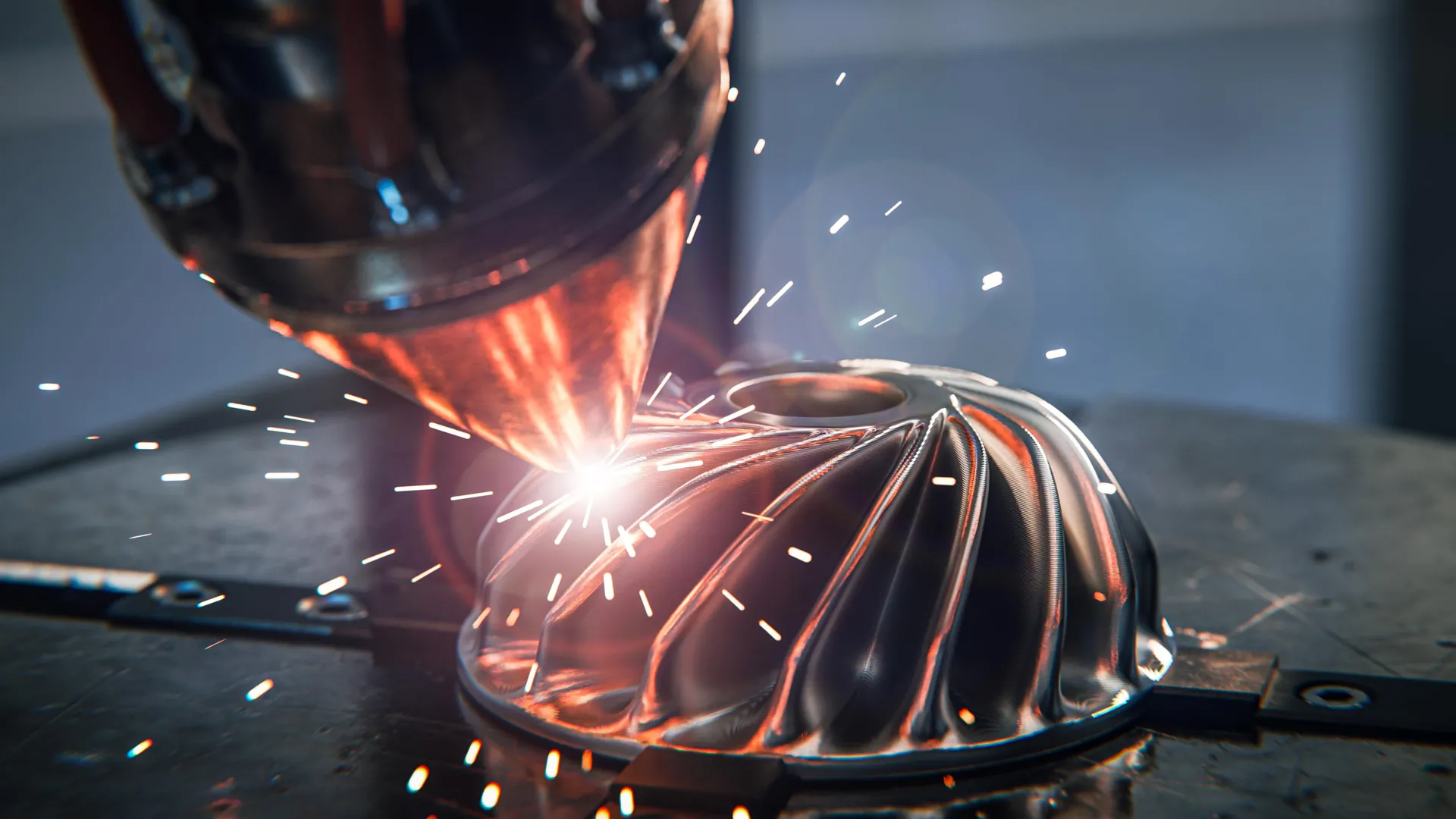
Tungsten carbide-cobalt (WC-Co) is valued because it can withstand intense wear, pressure, and repeated use. That exceptional hardness makes it ideal for industrial tools, but it also creates a major manufacturing challenge. The material is difficult to shape, expensive to produce, and often requires more raw material than ultimately ends up in the finished component.
Researchers have now tested a different way to manufacture WC-Co cemented carbide using additive manufacturing (AM, also commonly known as 3D printing). Their approach could reduce waste and lower production costs while preserving the strength and hardness that make the material so useful.
The study was published in the International Journal of Refractory Metals and Hard Materials.
Why Tungsten Carbide Is So Valuable
WC-Co cemented carbides are widely used in applications that demand extreme hardness and resistance to wear, including cutting tools, drills, machining equipment, and construction tools. The material combines tungsten carbide, which provides hardness, with cobalt, which acts as a metallic binder that holds the carbide particles together.
Manufacturers currently produce these materials mainly through powder metallurgy. In this process, fine WC and Co powders are compressed under high pressure and heated in sintering machines. Sintering bonds the particles together at elevated temperatures without necessarily melting every component completely.
The method produces extremely durable parts, but it has drawbacks. Tungsten and cobalt are costly raw materials, and conventional production can use a large amount of material while delivering a relatively limited yield. This makes reducing waste especially important.
The researchers explored whether additive manufacturing could provide a more efficient alternative. Unlike conventional methods that shape a part by cutting away material or filling a mold, additive manufacturing builds an object by placing material only where it is required.
A Laser and Heated Wire Build the Carbide
The team used hot-wire laser irradiation (also called laser hot-wire welding), a process that combines a laser beam with a preheated filler wire. Heating the wire before it reaches the work surface allows material to be added more quickly and efficiently. This can increase the deposition rate (how much of the filler metal is added) while reducing the amount of energy needed from the laser.
The researchers tested two fabrication arrangements.
In the first, the laser was directed onto the top of a cemented carbide rod, with the rod positioned ahead of the direction in which the material was being built. In the second, the laser led the process and irradiated the area between the bottom of the cemented carbide rod and the base material (iron).
Rather than fully melting the metals, both methods softened them enough to form and deposit the cemented carbide. This distinction is important because completely melting tungsten carbide can alter its internal structure and reduce the properties that make it valuable.
"Cemented carbides are extremely hard materials used for cutting tool edges and similar applications, but they are made from very expensive raw materials such as tungsten and cobalt, making reduction of material usage highly desirable. By using additive manufacturing, cemented carbide can be deposited only where it is needed, thereby reducing material consumption," said corresponding author Keita Marumoto, assistant professor at Hiroshima University's Graduate School of Advanced Science and Engineering.
Defect-Free, Industrial-Grade Carbides Achieved
The experiments showed that the approach could preserve the hardness and mechanical integrity associated with conventionally manufactured WC-Co cemented carbide. The researchers produced a base material with a hardness above 1400 HV (a unit representing resistance to penetration), without causing defects or decomposition.
The HV measurement refers to Vickers hardness, a test that evaluates how strongly a material resists being indented by a hard tip. A value above 1400 HV places the resulting carbide among the toughest materials commonly used in industry, below superhard substances such as sapphire and diamond.
The findings suggest that additive manufacturing can produce cemented carbide molds without major defects, although the results differed depending on the fabrication arrangement.
The rod-leading method caused some WC to decompose near the upper portion of the manufactured structure, creating defects in the final material. The laser-leading method avoided some of those problems but initially struggled to maintain the required hardness.
The researchers addressed this issue by adding a nickel alloy-based middle layer. They also carefully controlled and monitored the temperature so that it remained above the melting point for cobalt but below the temperature of grain growth. Grain growth occurs when the microscopic crystals inside a material become larger, which can change its hardness and mechanical performance.
With those adjustments, the team successfully produced cemented carbide through AM without sacrificing its hardness.
A New Strategy for Shaping Extremely Hard Materials
The results provide a foundation for further development, but several challenges remain. The researchers want to reduce cracking, improve durability, and determine how to manufacture more complicated shapes.
"The approach of forming metal materials by softening them rather than fully melting them is novel, and it has the potential to be applied not only to cemented carbides, which were the focus of this study, but also to other materials," said Marumoto.
Future work will focus on producing practical cutting tools, testing the process with additional materials, and finding ways to make the finished components even more durable.
If the technique can be refined for large-scale manufacturing, it could allow producers to place costly carbide only where it is needed. That could make advanced tools less wasteful and more economical while preserving the extreme hardness required for industrial use.
Keita Marumoto and Motomichi Yamamoto of the Graduate School of Advanced Science and Engineering at Hiroshima University and Takashi Abe, Keigo Nagamori, Hiroshi Ichikawa and Akio Nishiyama of the Mitsubishi Materials Hardmetal Corporation contributed to this research.
Story Source:
Materials provided by Hiroshima University. Note: Content may be edited for style and length.
Journal Reference:
- Keita Marumoto, Takashi Abe, Keigo Nagamori, Hiroshi Ichikawa, Akio Nishiyama, Motomichi Yamamoto. Effect of the hot-wire laser irradiation method and a Ni-based alloy middle layer on mechanical properties and microstructure in additive manufacturing of WC–Co cemented carbide. International Journal of Refractory Metals and Hard Materials, 2026; 136: 107624 DOI: 10.1016/j.ijrmhm.2025.107624
Cite This Page: