
Scientists discover a completely different way to fight viruses
- Date:
- June 30, 2026
- Source:
- The Hebrew University of Jerusalem
- Summary:
- Researchers have uncovered an unexpected antiviral defense system in sea anemones that works very differently from the one humans use. The discovery suggests evolution developed multiple ways to combat viruses, challenging long-held ideas about how animal immune systems evolved.
- Share:
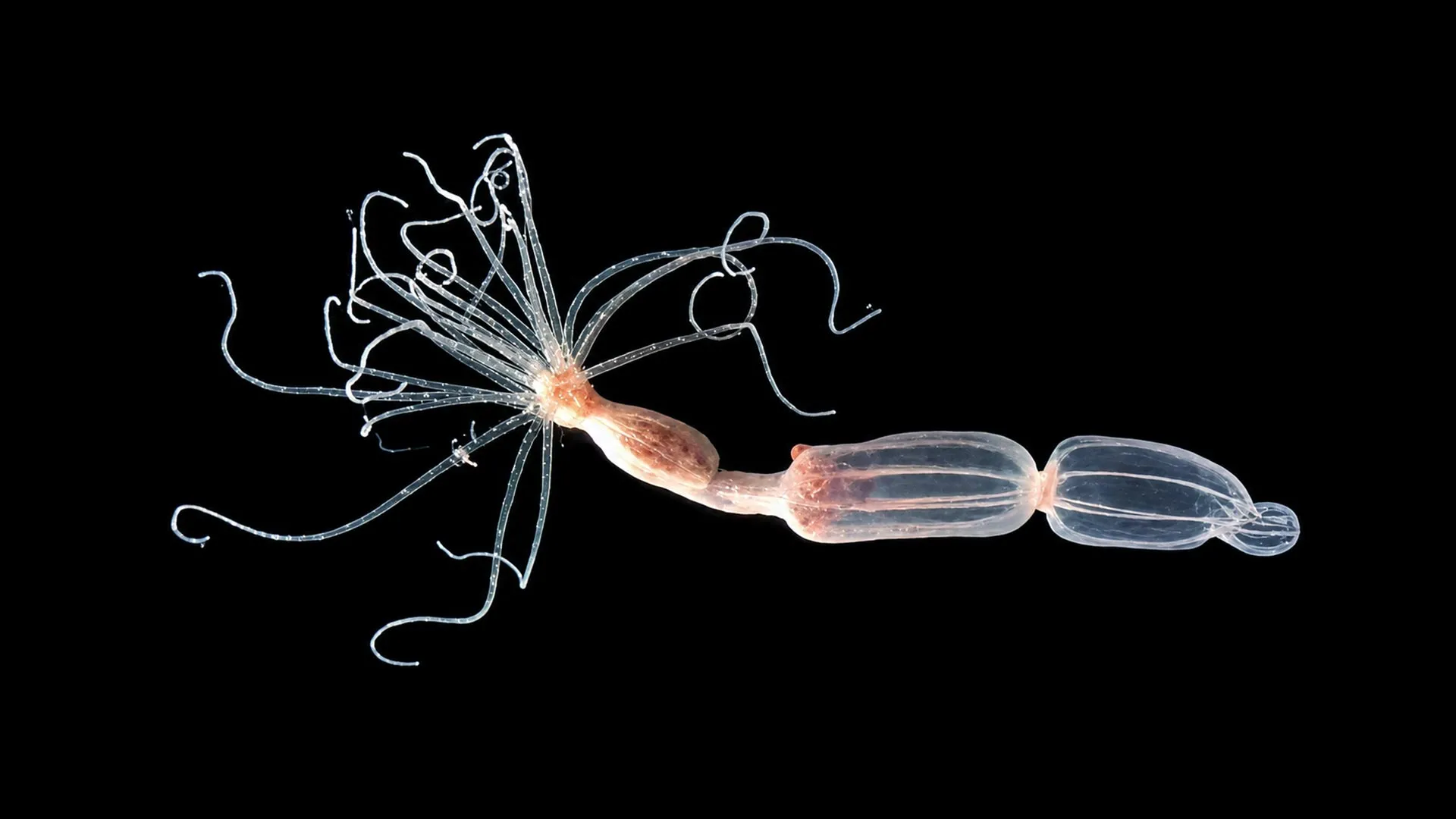
Scientists have uncovered a previously unknown way that sea anemones defend themselves against viruses, revealing that the evolution of animal immune systems may be far more diverse than previously believed. The newly identified defense relies on a protein that closely resembles one of the most important antiviral proteins in humans, yet performs the opposite function while still being essential for protecting the animal from infection. The findings suggest that evolution produced more than one successful strategy for fighting viruses across the animal kingdom.
The research, led by PhD candidate Ton Sharoni and Prof. Yehu Moran at the Hebrew University of Jerusalem in collaboration with scientists from the University of North Carolina at Charlotte, was published in Nature Ecology & Evolution. It challenges the long standing idea that animals inherited a single core antiviral system from a common ancestor and instead points to multiple evolutionary solutions for resisting viral infections.
An Ancient Animal Offers New Clues About Immunity
Viruses have threatened living organisms throughout evolutionary history. In humans and other vertebrates, one of the body's key antiviral defenses depends on a protein called MAVS. When a virus is detected, MAVS helps trigger the immune system so it can respond to the infection.
To investigate how old this defense system might be, the researchers studied sea anemones. These ancient marine animals split from the evolutionary line that eventually led to humans more than 600 million years ago. Because they are close relatives of corals and jellyfish, sea anemones provide scientists with a valuable glimpse into the early evolution of animal immunity.
During the study, the team discovered a previously unknown protein they named CARDIB (CARD Inhibitor Binding protein). At first, CARDIB looked remarkably similar to MAVS, leading researchers to believe it might perform the same antiviral role found in humans.
That assumption quickly fell apart.
"Everything about CARDIB suggested it should function like MAVS," said Prof. Yehu Moran, head of the Department of Ecology, Evolution and Behavior at the Hebrew University. "Instead, we discovered that it does the exact opposite. Rather than activating antiviral defenses, CARDIB normally suppresses them."
A Surprising Protein That Protects by Slowing the Immune System
The discovery immediately raised an important question. Why would an animal deliberately suppress its own immune response?
To find out, the researchers used CRISPR gene editing to remove the CARDIB gene from sea anemones before exposing them to viruses.
The results were unexpected. Sea anemones without CARDIB became much more susceptible to infection. Viruses multiplied more rapidly, the animals failed to properly activate their antiviral defenses, and their ability to fight infection dropped dramatically.
"The results were completely counterintuitive," said Sharoni. "Although CARDIB acts as a brake on the immune system under normal conditions, that brake turns out to be essential for mounting an effective antiviral response."
Overall, the experiments showed that sea anemones rely on an antiviral pathway that is fundamentally different from the one used by humans, even though both systems contain molecular components that look strikingly alike.
Natural Environment Confirms the Discovery
The researchers also wanted to determine whether this newly identified immune pathway mattered outside carefully controlled laboratory conditions.
To answer that question, genetically modified sea anemones were moved from laboratory aquaria into outdoor marine mesocosms supplied with natural estuarine water in South Carolina. This exposed the animals to the wide variety of viruses and microorganisms found in their normal environment.
The difference became obvious within days. Sea anemones lacking CARDIB and related antiviral genes accumulated substantially more viruses than unmodified animals. Researchers also found that one immune gene that appeared only moderately important in laboratory tests became clearly important under natural environmental conditions.
"This demonstrated that the pathway we discovered is not simply a laboratory phenomenon," said Moran. "It plays a crucial role in helping these animals cope with the viral challenges they face in nature."
Multiple Evolutionary Solutions to Fighting Viruses
The findings suggest that evolution did not settle on a single universal antiviral strategy. Instead, different groups of animals may have independently developed distinct molecular systems for detecting viruses and preventing them from spreading.
"Humans and sea anemones both need protection from viruses, but this work shows that evolution can organize those defenses in fundamentally different ways," Moran added.
The research also underscores the importance of looking beyond traditional laboratory animals. Ancient organisms such as sea anemones can preserve evolutionary innovations that would remain hidden if scientists focused only on humans, mice, and other commonly studied species.
As researchers continue exploring the remarkable diversity of life, discoveries like this are revealing that evolution has repeatedly found unexpected ways to solve some of biology's most fundamental challenges.
Story Source:
Materials provided by The Hebrew University of Jerusalem. Note: Content may be edited for style and length.
Journal Reference:
- Ton Sharoni, Adrian Jaimes-Becerra, Sydney Birch, Hee-Jin Kwak, Daria Aleshkina, Magda Lewandowska, Joachim M. Surm, Hannah Justin, Reuven Aharoni, Adam M. Reitzel, Yehu Moran. An ancient anthozoan protein reveals an alternative evolutionary path of antiviral signalling. Nature Ecology, 2026; DOI: 10.1038/s41559-026-03112-3
Cite This Page: