
Scientists discover what kept ancient campfires burning for generations
- Date:
- July 14, 2026
- Source:
- The Hebrew University of Jerusalem
- Summary:
- Nearly 800,000 years ago, early humans living beside a lake in what is now Israel may have chosen the location for one surprisingly practical reason: firewood. Researchers discovered that these ancient people regularly gathered driftwood washed up along the shoreline, giving them an easy, reliable fuel source for cooking fish, processing large animals, making tools, and organizing daily life around hearths.
- Share:
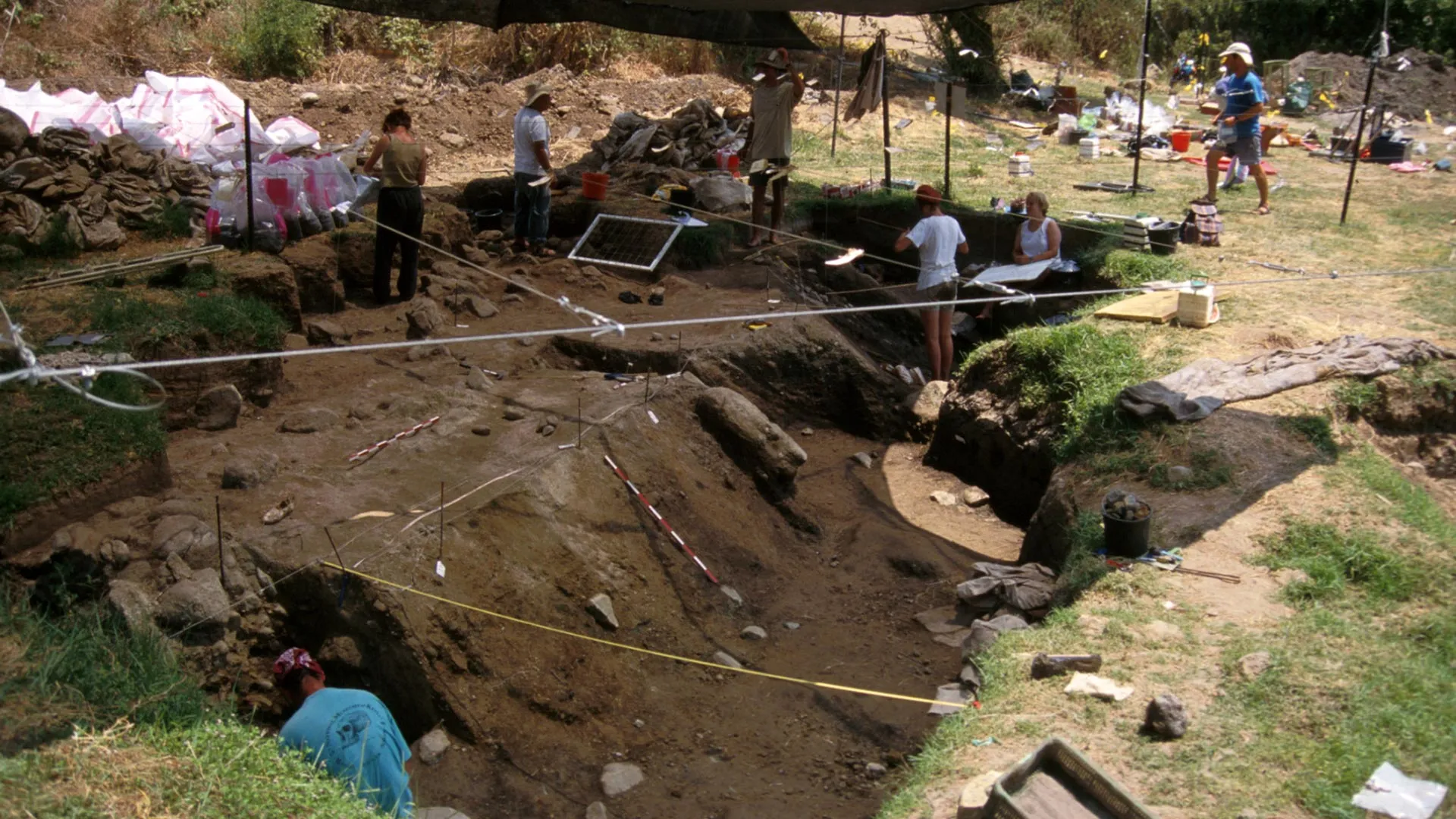
For early humans living nearly 800,000 years ago, access to fire may have influenced where they chose to settle. New research suggests these ancient communities relied on an abundant and dependable source of fuel: driftwood that naturally accumulated along a lakeshore. Rather than spending time searching for particular types of wood, they appear to have made practical use of materials that were readily available.
That steady supply of firewood likely helped them maintain fires for cooking and other daily activities. Researchers believe it may also explain why generations of people repeatedly returned to the same location. The site offered more than food and water. It also provided an easy way to keep fire burning.
Nearly 800,000 years ago, groups of early humans gathered along the shores of a large lake in what is now northern Israel. They hunted large animals, cooked fish using controlled fire, and organized many aspects of daily life around communal hearths. According to a new study, even tiny pieces of charcoal left behind from those fires can reveal important details about how these people interacted with their environment.
Published in Quaternary Science Reviews, the study reconstructs life at the Acheulian archaeological site of Gesher Benot Ya'aqov (GBY). An international team of researchers from Israel, Spain, and Germany examined an unusually rich collection of ancient charcoal preserved at the site. The team included Prof. Naama Goren-Inbar (Hebrew University), Prof. Nira Alperson-Afil and Dr. Yoel Melamed (Bar-Ilan University), Prof. Ethel Allué (Universitat Rovira i Virgili and Institut Català de Paleoecologia), and Prof. Brigitte Urban (Leuphana University). Their findings provide new insight into how early hominins gathered fuel and managed fire, suggesting a level of environmental awareness and planning more advanced than previously recognized.
Rare Charcoal Provides a Window Into the Past
Charcoal rarely survives at archaeological sites this old. As a result, the large collection recovered from GBY offers an exceptionally rare opportunity to study the everyday behavior of some of the earliest known fire users.
While many prehistoric sites contain only limited or uncertain evidence of burning, GBY preserves a detailed record showing repeated fire use over tens of thousands of years.
The site contains more than 20 archaeological layers documenting repeated occupation along the shores of paleo-Lake Hula. Excavations directed by Prof. Naama Goren-Inbar of the Hebrew University of Jerusalem have revealed a busy landscape where Acheulian hunter-gatherers returned generation after generation. Researchers have uncovered stone tools made from flint, limestone, and basalt, remains of hunted animals, and numerous plant foods gathered from the lakeshore, including fruits, nuts, and seeds.
One particularly remarkable layer captures evidence of a major hunting event. Alongside stone tools and plant remains, researchers found the skull and bones of a straight-tusked elephant. The arrangement of the remains indicates that the animal was butchered and processed at the site.
Fire played a central role in this ancient community. First identified at GBY by Prof. Nira Alperson-Afil of Bar-Ilan University, evidence suggests fire was used regularly rather than occasionally. Hearths served as focal points for activities such as preparing food, making tools, and social interaction.
Ancient Firewood Reveals the Landscape
The new research focused on one occupation layer dating to roughly 780,000 years ago. Scientists examined 266 charcoal fragments under a microscope, identifying the internal wood structure to determine which plant species had been burned.
The analysis revealed a surprisingly wide range of species, including ash, willow, grapevine, oleander, olive, oak, pistachio, and pomegranate. Notably, the pomegranate charcoal represents the earliest known evidence of this fruit tree in the Levant.
Researchers were surprised to find that the charcoal contained greater plant diversity than other botanical remains recovered from the site, including seeds, fruits, and unburned wood. This suggests that collecting firewood provided a broader sample of the surrounding environment than other plant-gathering activities.
Together, the identified species help reconstruct the ancient landscape. The area appears to have included both wet lakeshore habitats and open Mediterranean woodland. More importantly, the charcoal reveals how early humans used those environments.
Driftwood May Have Fueled Daily Life
The evidence suggests that the site's inhabitants were not carefully selecting specific tree species for fuel. Instead, they seem to have relied largely on driftwood that accumulated naturally along the shoreline.
Branches and logs carried by water would have collected near the lake's edge, creating an easily accessible supply of firewood. The charcoal composition closely matches the types of wood expected in that environment, supporting the idea that people simply gathered what nature delivered.
This finding points to a larger possibility. Access to fuel may have influenced where these communities chose to live. The lakeshore offered fresh water, edible plants, animals for hunting, raw materials for tools, and a dependable source of firewood needed to maintain fires.
Evidence of Fish Cooking and Advanced Fire Use
The study also sheds light on how fire was used. Researchers found that areas containing large amounts of charcoal often overlapped with concentrations of fish remains, especially the distinctive teeth of large carp.
This pattern provides additional evidence that fish were being cooked at the site nearly 800,000 years ago using controlled fire.
The findings strengthen the view that GBY hominins possessed sophisticated cognitive abilities. They were capable of managing fire, organizing activities around hearths, and incorporating fire into broader survival strategies.
Interestingly, the study suggests that collecting fuel may have required less planning than activities such as hunting large animals or producing stone tools. Instead of seeking out specific woods, people appear to have taken advantage of whatever fuel was readily available.
Taken together, the evidence portrays a highly capable community that understood its surroundings and repeatedly returned to a location that supplied the resources necessary for long-term survival.
The charcoal assemblage from GBY offers an exceptional dataset for exploring the relationship between fire use, environmental conditions, and hominin behavior. The findings refine scientific understanding of early fire use and highlight how local resources may have shaped patterns of settlement and survival during the Middle Pleistocene.
Story Source:
Materials provided by The Hebrew University of Jerusalem. Note: Content may be edited for style and length.
Journal Reference:
- Ethel Allué, Naama Goren-Inbar, Yoel Melamed, Brigitte Urban, Nira Alperson-Afil. Paleoenvironmental and behavioral insights into firewood selection by early Middle Pleistocene hominins. Quaternary Science Reviews, 2026; 382: 109973 DOI: 10.1016/j.quascirev.2026.109973
Cite This Page: