
Scientists may have found a pill for sleep apnea
- Date:
- March 11, 2026
- Source:
- The University of Gothenburg
- Summary:
- A European clinical trial found that the drug sulthiame significantly reduced breathing interruptions in people with moderate to severe sleep apnea. Patients taking higher doses experienced up to 47% fewer pauses in breathing and improved oxygen levels during sleep. The drug helps stabilize breathing signals in the brain, reducing airway collapse. Scientists say the findings could pave the way for a pill-based alternative to CPAP machines.
- Share:
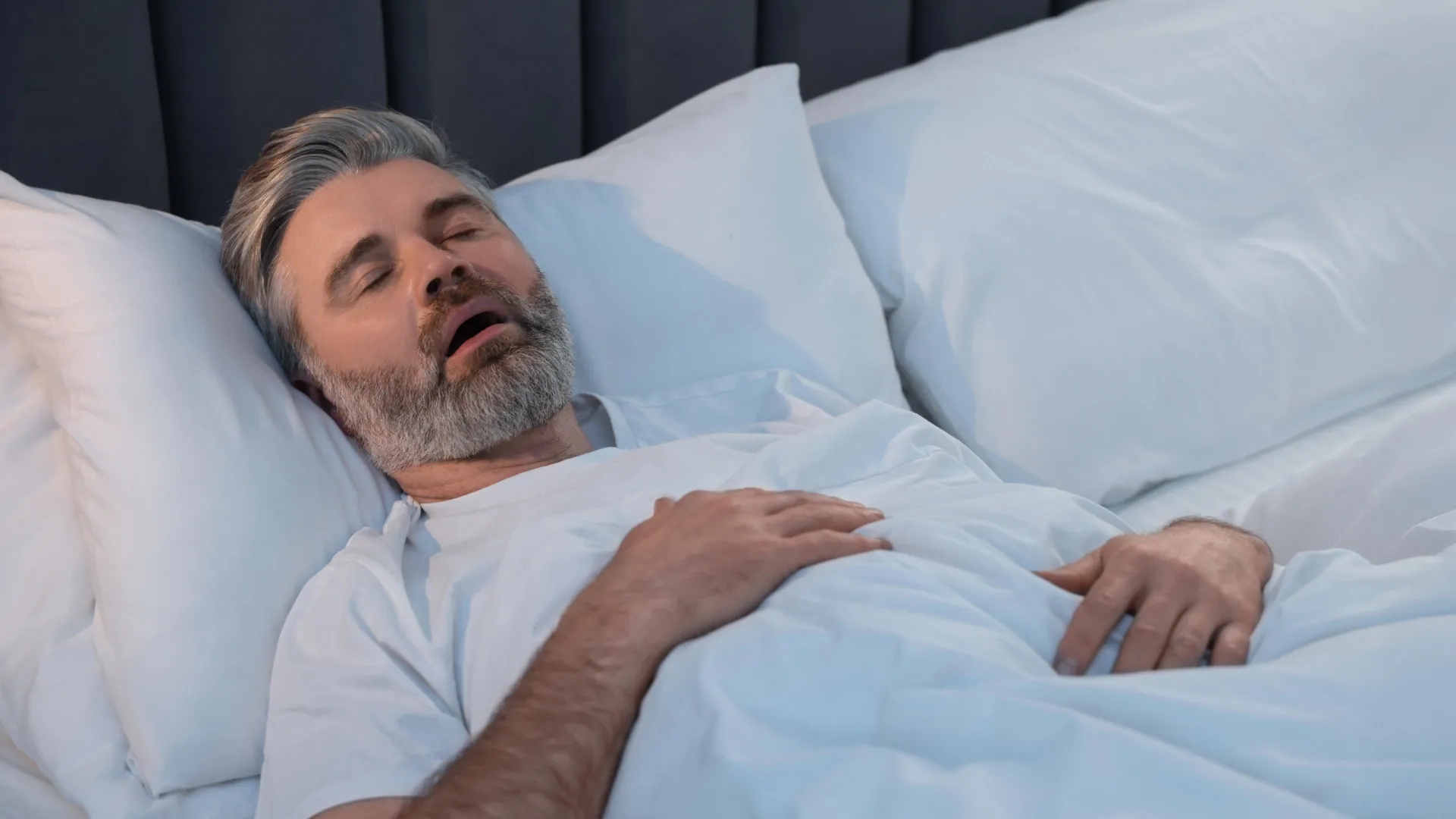
A medication called sulthiame may help people with obstructive sleep apnea breathe more easily during the night and sleep better overall. The findings come from a European clinical trial in which the University of Gothenburg played an important role. Researchers say the results raise the possibility of a drug treatment for patients who struggle to tolerate breathing masks.
The study results were published in The Lancet. A total of 298 people with moderate to severe sleep apnea participated in the trial. One quarter of the participants received a placebo, while the rest were treated with different doses of sulthiame. The study took place across four European countries and followed a double blind design, meaning neither the participants nor the researchers knew who was receiving the active drug.
Study Shows Major Reduction in Breathing Pauses
Patients who received higher doses of sulthiame experienced up to 47 percent fewer breathing interruptions during sleep compared with those given a placebo. They also showed improved oxygen levels overnight.
Sulthiame appears to work by stabilizing the body's control of breathing and increasing respiratory drive. This helps lower the likelihood that the upper airway will collapse during sleep, which is the main cause of obstructive sleep apnea. Most side effects reported during the trial were mild and temporary.
Jan Hedner, senior professor of pulmonary medicine at the Sahlgrenska Academy, University of Gothenburg, has played a leading role in the study.
"We have been working on this treatment strategy for a long time, and the results show that sleep apnea can indeed be influenced pharmacologically. It feels like a breakthrough, and we now look forward to larger and longer studies to determine whether the effect is sustained over time and whether the treatment is safe for broader patient groups," says Jan Hedner.
Ludger Grote and Kaj Stenlöf from the University of Gothenburg also made important contributions to the research.
Many Patients Cannot Tolerate CPAP Treatment
Obstructive sleep apnea happens when the upper airway repeatedly collapses during sleep. These episodes cause breathing to stop temporarily, reduce oxygen levels, and repeatedly disrupt sleep. Over time, untreated sleep apnea raises the risk of serious health problems, including high blood pressure, cardiovascular disease, stroke, and type 2 diabetes.
Even though sleep apnea is common, there is currently no medication that directly treats its underlying cause. The most common therapy is continuous positive airway pressure (CPAP), which uses a mask to keep the airway open during sleep. While CPAP is highly effective, many patients find it difficult to use. Up to half stop using the device within a year because the mask can feel uncomfortable or interfere with sleep.
Sulthiame is an existing medication that has previously been approved to treat a form of childhood epilepsy. Researchers are now investigating whether it could also become a drug treatment for sleep apnea.
Story Source:
Materials provided by The University of Gothenburg. Note: Content may be edited for style and length.
Journal Reference:
- Winfried Randerath, Ludger Grote, Kaj Stenlöf, Ingo Fietze, Julia Chevts, Erik Buntinx, Javier Albares, Katrin Kuhn, Corinna Hansen, Andreas Völp, Jan Hedner, Dries Testelmans, Jean-Benoit Martinot, Farhad Baharloo, Benny Gimbada Mwenge, Erik Buntinx, Pierre Philip, Jean Louis Pepin, Frederic Gagnadoux, Maxime Patout, Maria Fernanda Troncoso Acevedo, Alejandro Iranzo de Riquer, Francisco Martinez-Orozco, Francisco Javier Puertas Cuesta, Ainhoa Alvarez Ruiz de Larrinaga, Francisco Javier Albares Tendero, Christian Viniol, Winfried Randerath, Heike Benes, Ingo Fietze, Geert Mayer, Katrin Gade, Christian Deckert, Peter Heymer, Frank Kaessner, Julia Chevts, Henning Candler, Zbysek Pavelek, Samuel Genzor. Sultiame once per day in obstructive sleep apnoea (FLOW): a multicentre, randomised, double-blind, placebo-controlled, dose-finding, phase 2 trial. The Lancet, 2025; 406 (10514): 1983 DOI: 10.1016/S0140-6736(25)01196-1
Cite This Page: