
AI that talks to itself learns faster and smarter
Teaching AI to talk to itself could be the key to smarter, more adaptable machines.
- Date:
- January 28, 2026
- Source:
- Okinawa Institute of Science and Technology (OIST) Graduate University
- Summary:
- AI may learn better when it’s allowed to talk to itself. Researchers showed that internal “mumbling,” combined with short-term memory, helps AI adapt to new tasks, switch goals, and handle complex challenges more easily. This approach boosts learning efficiency while using far less training data. It could pave the way for more flexible, human-like AI systems.
- Share:
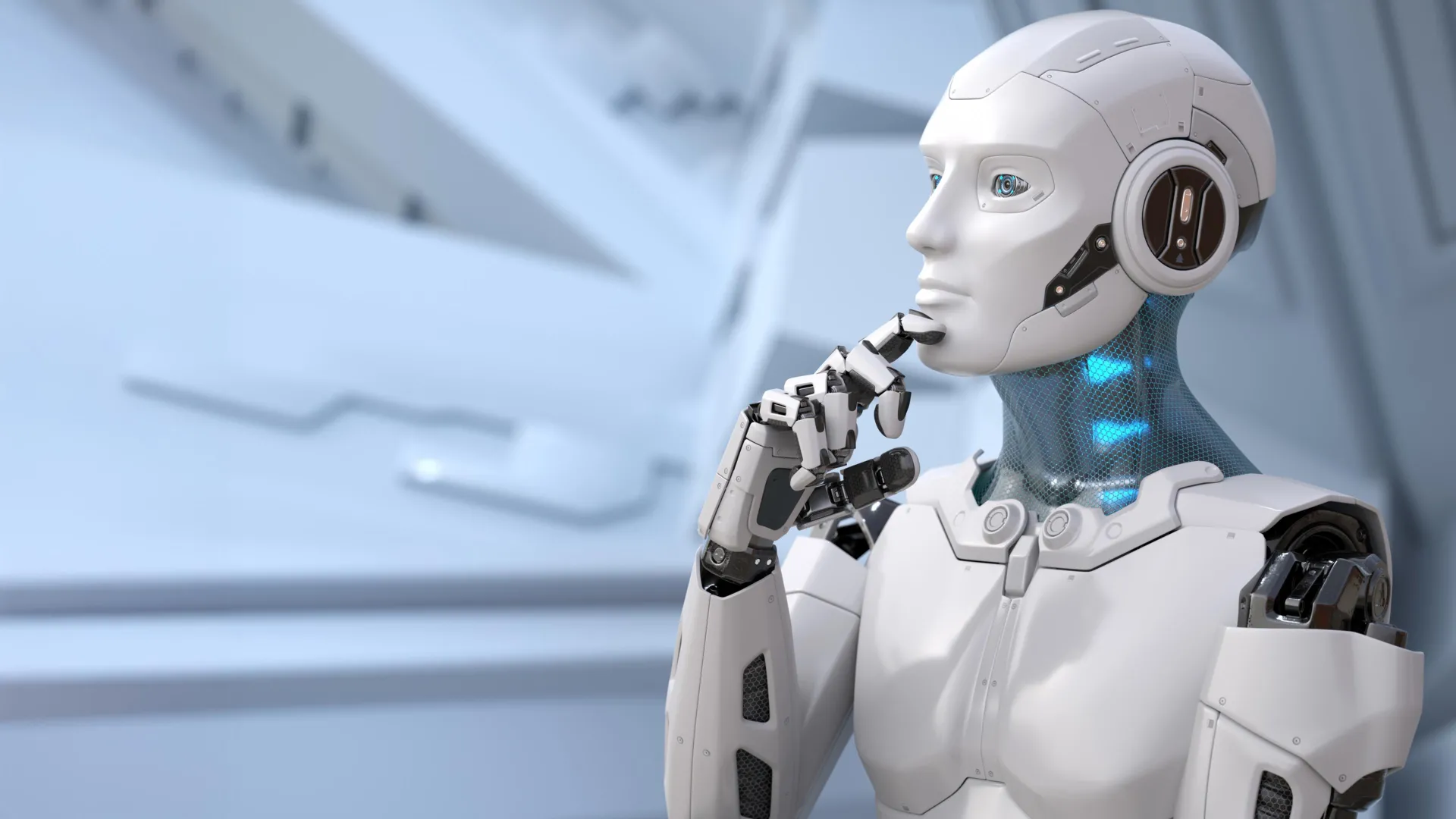
Talking to yourself may feel uniquely human, but it turns out this habit can also help machines learn. Internal dialogue helps people organize ideas, weigh choices, and make sense of emotions. New research shows that a similar process can improve how artificial intelligence learns and adapts. In a study published in Neural Computation, researchers from the Okinawa Institute of Science and Technology (OIST) found that AI systems perform better across many tasks when they are trained to use inner speech alongside short-term memory.
The findings suggest that learning is shaped not only by the structure of an AI system, but also by how it interacts with itself during training. As first author Dr. Jeffrey Queißer, Staff Scientist in OIST's Cognitive Neurorobotics Research Unit, explains, "This study highlights the importance of self-interactions in how we learn. By structuring training data in a way that teaches our system to talk to itself, we show that learning is shaped not only by the architecture of our AI systems, but by the interaction dynamics embedded within our training procedures."
How Self Talk Improves AI Performance
To test this idea, the researchers combined self-directed internal speech, described as quiet "mumbling," with a specialized working memory system. This approach allowed their AI models to learn more efficiently, adjust to unfamiliar situations, and handle multiple tasks at once. The results showed clear gains in flexibility and overall performance compared with systems that relied on memory alone.
Building AI That Can Generalize
A central goal of the team's work is content agnostic information processing. This refers to the ability to apply learned skills beyond the exact situations encountered during training, using general rules rather than memorized examples.
"Rapid task switching and solving unfamiliar problems is something we humans do easily every day. But for AI, it's much more challenging," says Dr. Queißer. "That's why we take an interdisciplinary approach, blending developmental neuroscience and psychology with machine learning and robotics amongst other fields, to find new ways to think about learning and inform the future of AI."
Why Working Memory Matters
The researchers began by examining memory design in AI models, focusing on working memory and its role in generalization. Working memory is the short-term ability to hold and use information, whether that means following instructions or doing quick mental calculations. By testing tasks with different levels of difficulty, the team compared various memory structures.
They found that models with multiple working memory slots (temporary containers for pieces of information) performed better on challenging problems, such as reversing sequences or recreating patterns. These tasks require holding several pieces of information at once and manipulating them in the correct order.
When the team added targets that encouraged the system to talk to itself a specific number of times, performance improved even further. The biggest gains appeared during multitasking and in tasks that required many steps.
"Our combined system is particularly exciting because it can work with sparse data instead of the extensive data sets usually required to train such models for generalization. It provides a complementary, lightweight alternative," Dr. Queißer says.
Learning to Learn in the Real World
The researchers now plan to move beyond clean, controlled tests and explore more realistic conditions. "In the real world, we're making decisions and solving problems in complex, noisy, dynamic environments. To better mirror human developmental learning, we need to account for these external factors," says Dr. Queißer.
This direction supports the team's broader aim of understanding how human learning works at a neural level. "By exploring phenomena like inner speech, and understanding the mechanisms of such processes, we gain fundamental new insights into human biology and behavior," Dr. Queißer concludes. "We can also apply this knowledge, for example in developing household or agricultural robots which can function in our complex, dynamic worlds."
Story Source:
Materials provided by Okinawa Institute of Science and Technology (OIST) Graduate University. Note: Content may be edited for style and length.
Journal Reference:
- Jeffrey Frederic Queißer, Jun Tani. Working Memory and Self-Directed Inner Speech Enhance Multitask Generalization in Active Inference. Neural Computation, 2026; 38 (1): 28 DOI: 10.1162/NECO.a.36
Cite This Page: