
The “impossible” LED breakthrough that changes everything
- Date:
- December 5, 2025
- Source:
- University of Cambridge
- Summary:
- Scientists have discovered how to electrically power insulating nanoparticles using organic molecules that act like tiny antennas. These hybrids generate extremely pure near-infrared light, ideal for medical diagnostics and advanced communications. The approach works at low voltages and surpasses competing technologies in spectral precision. Early results suggest huge potential for future optoelectronic devices.
- Share:
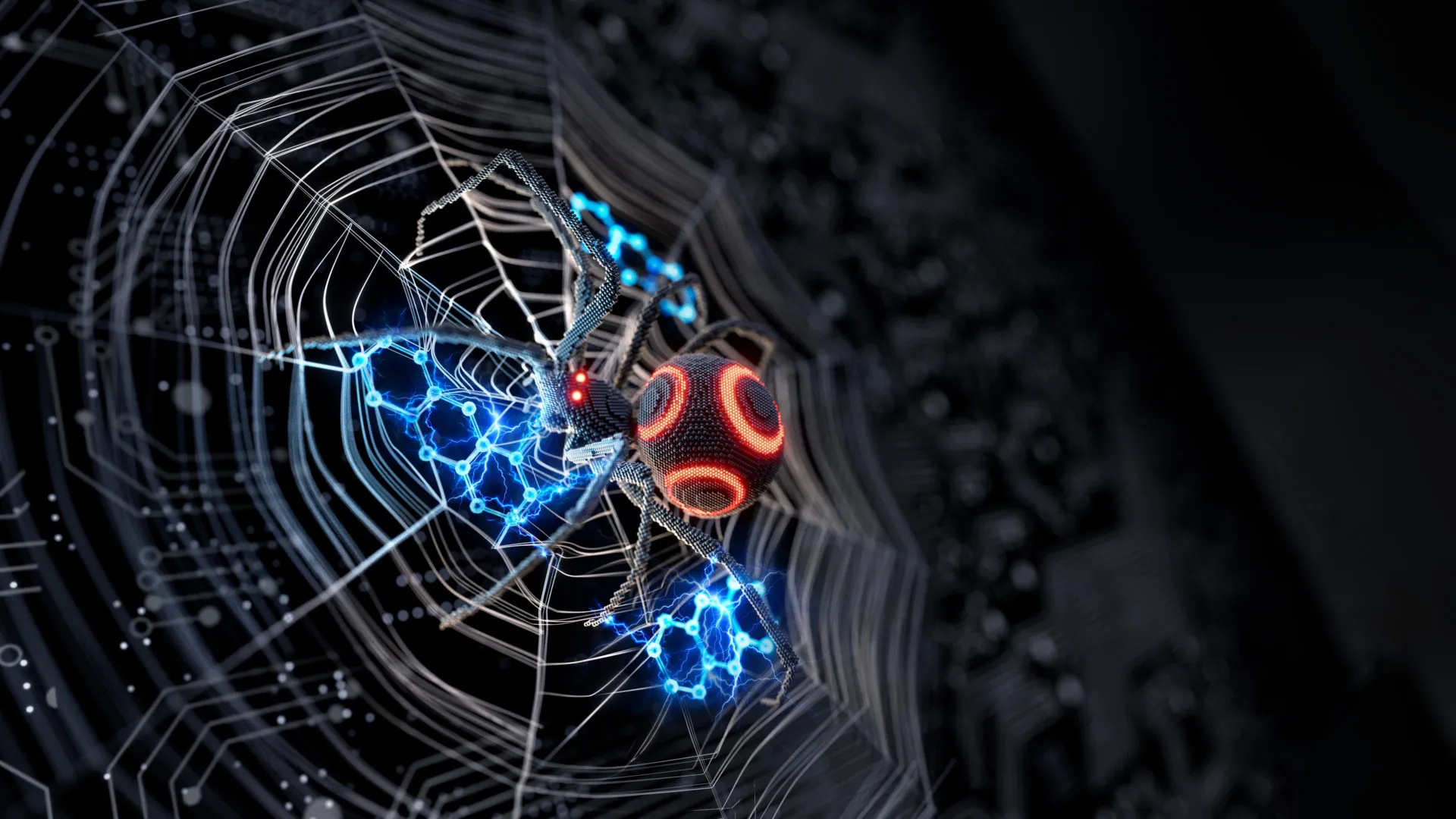
Scientists have unveiled a technique that uses 'molecular antennas' to direct electrical energy into insulating nanoparticles. This approach creates a new family of ultra-pure near-infrared LEDs that could be used in medical diagnostics, optical communication systems, and sensitive detectors.
Researchers at the Cavendish Laboratory, University of Cambridge have discovered how to drive electrical current into materials that normally do not conduct, a feat previously thought impossible under normal conditions. By attaching carefully chosen organic molecules that act like tiny antennas, they have built the first light-emitting diodes (LEDs) from insulating nanoparticles. Their work, reported in Nature, points toward a new generation of devices for deep-tissue biomedical imaging and high-speed data transmission.
The team focused on lanthanide-doped nanoparticles (LnNPs), a well-known class of materials prized for producing light that is extremely pure and stable. These nanoparticles are especially effective in the second near-infrared region, which is able to penetrate deep into biological tissue. Until now, however, their electrically insulating character meant they could not be integrated into standard electronic components such as LEDs.
"These nanoparticles are fantastic light emitters, but we couldn't power them with electricity. It was a major barrier preventing their use in everyday technology," said Professor Akshay Rao, who led the research at the Cavendish Laboratory. "We've essentially found a back door to power them. The organic molecules act like antennas, catching charge carriers and then 'whispering' it to the nanoparticle through a special triplet energy transfer process, which is surprisingly efficient."
Organic-Inorganic Hybrid Design With Molecular Antennas
To overcome the insulation problem, the researchers created an organic-inorganic hybrid structure. They attached an organic dye with a functional group anchor, called 9-anthracenecarboxylic acid (9-ACA), to the surface of the LnNPs. In the new LEDs, electrical charges are injected into these 9-ACA molecules, which act as a molecular antenna, rather than into the nanoparticles directly.
Once energized, the 9-ACA molecules enter an excited triplet state. In many optical systems this triplet state is considered "dark," meaning that its energy is often lost instead of converted into useful light. In this design, however, the energy from the triplet state is transferred with more than 98% efficiency to the lanthanide ions inside the insulating nanoparticles, causing them to emit light with remarkable brightness.
Ultra-Pure Near-Infrared Light at Low Voltage
Using this method, the team's "LnLEDs" can be switched on with a relatively low operating voltage of about 5 volts. At the same time, they generate electroluminescence with an extremely narrow spectral width. This makes the emission much purer than that of many competing technologies, including quantum dots (QDs).
"The purity of the light in the second near-infrared window emitted by our LnLEDs is a huge advantage," said Dr. Zhongzheng Yu, a lead author of the study and postdoctoral research associate at the Cavendish Laboratory. "For applications like biomedical sensing or optical communications, you want a very sharp, specific wavelength. Our devices achieve this effortlessly, something that is very difficult to do with other materials."
Biomedical Imaging, Optical Communications, and Sensing Potential
Because these electrically powered nanoparticles can emit such clean, well-defined light, they could form the basis of advanced medical technologies. Tiny LnLEDs, potentially injectable or built into wearable devices, might be used for deep-tissue imaging to find cancers, track organ function in real time, or trigger light-activated drugs with high precision.
Their narrow spectral output also makes them attractive for optical communications, where pure, stable wavelengths can help send more data with less interference. In addition, this platform could support highly sensitive sensors that detect very specific chemicals or biological markers, improving diagnostic tools and environmental monitoring.
First-Generation Performance and Future Directions
In early tests, the researchers achieved a peak external quantum efficiency above 0.6% for their NIR-II LEDs. For a first-generation device built from electrically powered insulating nanoparticles, this performance is considered very promising. The team has also identified clear routes to enhance efficiency further in future designs.
"This is just the beginning. We've unlocked a whole new class of materials for optoelectronics," added Dr. Yunzhou Deng, postdoctoral research associate at the Cavendish Laboratory. "The fundamental principle is so versatile that we can now explore countless combinations of organic molecules and insulating nanomaterials. This will allow us to create devices with tailored properties for applications we haven't even thought of yet."
This work was supported in part by a UK Research and Innovation (UKRI) Frontier Research Grant (EP/Y015584/1) and Postdoctoral Individual Fellowships (Marie Skłodowska-Curie Fellowship grant scheme).
Story Source:
Materials provided by University of Cambridge. Note: Content may be edited for style and length.
Journal Reference:
- Zhongzheng Yu, Yunzhou Deng, Junzhi Ye, Lars van Turnhout, Tianjun Liu, Alasdair Tew, Rakesh Arul, Simon Dowland, Yuqi Sun, Xinjuan Li, Linjie Dai, Yang Lu, Caterina Ducati, Jeremy J. Baumberg, Richard H. Friend, Robert L. Z. Hoye, Akshay Rao. Triplets electrically turn on insulating lanthanide-doped nanoparticles. Nature, 2025; 647 (8090): 625 DOI: 10.1038/s41586-025-09601-y
Cite This Page: