
Voyager 2 was running out of power. NASA just bought it more time
- Date:
- August 10, 2026
- Source:
- NASA's Jet Propulsion Laboratory
- Summary:
- NASA engineers have found a clever way to squeeze more life out of Voyager 2, nearly half a century after it left Earth. In an operation nicknamed the “Big Bang,” the team simultaneously shut down certain power-hungry hardware and switched to lower-power alternatives while keeping the spacecraft warm enough to survive.
- Share:
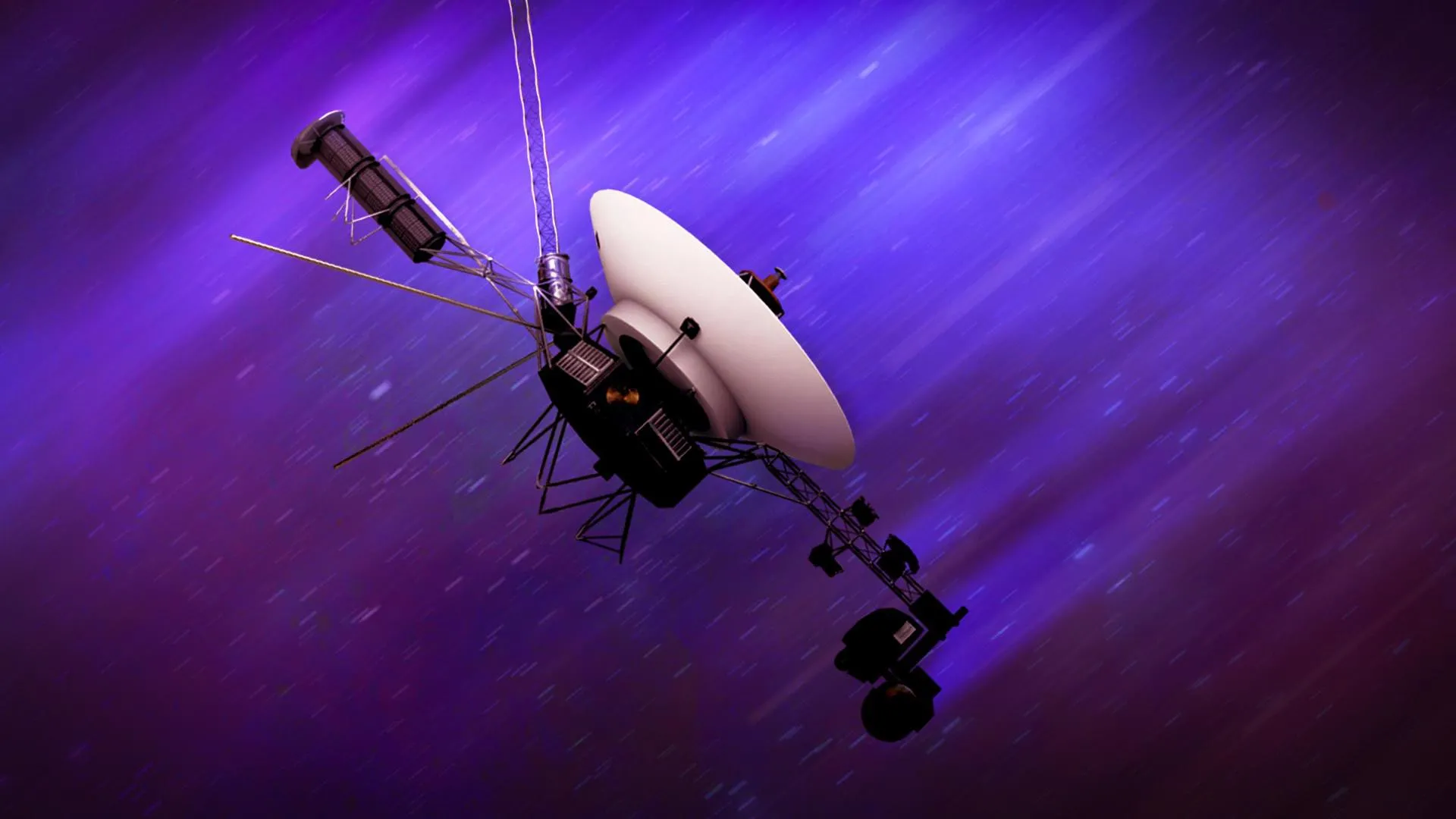
NASA engineers have found a way to free up additional power aboard Voyager 2, helping the nearly 50-year-old spacecraft continue its scientific work for longer.
The effort, known as the "Big Bang," was carried out by engineers at NASA's Jet Propulsion Laboratory. The team simultaneously shut down certain powered components and replaced them with options that use less energy, while also making sure Voyager 2 stayed warm enough to function properly.
Voyager 2's Shrinking Power Supply
Voyager 2 and its twin, Voyager 1, rely on radioisotope thermoelectric generators, which produce electricity from heat released by decaying plutonium. As that plutonium supply steadily diminishes, each spacecraft loses about 4 watts of available power every year.
After nearly half a century in space, the Voyagers now have extremely limited power to spare. To keep the spacecraft operating, mission controllers have increasingly had to shut down systems and equipment that are no longer essential.
Since 2024, declining power levels have forced the team to switch off two science instruments on each Voyager spacecraft (each spacecraft has 10 instruments; others had been turned off previously because they were only used for the mission's planetary encounters).
An Extra Year of Science
Without the "Big Bang" power saving effort, the Voyager team would have needed to turn off another instrument aboard Voyager 2 before the end of 2026. The newly freed power is expected to keep the spacecraft's three remaining instruments operating for at least one additional year.
NASA plans to carry out the same power-saving swap on Voyager 1, which is currently farther from Earth than Voyager 2. The mission team expects to complete that work in the coming months.
Story Source:
Materials provided by NASA's Jet Propulsion Laboratory. Note: Content may be edited for style and length.
Cite This Page: