
A surprising brain discovery is forcing scientists to rethink movement disorders
Scientists discovered that a key brain signal may be misleading researchers, opening the door to a new way of understanding and treating movement disorders.
- Date:
- July 1, 2026
- Source:
- Virginia Tech
- Summary:
- A surprising discovery is overturning a long-held assumption about how the brain’s movement center works. Researchers found that two key cerebellar cell types—thought to be tightly linked—often don’t behave in predictable ways, even though one directly influences the other. The finding suggests scientists may have been relying on the wrong signals when studying disorders such as dystonia, ataxia, and tremor.
- Share:
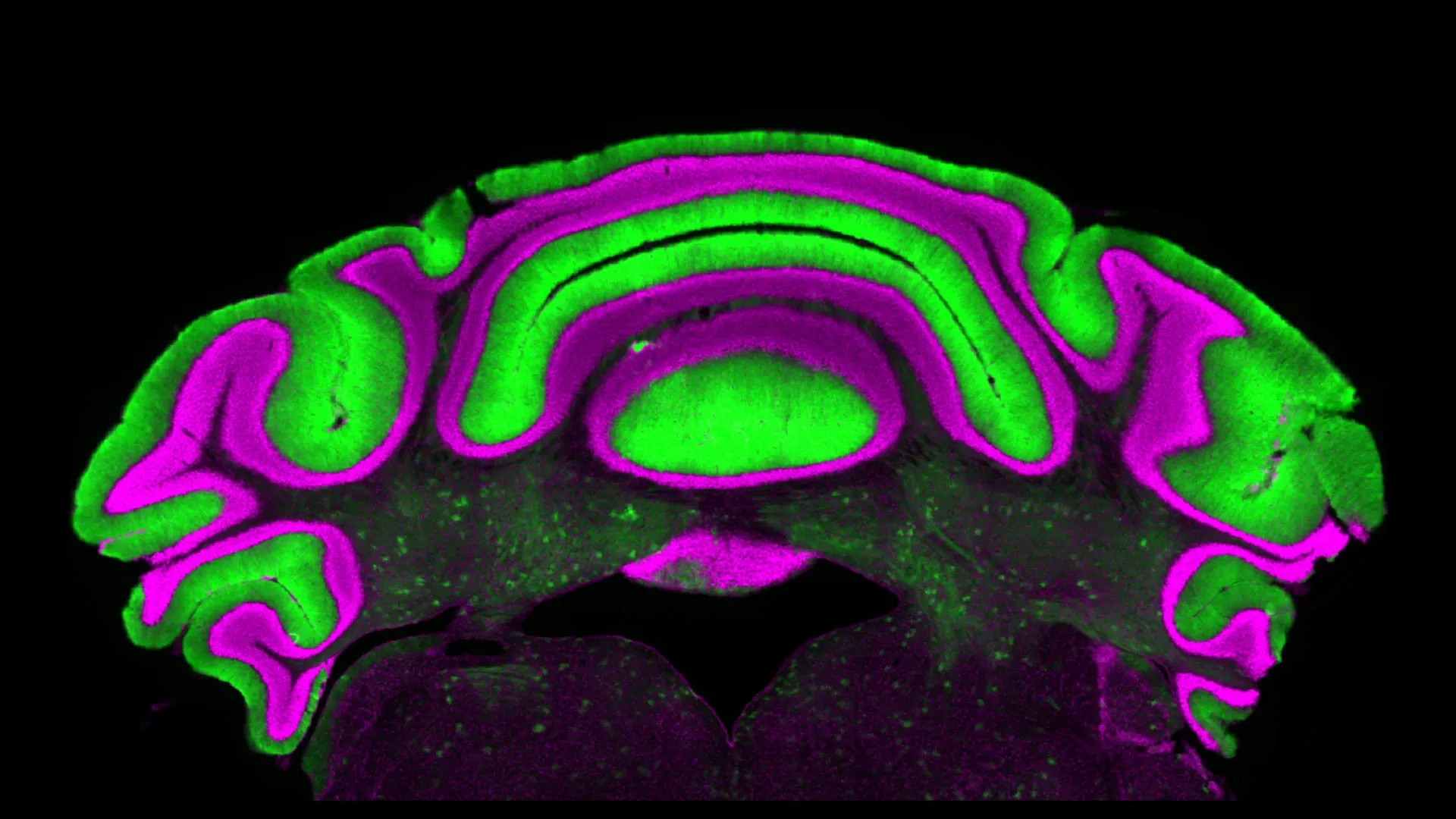
New research from a Virginia Tech neuroscientist at the Fralin Biomedical Research Institute at VTC is raising questions about a long-standing approach to studying chronic neurological conditions such as dystonia, ataxia, and tremor.
These disorders originate from problems in the cerebellum, a region of the brain involved in coordinating movement. When the cerebellum is disrupted, people can experience symptoms including painful muscle contractions, abnormal postures, and uncontrollable shaking.
For years, neuroscientists have focused on the relationship between two types of brain cells in the cerebellum. One group, known as Purkinje cells, suppresses activity in another group called deep cerebellar nuclei cells. Because of this connection, researchers have generally assumed that observing Purkinje cell activity provides a reliable picture of what is happening in the deep nuclei cells.
A new study led by Meike van der Heijden suggests that assumption may not hold true.
Published in the Journal of Physiology, the research found that activity in one cell type does not reliably predict activity in the other, despite their direct anatomical connection.
"We see that there's not a clear linear relationship between activity in the Purkinje cells and in the deep nuclei cells. So there's very limited predictive power in monitoring one to understand what's going on in the other," said Van der Heijden, assistant professor at the institute.
Implications for Dystonia, Ataxia, and Tremor
The findings could have important implications for both research and treatment of cerebellar movement disorders.
"Purkinje and cerebellar deep nuclei cell activity is disrupted in a disease state, and a better understanding of the relationship between these neuron types will ultimately help optimize treatments for diseases such as dystonia, ataxia, and tremor," said Alyssa Lyon, a doctoral candidate in Virginia Tech's Translational Biology, Medicine, and Health Graduate Program and the paper's first author.
One reason Purkinje cells have received so much attention is that they are easier to study. They sit in the outer layer of the cerebellum, making them more accessible to researchers. Deep nuclei cells, by contrast, are located farther beneath the brain's surface and are more difficult to measure directly.
As a result, many scientists have treated Purkinje cell activity as a useful biomarker for what is happening in the deeper cells.
Unexpected Results From Cerebellar Recordings
Under normal circumstances, Purkinje cells inhibit deep nuclei cells. Based on that relationship, greater activity in Purkinje cells would be expected to correspond with lower activity in deep nuclei cells, while reduced Purkinje activity would be expected to have the opposite effect.
To test that assumption, the research team analyzed a database of electrophysiology recordings collected from pre-clinical models of cerebellar disease.
The results revealed no significant correlation between activity in the two cell populations.
"We suggest that if you want to know how the cerebellum is behaving in a disease state, you have to look at the deep nuclei neurons, not just the Purkinje cells," said Van der Heijden, who also holds an appointment in Virginia Tech's School of Neuroscience.
She added that researchers should also be cautious about treatment strategies that focus on altering Purkinje cell activity with the expectation that deep nuclei cells will respond accordingly.
"This is a cautionary tale for understanding cerebellar activity in disease, but also for treating these challenging diseases," Van der Heijden said. "We need to be very careful in making assumptions, and to actually do experiments to test our hypotheses."
Story Source:
Materials provided by Virginia Tech. Note: Content may be edited for style and length.
Journal Reference:
- Alyssa M Lyon, Viviana Hernandez‐Castanon, Meike E van der Heijden. Steady‐state Purkinje cell activity has limited predictive power for cerebellar output in disease. The Journal of Physiology, 2026; 604 (10): 3964 DOI: 10.1113/JP290000
Cite This Page: