
Scientists say this algae could remove microplastics from drinking water
Orange-scented algae could become an unexpected weapon against the world’s growing microplastic pollution crisis.
- Date:
- May 12, 2026
- Source:
- University of Missouri-Columbia
- Summary:
- Researchers created a special kind of algae that can grab microscopic plastic pollution out of water almost like a magnet. The algae produce limonene, an orange-scented oil that helps them bind to water-repelling microplastics, forming easy-to-remove clumps. As a bonus, the algae also clean wastewater while growing.
- Share:
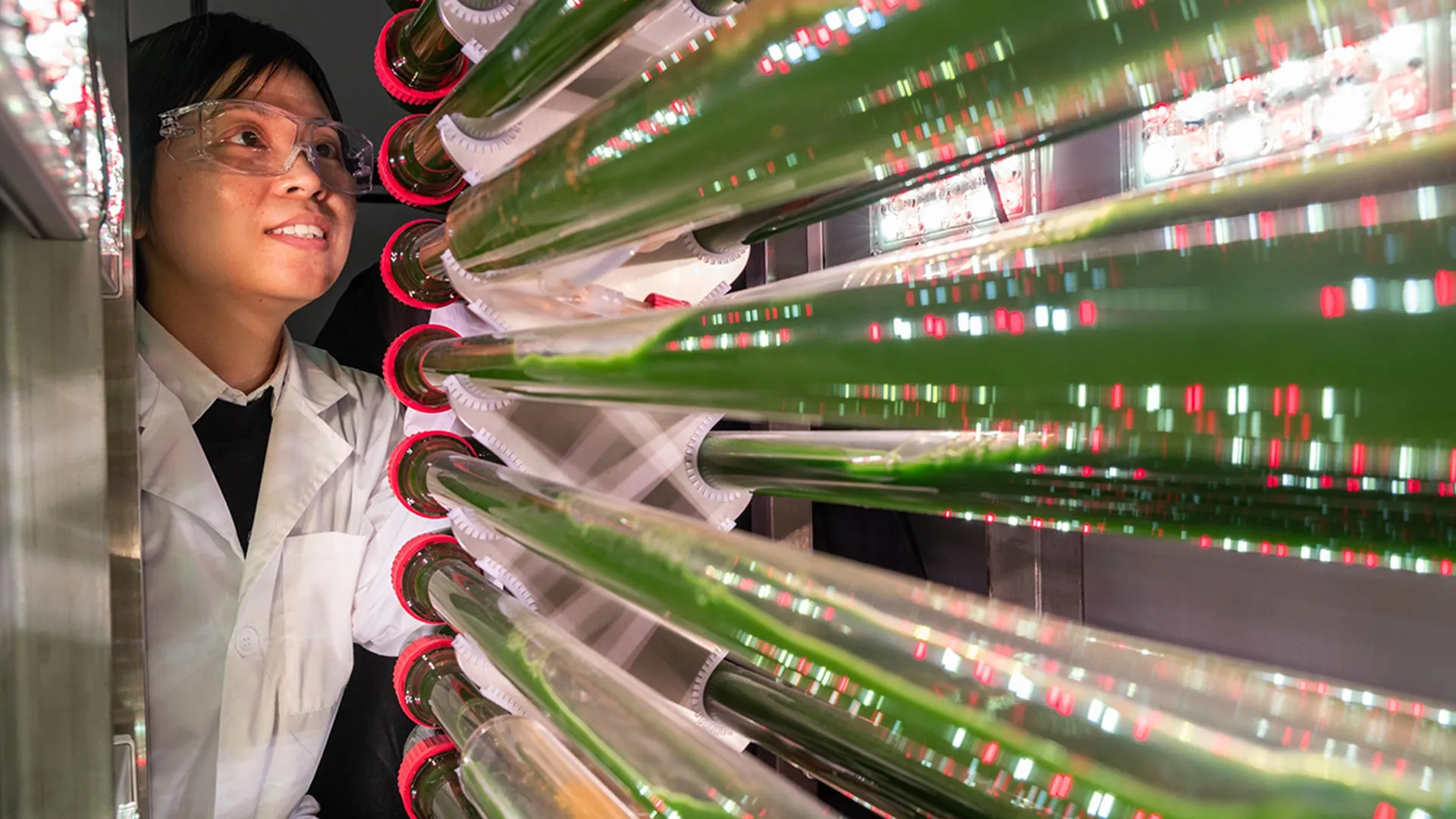
Researchers at the University of Missouri are developing a new way to remove tiny plastic pollutants from water using specially engineered algae.
Susie Dai, a researcher at Mizzou, recently created a modified strain of algae designed to capture harmful microplastics from contaminated water. Her long term goal is not only to clean waterways but also to recycle the collected plastic into safer bioplastic materials, including composite plastic films.
"Microplastics are pollutants found almost everywhere in the environment, such as in ponds, lakes, rivers, wastewater and the fish that we consume," Dai, a professor in the College of Engineering and principal investigator at the Bond Life Sciences Center, said. "Currently, most wastewater treatment plants can only remove large particles of plastic, but microplastics are so small that they slip through and end up in drinking water, polluting the environment and harming ecosystems."
Engineered Algae Targets Microplastics
In a recent study, Dai used genetic engineering to develop algae that produce limonene, a natural oil responsible for the familiar scent of oranges.
The limonene changes the algae's surface properties, making it repel water. Since microplastics are also water repellent, the particles naturally stick to the algae when they meet in water. The process forms clumps that sink to the bottom, creating a dense biomass layer that can be collected and removed more easily.
The modified algae also grow in wastewater, where they absorb excess nutrients while helping clean the water during the process.
"By removing the microplastics, cleaning the wastewater and eventually using the removed microplastics to create bioplastic products for good, we can tackle three issues with one approach," Dai said. "While our research is still in the early stages, our eventual goal is to integrate this new process into existing wastewater treatment plants so cities can clean their water more effectively and reduce pollution while creating useful products at the same time."
Plans To Scale Up the Technology
Dai's lab already grows algae inside large tank bioreactors. One system, a 100 liter bioreactor nicknamed "Shrek," is currently used to process industrial flue gas as part of efforts to reduce air pollution.
Looking ahead, Dai hopes to create larger versions of the Shrek system that could eventually be adapted for wastewater treatment and the removal of other pollutants.
The study, "Remediation and upcycling of microplastics by algae," was published in Nature Communications.
Story Source:
Materials provided by University of Missouri-Columbia. Note: Content may be edited for style and length.
Journal Reference:
- Bin Long, Qiang Li, Cheng Hu, Yayun Chen, Yining Zeng, Weiwei Li, Sydney Pearson, Mengqiao Liu, Chengcheng Fei, Joshua S. Yuan, Susie Y. Dai. Remediation and upcycling of microplastics by algae with wastewater nutrient removal and bioproduction potential. Nature Communications, 2025; 16 (1) DOI: 10.1038/s41467-025-67543-5
Cite This Page: