
Ocean warming may supercharge a tiny microbe that controls marine nutrients
- Date:
- March 11, 2026
- Source:
- University of Illinois at Urbana-Champaign
- Summary:
- As deep-sea waters warm, scientists expected trouble for the microbes that help keep ocean chemistry in balance. Instead, researchers found that Nitrosopumilus maritimus can adapt to warmer, iron-limited conditions by using iron more efficiently. Because these microbes control key nitrogen reactions that support marine life, their adaptability could help sustain ocean productivity. In a warming world, they may play an even bigger role in shaping marine nutrient cycles.
- Share:
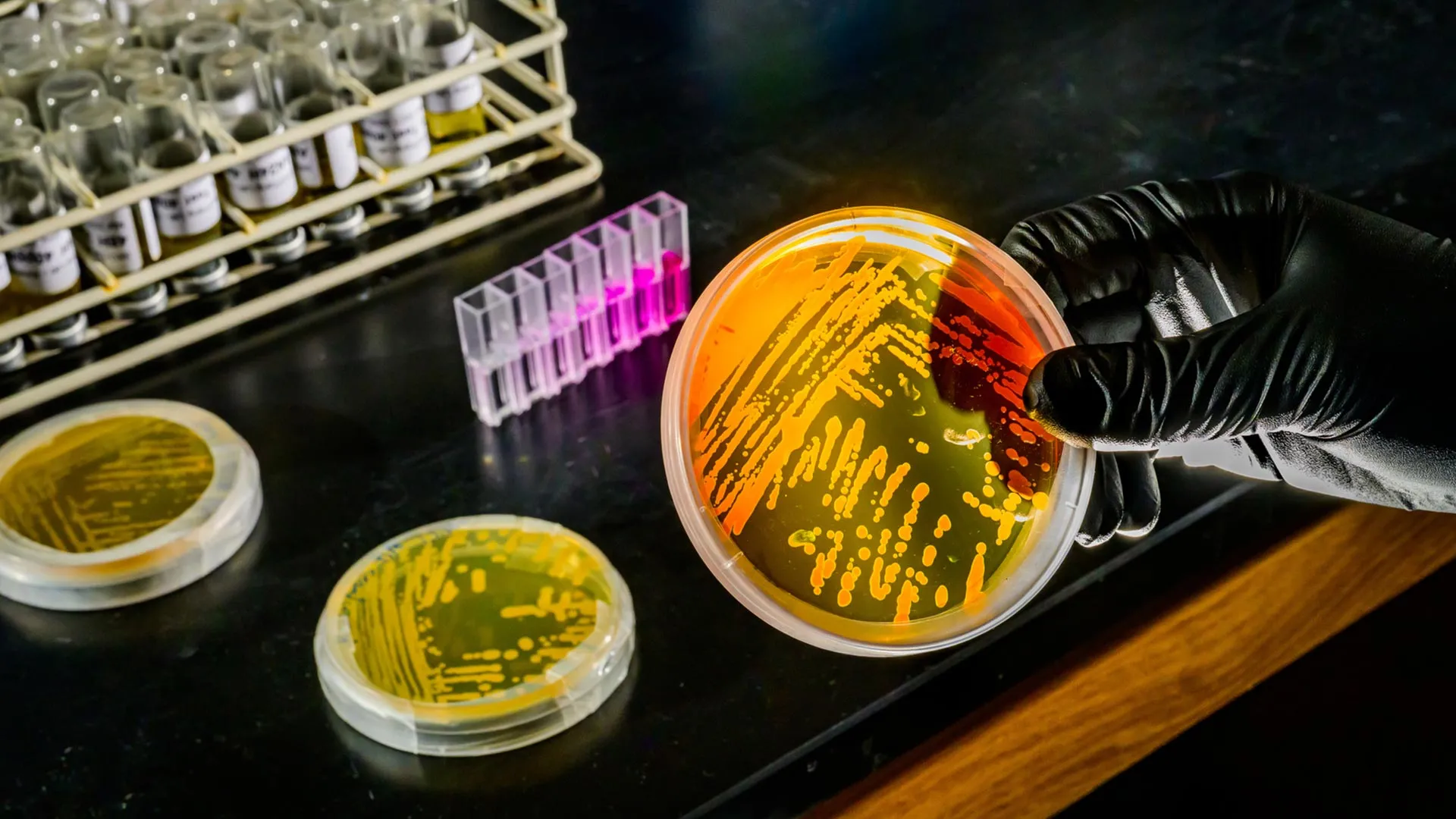
Rising ocean temperatures driven by marine heat waves and climate change are reaching deep waters, raising concerns about disruptions to the ocean's fragile chemical and biological systems. But new research suggests that a key marine microbe, Nitrosopumilus maritimus, may already be adjusting to warmer and more nutrient-poor conditions. Scientists believe these adaptable microorganisms, which rely heavily on iron and carry out ammonia oxidation, could significantly influence how nutrients are distributed throughout the oceans as the climate continues to change.
The research findings appear in the Proceedings of the National Academy of Sciences.
Microbes That Power Ocean Nutrient Cycles
Nitrosopumilus maritimus and closely related microbes make up about 30% of marine microbial plankton. Many scientists consider them essential to ocean chemistry because they drive reactions that support marine ecosystems. These archaea oxidize ammonia, a process that plays a central role in the ocean's nitrogen cycle.
By converting nitrogen into different chemical forms in seawater, these microbes regulate the growth of microbial plankton. These tiny organisms form the base of the marine food chain, meaning the activity of ammonia-oxidizing archaea ultimately helps sustain ocean biodiversity.
Deep-Sea Warming May Alter Iron Use
"Ocean-warming effects may extend to depths of 1,000 meters or more," said University of Illinois Urbana-Champaign microbiology professor Wei Qin. "We used to think that deeper waters were mostly insulated from surface warming, but now it is becoming clear that deep-sea warming can change how these abundant archaea use iron -- a metal they depend on heavily -- potentially affecting trace metal availability in the deep ocean."
Experiments Show Microbes Use Iron More Efficiently in Warmer Water
The research team, led by Qin and University of Southern California global change biology professor David Hutchins, conducted carefully controlled experiments designed to avoid trace metal contamination. They exposed pure cultures of Nitrosopumilus maritimus to different temperatures and varying levels of iron.
Their results showed that when temperatures increased under iron-limited conditions, the microbes required less iron and used it more efficiently. This finding indicates that the organisms can adjust their metabolism to cope with both higher temperatures and reduced iron availability.
Modeling Suggests a Larger Future Role in Ocean Chemistry
"We coupled these findings with global ocean biogeochemical modeling by Alessandro Tagliabue from the University of Liverpool," Qin said. "The results suggest that deep-ocean archaeal communities may maintain or even enhance their role in nitrogen cycling and primary production support across vast iron-limited regions in a warming climate."
Upcoming Ocean Expedition to Test Findings
Later this summer, Qin and Hutchins will serve as co-chief scientists on the research vessel Sikuliaq. The expedition will travel from Seattle to the Gulf of Alaska and then continue to the subtropical gyre, with a stop in Honolulu, Hawaii.
The voyage will include 20 additional researchers who will examine natural archaeal populations in the ocean. Their goal is to confirm the experimental results in real-world conditions and better understand how temperature changes and metal availability interact to shape microbial activity in the deep ocean.
Qin is also affiliated with the Carl R. Woese Institute for Genomic Biology.
The National Science Foundation, Simons Foundation, National Natural Science Foundation of China, University of Illinois Urbana-Champaign and the University of Oklahoma supported this research.
Story Source:
Materials provided by University of Illinois at Urbana-Champaign. Note: Content may be edited for style and length.
Journal Reference:
- Wei Qin, Alessandro Tagliabue, Lei Hou, Min Xu, Xiaopeng Bian, Dawn M. Moran, Duo Zhao, Qian Li, Matthew R. McIlvin, Yue Zheng, Shuh-Ji Kao, Yao Zhang, Mak A. Saito, Seth G. John, Fei-Xue Fu, David A. Hutchins. Ocean warming enhances iron use efficiencies of marine ammonia-oxidizing archaea. Proceedings of the National Academy of Sciences, 2026; 123 (10) DOI: 10.1073/pnas.2531032123
Cite This Page: