
Scientists discover tiny ocean fungus that kills toxic algae
A newly discovered marine fungus can kill toxic algae blooms, hinting at a hidden natural regulator in the ocean.
- Date:
- March 6, 2026
- Source:
- Yokohama National University
- Summary:
- Scientists have discovered a newly identified marine fungus that can infect and kill toxic algae responsible for harmful blooms. The microscopic parasite, named Algophthora mediterranea, attacks algae such as Ostreopsis cf. ovata, which produces toxins that can irritate the lungs, skin, and eyes of people exposed during coastal blooms. Remarkably, the fungus can infect several different algae species and even survive on pollen, suggesting it is far more adaptable than most known marine parasites.
- Share:
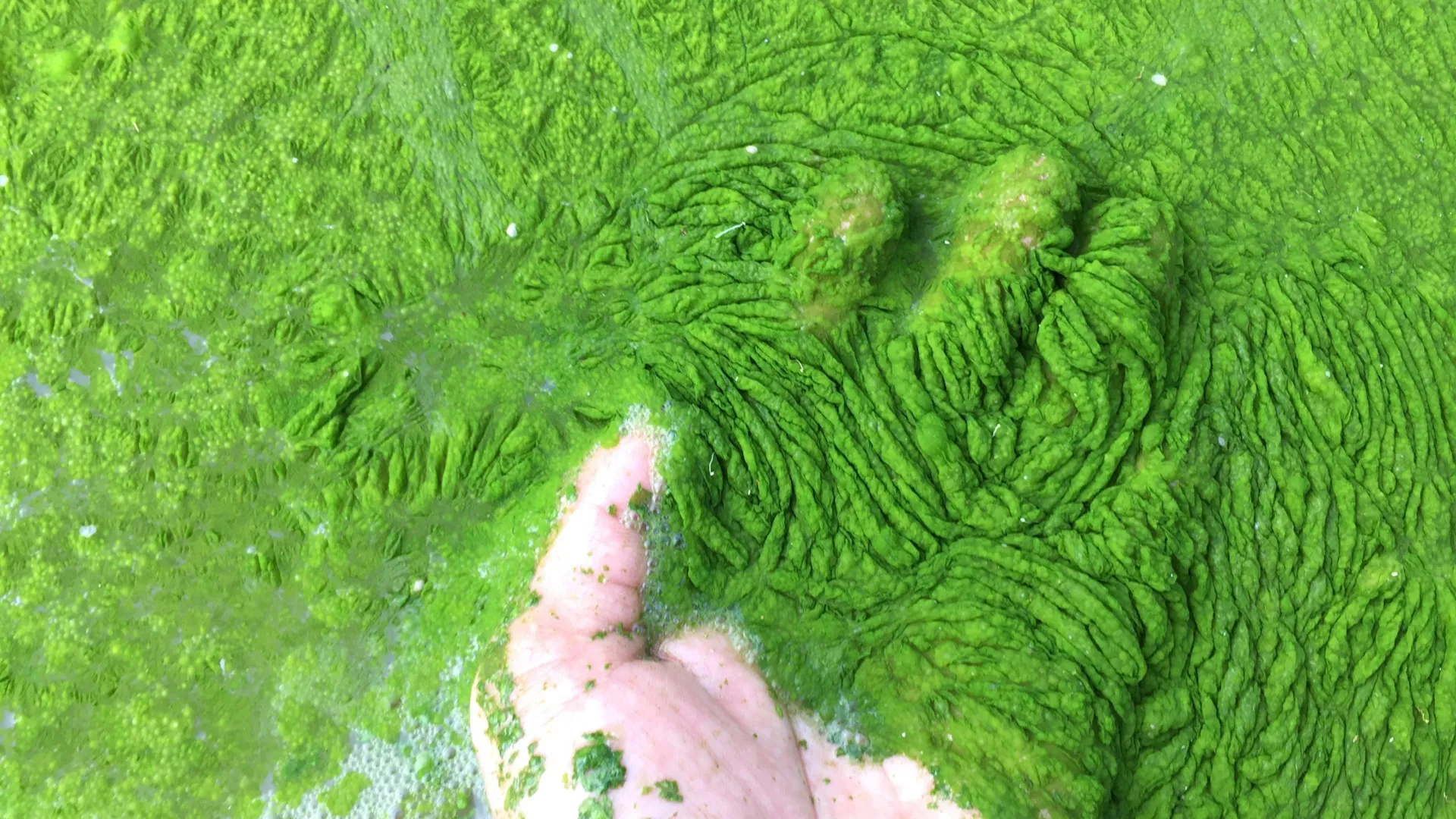
Researchers at Yokohama National University in Japan have identified a previously unknown species of marine fungus capable of killing harmful algae that form toxic blooms.
The organism, named Algophthora mediterranea, is a microscopic chytrid fungus that can infect a wide variety of hosts. Chytrids are a diverse group of aquatic fungi, and the discovery suggests they may influence marine ecosystems more strongly than scientists once believed.
The researchers found that this fungus acts as a lethal parasite in Ostreopsis cf. ovata, a species of algae responsible for toxic blooms that can negatively affect human health. The study describing the discovery was published in Mycologia.
Toxic Algae and Their Health Risks
Harmful algal blooms have become an increasing concern in oceans, rivers, and lakes around the world. These outbreaks occur when algae grow rapidly and excessively, often triggered by high nutrient levels and warmer water temperatures. Such blooms can degrade water quality, disrupt ecosystems, and release toxins that threaten both wildlife and people.
Large blooms of Ostreopsis cf. ovata have been reported more frequently in the Mediterranean over recent decades. This alga produces a toxin called ovatoxin (OVTX), which can cause symptoms in humans including runny nose, coughing, shortness of breath, conjunctivitis, itching, and dermatitis.
A Newly Identified Algae Killing Fungus
Algophthora mediterranea was first detected in Spanish seawater in 2021 by scientists from the Institut de Ciències del Mar (ICM) in Spain, led by Dr. E. Garcés and Dr. A. Reñé. The species was later formally described by Professor Maiko Kagami and PhD student Núria Pou-Solà at Yokohama National University.
Genetic analysis confirmed that the organism represents not only a newly identified species but also an entirely new genus. The researchers named the genus Algophthora by combining the word 'alga' with the Greek word 'phthora', meaning 'destruction'.
Scientists observed that the fungus parasitizes cells of O. cf. ovata and can kill them within a few days. Additional experiments showed that it can also infect several other algae species and can even feed on pollen grains.
"Although previous DNA-based surveys have revealed a wide diversity of marine fungi, only a handful of parasitic species have ever been isolated, and their ecology has remained largely unknown," said Pou-Solà. "Our newly described species stands out for its unusually broad host range and distinctive feeding strategy, demonstrating that some chytrid fungi possess remarkable ecological resilience."
Studying the Parasite in Detail
To better understand the organism, the researchers isolated the fungus and recorded time-lapse images every ten minutes over a four-day period. They also examined samples using scanning electron microscopy (SEM), a technique in which a focused beam of electrons scans the surface of a specimen to create highly detailed images. The fungus was also analyzed through DNA sampling.
"The next step is to investigate how such versatile parasites operate within complex marine communities," said Kagami. "Ultimately, our goal is to understand how parasitic fungi contribute to -- and potentially shape -- the ocean's biogeochemical cycles, an ecosystem role that has been largely overlooked until now."
"In the future we aim to build the necessary knowledge to improve our predictive capacity and support the management of harmful algal blooms," adds Pou-Solà.
Story Source:
Materials provided by Yokohama National University. Note: Content may be edited for style and length.
Journal Reference:
- Núria Pou-Solà, Kensuke Seto, Alan Denis Fernández-Valero, Jordina Gordi, Esther Garcés, Albert Reñé, Maiko Kagami. Algophthora mediterranea , gen. et sp. nov.: Novel dinoflagellate- and diatom-infecting generalist marine chytrid from the Mediterranean Sea. Mycologia, 2025; 118 (1): 10 DOI: 10.1080/00275514.2025.2577604
Cite This Page: