
Study finds wild release can be deadly for rescued slow lorises
For rescued slow lorises, returning to the wild can be a deadly gamble.
- Date:
- March 3, 2026
- Source:
- Anglia Ruskin University
- Summary:
- Returning rescued slow lorises to the wild may sound like a conservation success, but a new study shows it can turn deadly. Researchers tracked nine released animals and found that only two survived, with most killed in territorial attacks by other lorises. Scientists say better planning is essential to ensure wildlife releases actually help endangered species.
- Share:
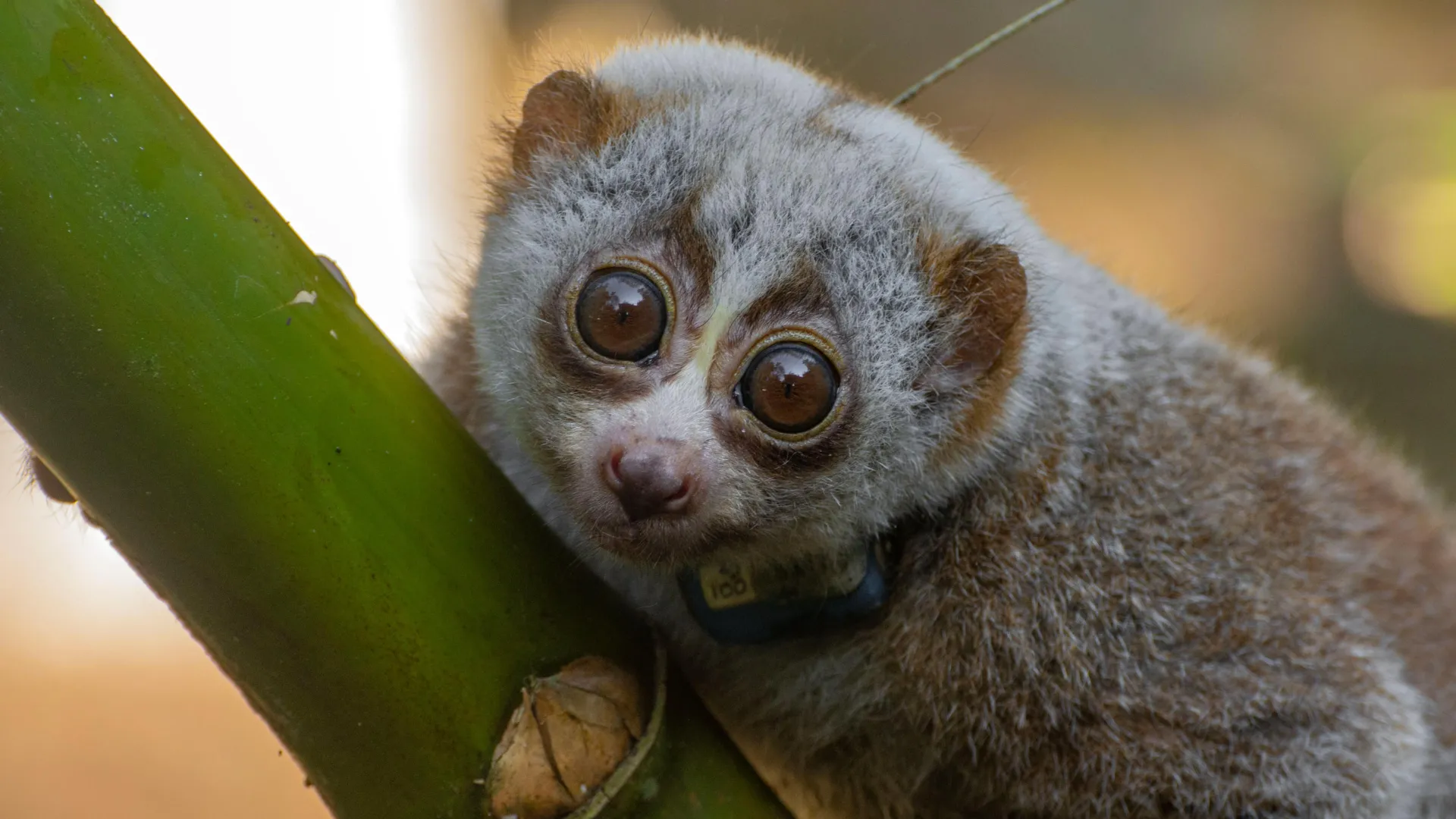
A new scientific study suggests that returning rescued wildlife to natural habitats does not always end in success. In some situations, animals released after time in captivity face serious risks, and the wild can become what researchers describe as a "death trap."
The findings appear in the journal Global Ecology and Conservation. The research was carried out by primatologist Professor Anna Nekaris OBE of Anglia Ruskin University along with collaborators from the conservation group Plumploris e.V. and the University of Western Australia. Their work examined the fate of Bengal slow lorises (Nycticebus bengalensis) that were released in Bangladesh.
Slow Lorises and the Illegal Pet Trade
Slow lorises are known for their large eyes and gentle looking faces, features that have unfortunately made them popular in the illegal wildlife trade. Because of this demand, they rank among the most heavily trafficked primates in the world.
All slow loris species are listed by the International Union for Conservation of Nature as Critically Endangered, Endangered, or Vulnerable. Their threatened status means they are frequently rescued and later released as part of conservation efforts aimed at rebuilding wild populations.
Tracking Bengal Slow Lorises After Release
Despite these good intentions, the new research shows that release programs can sometimes end tragically. Scientists fitted nine Bengal slow lorises with radio collars and followed their movements after releasing them into a national park in northeastern Bangladesh. The park has been used for previous wildlife releases.
The results were stark. Only two of the nine animals survived after returning to the forest. Three died within just 10 days of release, and four more died within six months. Researchers recovered four of the seven bodies, and all showed evidence that they had been killed by other slow lorises.
Territorial Conflicts and Venomous Bites
Slow lorises are extremely territorial animals. They are also the only venomous primates in the world, using specialized teeth to deliver a toxic bite. The animals recovered during the study had obvious bite wounds on the head, face, and digits, indicating that deadly territorial encounters were responsible for their deaths.
The research also revealed that animals kept in captivity for longer periods tended to survive for fewer days after release. In addition, the released lorises moved around more and appeared more alert than wild Bengal slow lorises normally do.
The two animals that survived traveled across larger areas than those that died. This pattern suggests that survival depended on leaving established territories and avoiding confrontations with resident lorises.
Rethinking Wildlife Rescue and Release
Large and charismatic animals such as big cats often receive intensive monitoring after they are released. In contrast, many smaller species are not closely tracked, meaning the outcomes of their releases frequently remain unknown.
The researchers stress that successful wildlife releases require careful planning. Evaluating the suitability of the release site and the condition of each animal is essential. Detailed habitat assessments, long term monitoring, and rehabilitation guidelines tailored to each species can improve the chances of success.
Senior author Anna Nekaris OBE, Professor of Ecology, Conservation and Environment at Anglia Ruskin University in Cambridge, England, and head of the Little Fireface Project, said: "It's assumed that returning confiscated or rescued animals to the wild is always a positive conservation story. Our research shows that for highly territorial species like slow lorises, releasing them into areas that are already densely populated can be a death trap.
"Many rescued endangered species are often released because the public expects it, but for animals such as the Bengal slow loris, this is not always the best course of action. Without fully understanding the animal's behaviour, its time spent in captivity and the density of resident populations at the release site, reintroductions may do more harm than good."
Lead author Hassan Al-Razi, the team leader of Plumploris e.V. Bangladesh, said: "Rescue and release have become an increasingly common practice in Bangladesh. Many wild animals, including slow lorises, are rescued and subsequently released back into the wild.
"However, in many cases, these releases are conducted inappropriately. For forest-dwelling species, release sites are often selected based on logistical convenience rather than ecological suitability. As a result, certain forests have effectively become dumping grounds for rescued animals and are no longer appropriate release sites.
"Although our research has focused on the Bengal slow loris and demonstrated the consequences of such practices, we believe similar patterns likely affect many other species."
Story Source:
Materials provided by Anglia Ruskin University. Note: Content may be edited for style and length.
Journal Reference:
- Hassan Al-Razi, Marjan Maria, Rifat Ahmmed Rabbi, Mst Sadia Afrin Shimu, Shohanur Rahman, Rejoana Sultana, Ali Akbar, Mahedi Hasan, Jahidul Kabir, Md. Rezaul Karim Chowdhury, Marcel Stawinoga, K.A.I. Nekaris. A new home is a death trap: Reinforcement at a translocation release site leads to fatalities in an endangered primate species. Global Ecology and Conservation, 2026; e04072 DOI: 10.1016/j.gecco.2026.e04072
Cite This Page: