
A fish that ages in months reveals how kidneys grow old
In a fast-aging fish, a widely prescribed diabetes drug kept kidneys younger and healthier.
- Date:
- January 30, 2026
- Source:
- MDI Biological Laboratory
- Summary:
- A fast-aging fish is giving scientists a rare, accelerated look at how kidneys grow old—and how a common drug may slow that process down. Researchers found that SGLT2 inhibitors, widely used to treat diabetes and heart disease, preserved kidney structure, blood vessels, and energy production as the fish aged, while also calming inflammation. The results help explain why these drugs protect kidneys and hearts so reliably in people, even beyond blood sugar control.
- Share:
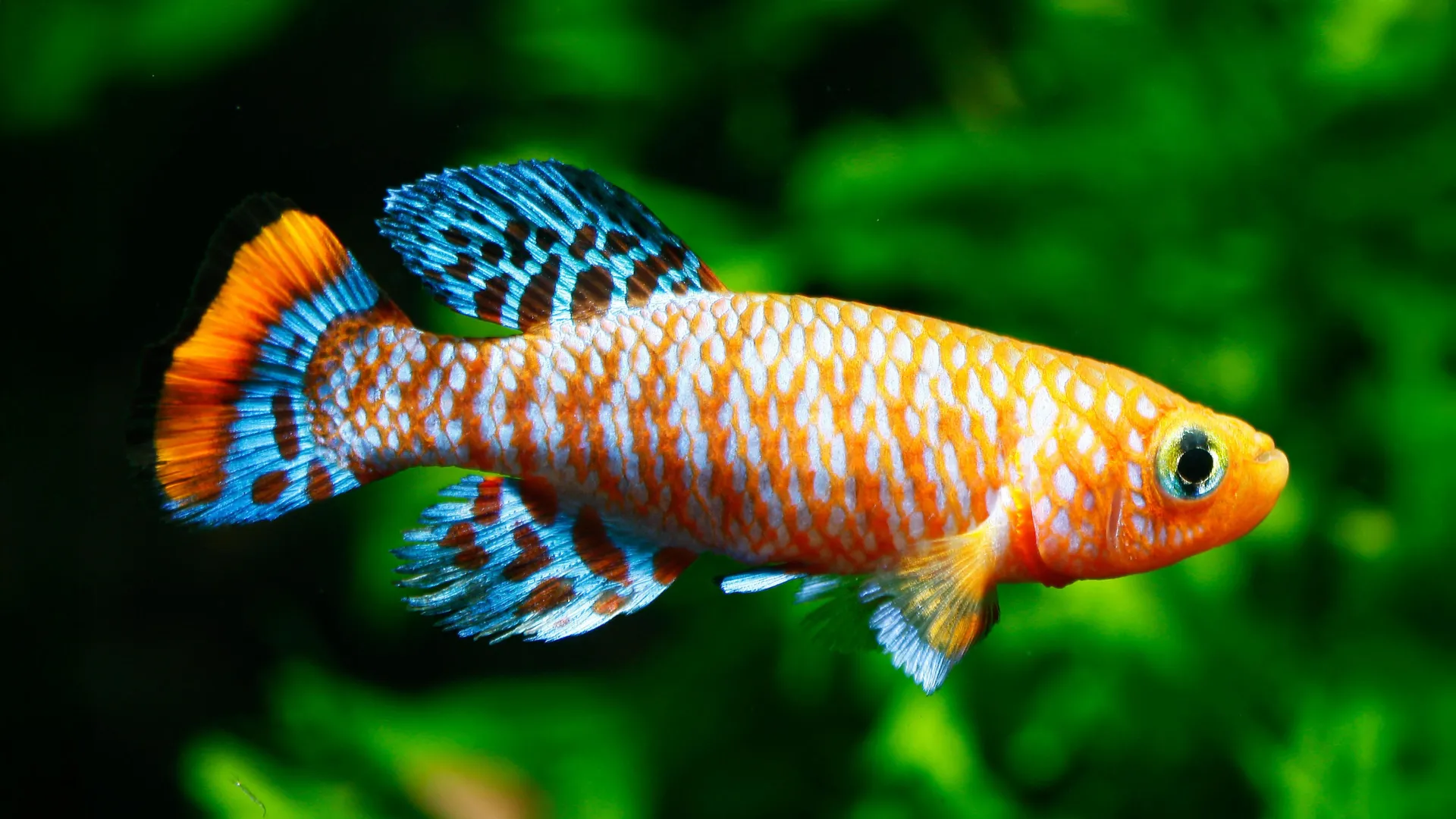
A new study published in Kidney International reports that a class of medications called SGLT2 inhibitors helped prevent age-related damage to kidney structure and function in the African turquoise killifish. This small vertebrate completes its entire lifespan in only a few months, making it a unique model for studying aging. The results shed light on the biological processes behind the kidney and heart protection these drugs provide in people, effects that go beyond their original purpose of lowering blood sugar.
The research also positions the African turquoise killifish as a valuable new tool for exploring how organs change with age and for rapidly testing treatments that could help preserve organ health later in life.
A Fish That Recreates Decades of Aging in Months
The African turquoise killifish is among the fastest-aging vertebrates known, living only four to six months. In this study, an international team of 13 scientists from MDI Biological Laboratory, Hannover Medical School, and Colby College found that the fish develops kidney changes over time that closely resemble those seen in aging human kidneys.
As the fish grew older, their kidneys showed a loss of tiny blood vessels, damage to the filtration barrier, rising inflammation, and disruptions in how kidney cells produce and regulate energy. These changes are well-known features of kidney aging and disease in humans.
Because the fish experiences these processes so quickly, researchers can observe the full progression of kidney aging in a short time. This makes it possible to test potential therapies far faster than in longer-lived animals such as mice.
A Widely Used Drug Examined From a New Angle
After establishing the killifish as a reliable aging model, the researchers turned their attention to sodium-glucose cotransporter-2 (SGLT2) inhibitors. These drugs are commonly prescribed to treat diabetes-related heart disease and chronic kidney disease.
"These drugs are already known to protect the heart and kidneys in patients with and without diabetes," said Hermann Haller, M.D., senior author of the study and President of MDI Biological Laboratory. "What has been less clear is how they do so."
The study showed that fish treated with SGLT2 inhibitors maintained healthier kidneys as they aged. Their kidneys retained denser networks of capillaries, stronger filtration barriers, and more stable energy production within cells.
The treatment also helped preserve communication between different types of kidney cells and reduced age-related inflammatory activity at the genetic level.
"Together, these upstream effects provide a biological explanation for clinical observations that the benefits of SGLT2 inhibitors often exceed what would be expected from glucose control alone," Haller said. "They help explain why these drugs consistently reduce kidney and cardiovascular events across diverse patient populations."
Preserving Blood Vessels and Cellular Energy
In untreated fish, one of the most striking signs of kidney decline was the gradual loss of capillaries, a process known as vascular rarefaction. As these small blood vessels disappeared, kidney cells shifted away from efficient, mitochondria-based energy production and relied more heavily on less effective backup systems.
Fish that received SGLT2 inhibitors showed a very different pattern. Their kidneys retained healthier capillary networks and displayed gene activity that more closely matched that of younger animals. These so-called "youthful transcriptional profiles" were linked to better energy metabolism and lower levels of inflammation.
Speeding Up Aging Research With Human Relevance
The study's first author, Anastasia Paulmann, M.D., previously worked as a postdoctoral researcher at MDI Bio Lab and also holds a clinical position at Hannover Medical School. She established and maintained the killifish colony at the Lab's Kathryn W. Davis Center for Regenerative Biology and Aging. According to Paulmann, the model offers a powerful way to accelerate aging research while keeping it closely connected to human health.
"Seeing these effects emerge so clearly in a rapid-aging model like our killifish was striking," Paulmann said. "What impressed me most was how a seemingly simple drug influences so many interconnected systems within the kidney -- from blood vessels and energy metabolism to inflammation and overall function."
By condensing decades of kidney aging into just a few months, the model provides a practical way to evaluate how existing and experimental treatments affect organ resilience over time. This approach can help researchers identify the most promising therapies before moving them into human clinical trials.
The team plans follow-up studies to determine whether SGLT2 inhibitors can help repair kidney tissue after age-related damage has already taken place. They also aim to explore how the timing and duration of treatment shape long-term outcomes.
This future work will be supported by expanded and renovated laboratory facilities at MDI Bio Lab as part of the institution's MDI Bioscience initiative, which focuses on translating basic scientific discoveries into strategies that improve human health.
This research was supported by the National Institutes of Health (P30GM154610, P20GM203423), the Morris Discovery Fund, the Scott R. McKenzie Foundation, and MDI Biological Laboratory.
Story Source:
Materials provided by MDI Biological Laboratory. Note: Content may be edited for style and length.
Journal Reference:
- Anastasia Paulmann, Matthew D. Cox, Tom Boewer, Hannah M. Somers, Heath Fuqua, Ryan P. Seaman, Joel H. Graber, Anchal Mahajan, Cory P. Johnson, Laura L. Beverly-Staggs, Sonia Sandhi, Heiko Schenk, Hermann Haller. Sodium-glucose co-transporter 2 inhibition improves age-dependent kidney microvascular rarefaction. Kidney International, 2025; DOI: 10.1016/j.kint.2025.12.011
Cite This Page: