
October’s night sky is full of cosmic tricks and treats
- Date:
- October 8, 2026
- Source:
- NASA
- Summary:
- October’s skies are packed with celestial surprises, from Jupiter disappearing behind the Moon to two meteor showers lighting up the darkness. NASA highlights four must-see events, including shooting stars from Halley’s Comet and a glowing Hunter’s Moon just before Halloween.
- Share:
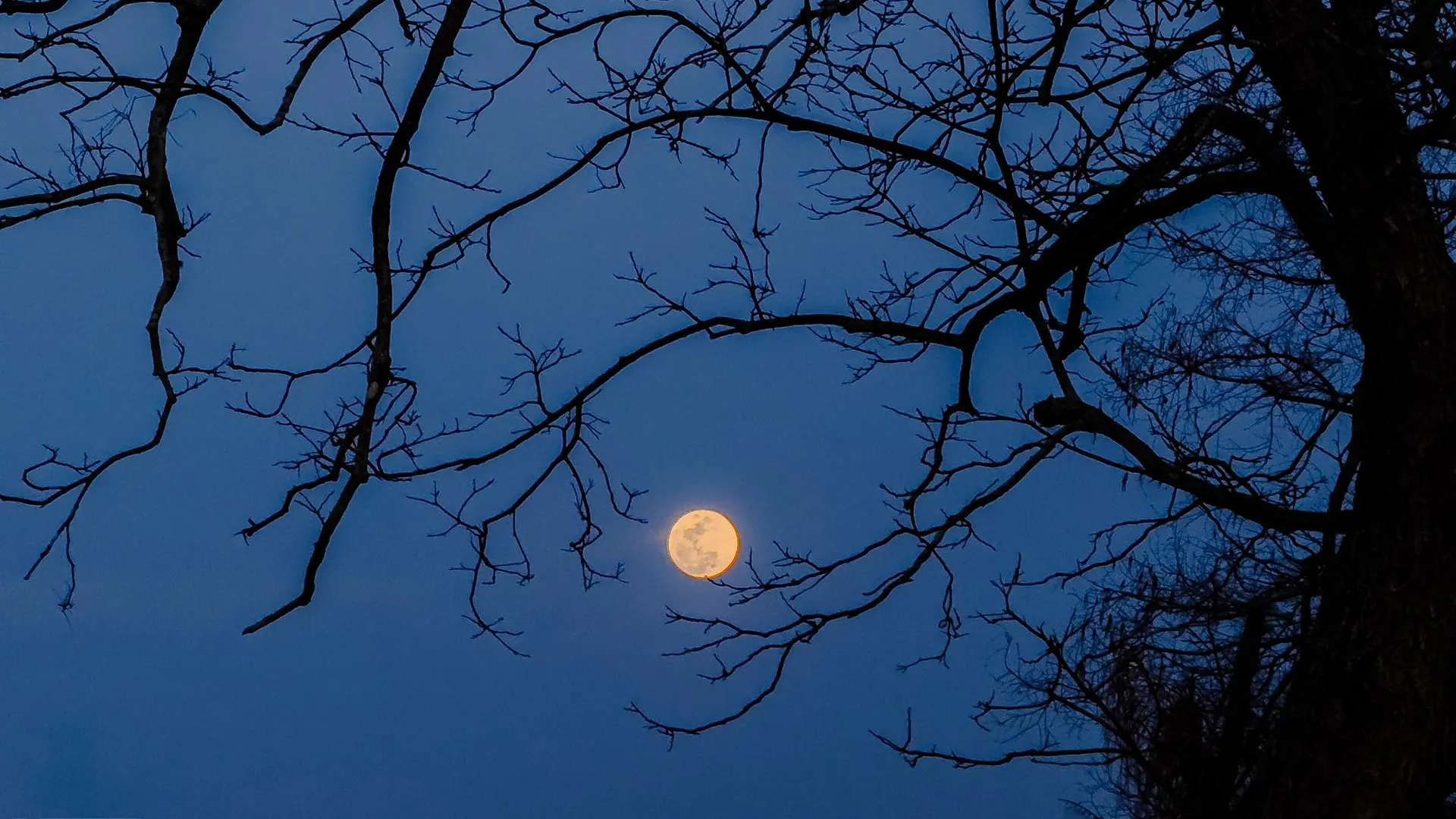
October is bringing a spectacular lineup of celestial events, including a disappearing planet, two meteor showers, and a bright full Moon just in time for Halloween. As autumn days grow shorter and darkness arrives earlier, the night sky offers more opportunities to witness some remarkable astronomical sights.
NASA has highlighted four events worth watching this month, ranging from Jupiter briefly vanishing behind the Moon to shooting stars created by debris from Halley's Comet. With crisp autumn evenings and a little luck, skywatchers can enjoy several of these displays without any special equipment.
Jupiter Disappears Behind the Moon on October 6
Before sunrise on Tuesday, October 6, skywatchers in parts of North America had an opportunity to witness an unusual celestial disappearing act. Jupiter, the largest planet in our solar system, slipped behind the Moon's slender crescent and remained hidden for approximately an hour before coming back into view.
Astronomers call this phenomenon a lunar occultation. It happens when the Moon moves directly between Earth and a more distant object, temporarily blocking our view. Despite its mysterious-sounding name, occultation simply refers to one celestial object concealing another.
The event was visible to the naked eye, although binoculars offered a more detailed look. Observers using optical equipment could also potentially watch some of Jupiter's moons disappear behind the lunar edge and emerge again.
Viewing opportunities depended on location, with the occultation visible across parts of eastern and central North America. The timing varied geographically, with the event occurring during the early morning hours, around 4 a.m. EDT in some locations.
Draconid Meteor Shower Peaks October 8 and 9
The next celestial attraction comes on the evening of Thursday, October 8, when the Draconid meteor shower reaches its peak. Favorable viewing beginning around 9 p.m. EDT, and the display continues into the early hours of Friday, October 9.
Unlike many meteor showers that are best observed after midnight, the Draconids offer a convenient opportunity to see shooting stars soon after nightfall. That makes them particularly appealing to casual observers who would rather not stay awake until dawn.
Conditions are especially promising this year because the Moon is approaching its new phase. With little moonlight to brighten the sky, even relatively faint meteors should be easier to detect.
The shower gets its name from Draco, a constellation representing a dragon. Although the name might sound like something from a Halloween horror story involving a certain famous vampire, it actually refers to the constellation from which the meteors appear to originate.
The Draconids are generally a modest display, typically producing only a handful of visible meteors each hour. For the best chance of spotting them, head somewhere away from bright city lights, allow your eyes to adjust to the darkness, and scan the open sky for brief streaks of light.
Orionid Meteor Shower Brings Debris From Halley's Comet
Another opportunity to catch shooting stars arrives on October 21, when the Orionid meteor shower reaches its annual peak.
These meteors have a particularly fascinating origin. They are tiny fragments of material left behind by Halley's Comet during its journeys through the solar system. When Earth travels through this trail of ancient comet debris, the particles enter our atmosphere at tremendous speeds, creating bright streaks of light as they burn up.
For observers in suburban areas with some artificial lighting, NASA estimates that approximately 3 to 6 meteors may be visible each hour. People watching from darker locations could see somewhat more.
The Orionids take their name from Orion, the famous hunter constellation, because their meteors appear to radiate from that region of the sky. Orion is also home to Betelgeuse, an enormous red supergiant star recognizable by its reddish appearance (but don't say that name three times in a row!).
There is one potential obstacle to this year's display. The Moon will be in its waxing gibbous phase, meaning more than half of its visible surface will be illuminated. Its brightness could make some of the dimmer meteors difficult to spot.
Fortunately, viewing conditions should improve after the Moon sets at approximately 3 a.m. local time. By then, Orion will also be higher in the sky, creating a better opportunity to catch meteors during the hours before sunrise.
October's Hunter's Moon Lights Up the Halloween Sky
October's final major celestial highlight is the Hunter's Moon, which reaches its full phase on October 26 in Universal Time. For observers in much of North America, the Moon will appear full on the evening of Sunday, October 25.
The name Hunter's Moon comes from traditions associated with the changing autumn season. As crops were harvested, fields became more open, and daylight hours shortened, hunters could take advantage of the bright moonlight to locate and follow animals after sunset.
The Moon will remain a prominent feature of the night sky in the days following its full phase. As Halloween approaches, it will gradually transition into a waning gibbous Moon, with its illuminated portion slowly decreasing each night.
Its lingering glow will provide a fitting backdrop for the final evenings of October, bringing NASA's month of celestial tricks and treats to a memorable close.
Cite This Page: