
Scientists accidentally discover a genetic code that breaks the rules of life
- Date:
- October 8, 2026
- Source:
- Earlham Institute
- Summary:
- Scientists accidentally discovered a microscopic organism with a genetic code that breaks a rule researchers thought was nearly universal. While testing a new DNA sequencing technique, they examined a previously unknown protist collected from a freshwater pond at Oxford University. To their surprise, the organism uses two genetic signals that normally mark the end of a gene to encode two entirely different amino acids instead. These signals were previously thought to evolve together, making the discovery particularly remarkable.
- Share:
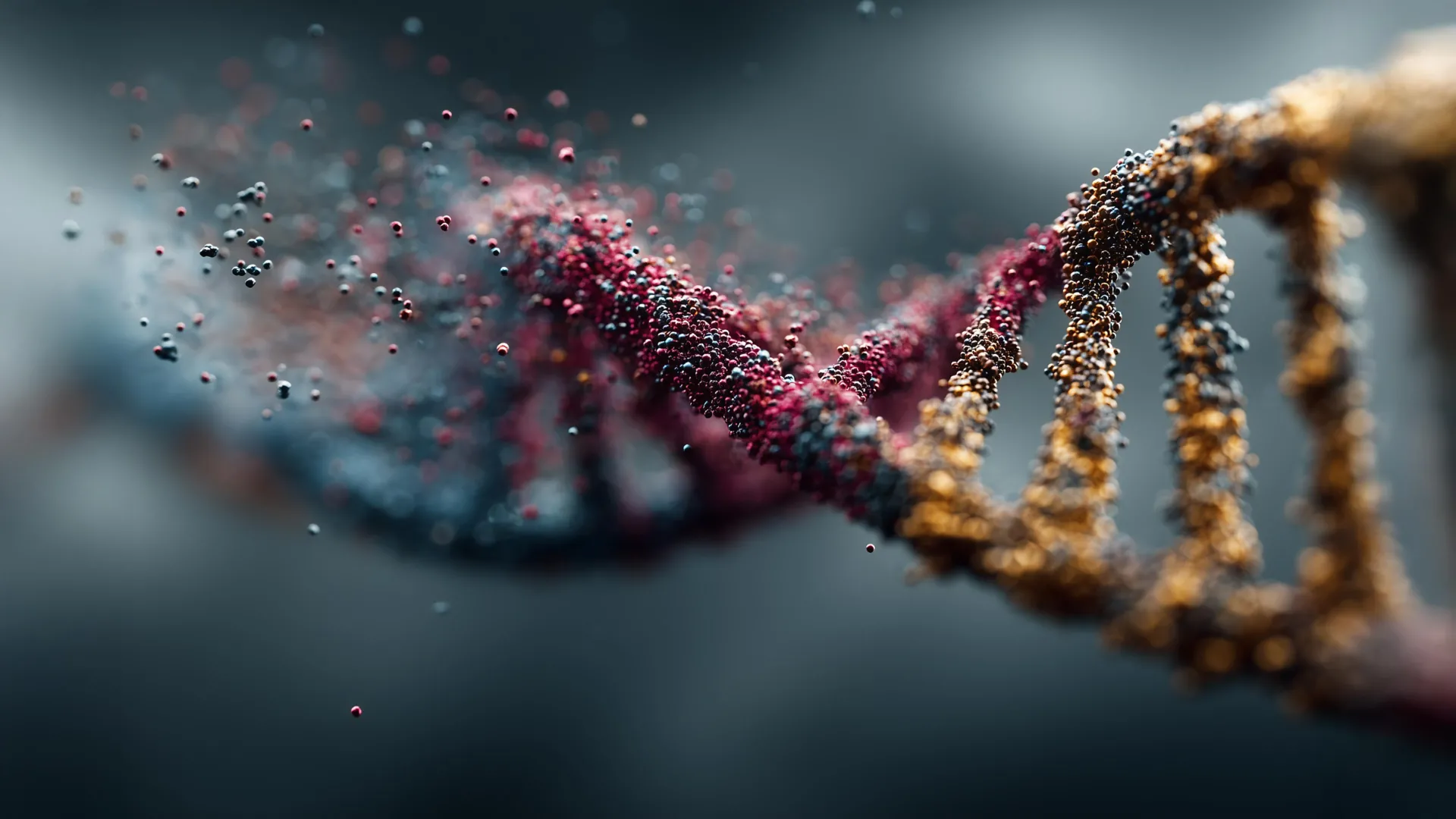
A routine experiment involving a microscopic organism from a freshwater pond led scientists to an extraordinary genetic discovery. The tiny creature was found to interpret DNA instructions in a way researchers had never documented before, challenging a long held assumption about how the genetic code works.
The surprise came when scientists examined a previously unknown protist called Oligohymenophorea sp. PL0344. Two genetic signals that ordinarily tell cells to stop making proteins had taken on completely different functions. Even more remarkably, the signals had been reassigned to two different amino acids, breaking a pattern scientists believed was closely linked by evolution.
The discovery, published in PLOS Genetics in October 2023, revealed an unexpected level of flexibility in one of life's most fundamental biological systems. Subsequent research has uncovered additional genetic code variations in related microorganisms, suggesting that many more surprises could be waiting in the microscopic world.
An Accidental Genetic Discovery in a Freshwater Pond
Dr. Jamie McGowan, who was a postdoctoral scientist at the Earlham Institute, made the discovery while studying a protist collected from a pond at Oxford University Parks in England.
The project had originally been designed to test a DNA sequencing method capable of analyzing extremely small quantities of genetic material, potentially from just one cell. McGowan worked alongside scientists at the Earlham Institute and a research group led by Professor Thomas Richards at the University of Oxford.
Rather than investigating genetic code evolution, the researchers were trying to improve the tools available for studying organisms that are difficult to grow and analyze in laboratories.
But when they assembled and examined the organism's genome, they noticed something unexpected. The protist belonged to a previously unidentified species, and its genetic instructions appeared to operate according to an unusual set of rules.
Dr. McGowan said: "It's sheer luck we chose this protist to test our sequencing pipeline, and it just shows what's out there, highlighting just how little we know about the genetics of protists."
What Are Protists, and Why Are They So Unusual?
Protists are among the most diverse and least understood groups of organisms on Earth. Many consist of just one cell and are too small to see without a microscope. Familiar examples include amoebas, various algae, and diatoms, which are microscopic organisms often found in aquatic environments.
However, not all protists are tiny. The broad category also includes organisms such as kelp, slime molds, and red algae, some of which grow into large, complex structures.
The group is so varied that scientists generally define its members by excluding other major branches of life.
"The definition of a protist is loose -- essentially it is any eukaryotic organism which is not an animal, plant, or fungus," said Dr. McGowan. "This is obviously very general, and that's because protists are an extremely variable group.
"Some are more closely related to animals, some more closely related to plants. There are hunters and prey, parasites and hosts, swimmers and sitters, and there are those with varied diets while others photosynthesize. Basically, we can make very few generalizations."
Eukaryotes are organisms whose cells contain a nucleus, a specialized compartment that houses most of their genetic material. Humans, other animals, plants, fungi, and protists all belong to this broad category.
The organism at the center of the discovery belongs to a group of protists called ciliates. These creatures typically swim using tiny hair-like structures known as cilia, which move in coordinated patterns to propel them through water.
Ciliates are widespread in freshwater and marine environments. They are also particularly interesting to geneticists because some have evolved unusual ways of interpreting DNA instructions.
How the Genetic Code Tells Cells When to Stop
To understand why this discovery was so unexpected, it helps to know how cells turn genetic information into proteins.
DNA acts like an instruction manual, storing the information that cells need to build and maintain their structures. However, those instructions must be translated into physical molecules before they can carry out biological functions.
The process begins when a section of DNA is copied into messenger RNA, a molecule that carries genetic instructions to the cell's protein-producing machinery.
A structure called the ribosome then reads the RNA sequence three letters at a time. Each group of three letters is known as a codon, and most codons specify one of the amino acids that serve as the building blocks of proteins.
As amino acids are connected, they form a chain that can fold into a three-dimensional structure. The resulting protein may function as an enzyme, provide structural support, transport molecules, or perform countless other cellular tasks.
In DNA notation, a protein-coding sequence commonly begins with a start codon (ATG) and ends with a stop codon (normally TAA, TAG, or TGA).
These stop codons work like punctuation marks. They tell the ribosome that it has reached the end of the instructions for a particular protein and should release the completed chain.
When the instructions are copied into RNA, the letter T is replaced by U. Consequently, the corresponding stop codons in RNA are written as UAA, UAG, and UGA.
Across most forms of life, these signals have maintained the same basic functions for an extraordinarily long period of evolutionary history.
But nature has occasionally found ways around the usual rules.
Scientists Find Two Genetic Stop Signals With Different Meanings
Researchers have known for decades that some organisms use modified versions of the genetic code. These variations are uncommon across life as a whole, but ciliates are particularly rich in examples.
In certain ciliates, stop codons have evolved to specify amino acids instead of terminating protein production.
Until relatively recently, one pattern appeared especially consistent. Two of the conventional stop codons, TAA and TAG, almost always retained the same meaning. When their functions changed, both generally came to specify the same amino acid.
This suggested that the two signals were constrained to evolve together.
"In almost every other case we know of, TAA and TAG change in tandem," explained Dr. McGowan. "When they aren't stop codons, they each specify the same amino acid."
The genome of Oligohymenophorea sp. PL0344 told a different story.
Instead of functioning as stop signals, TAA and TAG appeared to encode entirely different amino acids. TAA specified lysine, while TAG specified glutamic acid.
Both amino acids are common components of proteins, but they have different chemical properties and biological roles.
Meanwhile, TGA remained the organism's only conventional stop codon.
The findings represented the first reported example of a genetic code in which both TAA and TAG had been reassigned to encode two different amino acids.
That distinction matters because it shows that the evolutionary relationship between the two codons is not as restrictive as scientists had assumed.
"This is extremely unusual," Dr. McGowan said. "We're not aware of any other case where these stop codons are linked to two different amino acids. It breaks some of the rules we thought we knew about gene translation -- these two codons were thought to be coupled.
How This Microscopic Organism Makes the Unusual Code Work
Further investigation revealed clues about how the protist manages to function with its unconventional genetic instructions.
The researchers identified specialized transfer RNA genes associated with the reassigned codons. Transfer RNA molecules act as interpreters during protein production, helping match the instructions in messenger RNA with the correct amino acids.
Their presence supported the conclusion that the unusual genetic code was a genuine feature of the organism rather than a sequencing error.
The team also found an unexpectedly high number of TGA stop codons in DNA regions immediately following protein-coding sequences.
These additional stop signals could act as a backup system. If the ribosome accidentally continues reading beyond the intended end of a protein, a second stop codon may prevent it from extending the protein too far.
That protection could be particularly valuable in an organism that relies on only one of the three conventional stop codons.
Although the researchers could not establish exactly how the unusual code evolved, the findings demonstrated that the machinery responsible for translating genetic information can be far more adaptable than previously appreciated.
Follow-Up Research Reveals More Genetic Code Surprises
The original discovery also opened the door to a broader question: How many other microorganisms are using genetic codes that scientists have not yet recognized?
In December 2024, McGowan and colleagues published additional findings in PLOS Genetics showing that unusual genetic code changes had occurred independently in several other ciliate lineages.
The team investigated genetic information from a group of ciliates known as Phyllopharyngea, including genomic data gathered through the TARA Oceans project, an international effort to study marine life and its genetic diversity.
Their analysis identified three previously uncultivated ciliate species in which UAG, normally a stop codon, appeared to specify leucine instead.
These organisms came from samples associated with the Arctic and Southern Oceans.
The researchers also examined existing genomic datasets and identified two additional ciliates, Hartmannula sinica and Trochilia petrani, in which UAG appeared to encode glutamine.
Evolutionary comparisons suggested that these changes arose independently on at least three occasions.
Importantly, the genetic codes were not identical to the unusual system found in Oligohymenophorea sp. PL0344. In the five ciliates examined in the 2024 research, UAA remained a stop signal while UAG had acquired a different meaning.
Even so, the findings provided further evidence that these two genetic signals do not always have to evolve together.
Rather than being an isolated curiosity, the original discovery had helped illuminate a much wider pattern of genetic code flexibility among ciliates.
Scientists Are Still Uncovering Hidden Protist Diversity
The search for unexpected biology in microscopic organisms has continued beyond the genetic code itself.
In March 2026, researchers from the Earlham Institute and the University of Oxford reported another discovery made possible by techniques designed to sequence individual cells.
Their study, published in Microbial Genomics, investigated Bodo, a group of common protists found in freshwater, brackish water, and soil.
By analyzing just seven uncultured cells, the scientists identified three previously unrecognized evolutionary lineages, each associated with its own distinct bacterial partner living inside the organism.
The work did not demonstrate the same genetic code changes found in PL0344. Instead, it showed how much biological diversity can remain hidden when researchers rely primarily on organisms that are easy to cultivate in laboratories.
Together with the genetic code discoveries, these findings demonstrate the value of examining microorganisms that have received relatively little scientific attention.
Better sequencing technologies could reveal additional unconventional genetic codes, unexpected relationships between organisms, and previously unknown ways that cells function.
Nature May Have More Genetic Rules to Break
For scientists, unusual genetic codes offer more than biological curiosities. They provide opportunities to investigate why the genetic code is so consistent across most forms of life and how evolutionary changes can sometimes alter its fundamental instructions.
Understanding these natural variations could also inform efforts in synthetic biology, where researchers attempt to modify genetic codes to give cells new capabilities or enable them to produce proteins with unusual properties.
However, the evolutionary forces responsible for the extraordinary diversity of genetic codes among ciliates remain incompletely understood.
What began as a routine sequencing experiment ultimately revealed that even some of biology's most familiar rules have remarkable exceptions.
As McGowan observed:
"Scientists attempt to engineer new genetic codes -- but they are also out there in nature. There are fascinating things we can find, if we look for them.
"Or, in this case, when we are not looking for them."
Story Source:
Materials provided by Earlham Institute. Note: Content may be edited for style and length.
Journal References:
- Jamie McGowan, Estelle S. Kilias, Elisabet Alacid, James Lipscombe, Benjamin H. Jenkins, Karim Gharbi, Gemy G. Kaithakottil, Iain C. Macaulay, Seanna McTaggart, Sally D. Warring, Thomas A. Richards, Neil Hall, David Swarbreck. Identification of a non-canonical ciliate nuclear genetic code where UAA and UAG code for different amino acids. PLOS Genetics, 2023; 19 (10): e1010913 DOI: 10.1371/journal.pgen.1010913
- Jamie McGowan, Thomas A. Richards, Neil Hall, David Swarbreck. Multiple independent genetic code reassignments of the UAG stop codon in phyllopharyngean ciliates. PLOS Genetics, 2024; 20 (12): e1011512 DOI: 10.1371/journal.pgen.1011512
- Sally D. Warring, Jamie McGowan, Estelle S. Kilias, James Lipscombe, Elisabet Alacid, Tom Barker, Leah Catchpole, Karim Gharbi, Seanna McTaggart, Thomas A. Richards, David Swarbreck, Neil Hall. Single-cell sequencing reveals unexpected genetic diversity among Bodo spp. flagellates and their bacterial endosymbionts. Microbial Genomics, 2026; 12 (3) DOI: 10.1099/mgen.0.001642
Cite This Page: