
Rocky planets may have formed just 100 million years after the Big Bang
The ingredients for rocky, potentially habitable planets may have appeared just 100 million years after the Big Bang, billions of years earlier than scientists once expected.
- Date:
- August 31, 2026
- Source:
- University of Portsmouth
- Summary:
- Rocky planets may have been able to start forming just 100 million years after the Big Bang, thanks to enormous early supernovae that scattered planet-building elements across space. Simulations found enough solid material and water around a young star to suggest that Earth-like worlds could have appeared far earlier than previously believed.
- Share:
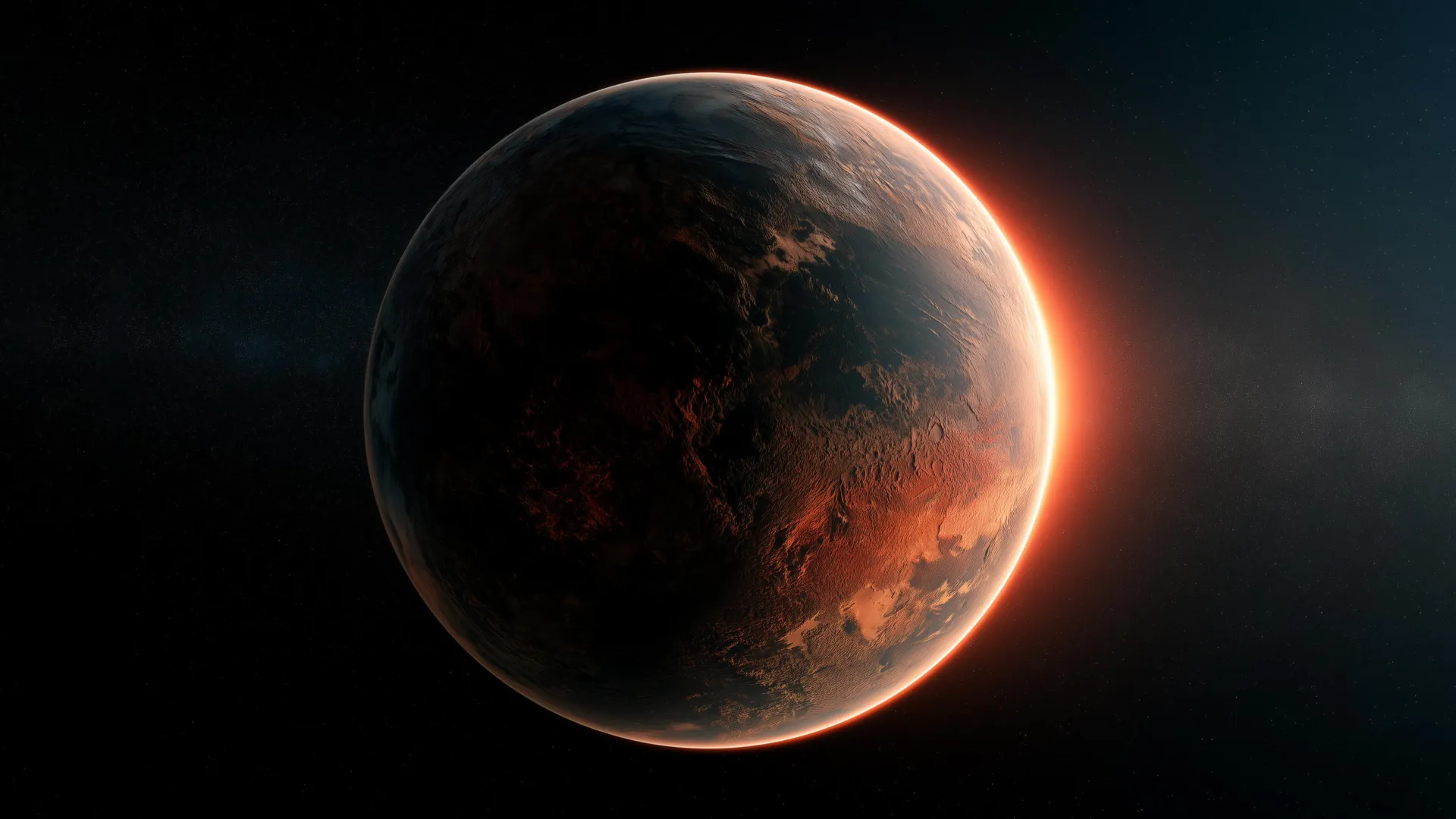
The ingredients needed to build rocky planets may have appeared as early as 100 million years after the Big Bang, according to new research from the University of Portsmouth. That would place the beginnings of planet formation remarkably close to the dawn of the Universe, even before the first galaxies had fully emerged.
Scientists have long thought that planets took much longer to become possible, with significant planet formation beginning several billion years into cosmic history. The new findings suggest that the necessary conditions may have developed far sooner.
The First Stars Seeded Space With Planet Ingredients
Some of the earliest stars were extremely massive and ended their lives in violent explosions. These stellar blasts spread large quantities of elements such as carbon, oxygen and iron into the surrounding gas.
Known as 'Pop III supernovae', these explosions acted as the Universe's first major sources of the heavier elements required to make planets and, eventually, life.
Dr. Daniel Whalen, from the University of Portsmouth's Institute of Cosmology and Gravitation, said: "Our new paper, in which my PhD student Chris Jessop ran the first part of the simulation chain, shows that the precursors of terrestrial planets can form around low-mass, long-lived stars in the debris of the first cosmic explosions 100 million years after the Big Bang.
"To put this into perspective, the Universe is about 13.8 billion years old, so this is remarkably early in cosmic history."
Powerful Supernovae Could Create Planet-Forming Disks
One especially energetic kind of Pop III supernova, called a pair-instability supernova, can eject more than 100 times the Sun's mass in heavy elements during a single explosion.
That material can dramatically increase the abundance of heavy elements in nearby clouds of gas. As gravity pulls those enriched clouds together, they can form rotating disks around young stars, similar to the disk of material that eventually produced our own Solar System.
Dr. Whalen added: "In our computer simulations of the early Universe, we found one such disc around a young star about 70 percent as massive as the Sun. Within that disc, enough solid material accumulated to create several Earth-masses' worth of planetary building blocks at roughly the same distance from the star as Earth is from the Sun.
Water Was Already Present
The simulations revealed another striking feature: the disk contained a substantial supply of water.
"Most surprisingly, the disc also contained substantial amounts of water, only a few times less than what was available when our own Solar System formed. This means that any planets forming there could potentially have received water in a similar way to Earth, which is thought to have gained much of its water from material left over during the planet-building process.
"Our findings suggest that the conditions for planet formation may have existed much earlier than previously thought. If that's the case, it raises an intriguing question: could potentially habitable worlds have appeared far earlier in the Universe's history as well?"
The findings suggest that rocky planets, and possibly worlds with some of the ingredients associated with habitability, may have become possible much earlier in cosmic history than scientists previously expected.
The paper is published in The Astrophysical Letters Journal.
Story Source:
Materials provided by University of Portsmouth. Note: Content may be edited for style and length.
Journal Reference:
- Eduard I. Vorobyov, Daniel J. Whalen, Muhammad A. Latif, Alexander Skliarevskii, Christopher Jessop, Ryoki Matsukoba, Takashi Hosokawa, Devesh Nandal. Planet Formation at Cosmic Dawn: Planetesimals in H2O-rich Disks around Low-mass Stars. The Astrophysical Journal Letters, 2026; 1007 (2): L51 DOI: 10.3847/2041-8213/ae907c
Cite This Page: