
Drinking to cope with stress may permanently rewire your brain
Stress-driven drinking in early adulthood may permanently rewire the brain, leaving lasting cognitive effects even after years of abstinence.
- Date:
- July 3, 2026
- Source:
- University of Massachusetts Amherst
- Summary:
- Using alcohol to cope with stress when young may permanently alter the brain, making it harder to adapt to challenges and increasing the risk of returning to drinking later in life. Researchers also found signs of brain damage associated with early dementia, suggesting the effects can linger long after alcohol use has stopped.
- Share:
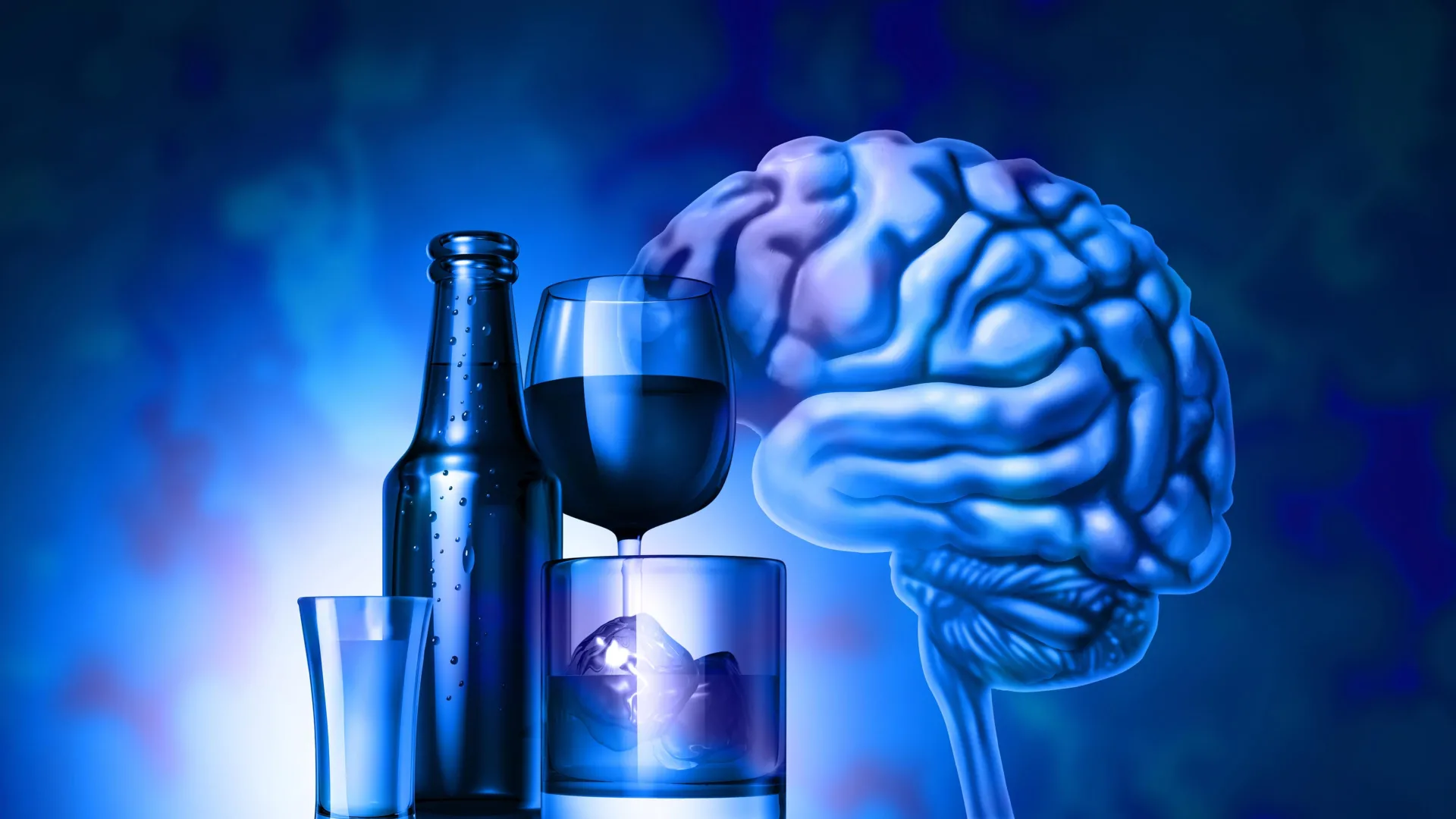
Recent research from the University of Massachusetts Amherst suggests that using alcohol to cope with stress in early adulthood may have lasting effects on the brain that do not disappear with years of sobriety. The study found that these changes can begin to surface by middle age, reducing mental flexibility, increasing the likelihood of turning back to alcohol during stressful times, and contributing to patterns of cognitive decline associated with dementia and Alzheimer's disease.
Published in the journal Alcohol Clinical and Experimental Research, the findings shed new light on how alcohol and stress work together to reshape brain circuits. The researchers say this improved understanding could eventually lead to better treatments that address the long-term effects of alcohol use rather than focusing only on stopping drinking.
How Stress and Alcohol Reinforce Each Other
Scientists have long recognized that stress and alcohol can fuel one another. Alcohol may temporarily ease feelings of stress, but repeated drinking can weaken the brain's natural ability to manage stress on its own. Over time, this can lead people to rely on alcohol more often, and in larger amounts, to achieve the same relief.
At the same time, heavier drinking can increase stress by contributing to poor decisions and their consequences. This creates a cycle that becomes increasingly difficult to break as the brain adapts to repeated exposure to both stress and alcohol. Researchers wanted to understand what those changes look like over the long term.
"My lab studies the neurocircuitry that underlies how we make decisions," said Elena Vazey, associate professor of biology at UMass Amherst and the study's senior author. "We all know that drinking can often lead to poor decision-making, but we wondered how early adulthood drinking combined with stress affects that circuitry, especially as we grow older. If we can figure out how alcohol and stress change the brain's circuitry, then we can help figure out how best to help people."
Stress and Alcohol Together Cause Greater Brain Changes
With support from the National Institute on Alcohol Abuse and Alcoholism (NIAAA), Vazey and her team studied mice because many of their brain circuits closely resemble those in humans. Their results showed that the combination of alcohol and stress had a much greater impact than either factor on its own.
The researchers found that heavy alcohol use as a way of coping with stress during early adulthood increased the likelihood that the animals would return to drinking when stressed during middle age, even after long periods of complete abstinence. This suggests that alcohol and stress together can produce lasting changes in the brain that persist well beyond the period of drinking itself.
Interestingly, the researchers found little difference in learning ability between middle aged mice with a history of stress drinking and lighter drinking mice. The biggest difference was cognitive flexibility, or the ability to quickly adjust to changing situations and make new decisions when circumstances change.
"Middle age is when problems start to add up," said Vazey. "We know that alcohol is a risk factor for early cognitive decline, and we saw that that this alcohol-stress combination creates the kind of trouble adapting to changing situations that also happens in the early stages of dementia."
Lasting Damage in a Key Decision Making Center
To understand why these long-term effects occur, the researchers focused on a small region of the brainstem called the locus coeruleus (LC), which plays an important role in adaptive decision making in both mice and humans.
In healthy brains, the LC becomes active during stressful situations and then returns to normal once the stress has passed. In the mice exposed to both alcohol and chronic stress, however, the LC lost important molecular machinery that normally allows it to shut itself off. As a result, the brain region remained disrupted, reducing its ability to guide effective decision making.
The team also discovered high levels of oxidative stress in the LC. This form of cellular damage is commonly found in the brains of people with Alzheimer's disease and can harm cells throughout the body. Even after prolonged abstinence, the middle aged brains of the formerly heavy drinking mice showed little sign of repairing this damage.
"The brain can really struggle to recover from a history of chronic stress and drinking in early adulthood," said Vazey. "We think that the oxidative damage might be one of the things that keeps the heavy drinking going, that can lead to someone going back to alcohol even after long-term abstinence. It's these persistent changes in the brain that also impair decision making and lead to the kinds of early cognitive decline associated with dementia and Alzheimer's. The brain's wiring system is damaged, which means quitting drinking or making better decisions isn't a matter of willpower. After a history of stress and drinking, the brain simply works differently, and our treatment strategies need to able to address these long-lasting differences."
Story Source:
Materials provided by University of Massachusetts Amherst. Note: Content may be edited for style and length.
Journal Reference:
- O. Revka, S. J. Belculfine, L. Fitts, K. E. Nippert, C. A. F. Teves, P. M. Reis, S. Tenney, B. E. Packer, I. Garcia Alvarez, O. Milstein, M. Coutinho da Silva, D. E. Moorman, E. M. Vazey. Impact of chronic alcohol and stress on midlife cognition and locus coeruleus integrity in mice. Alcohol, Clinical and Experimental Research, 2026; 50 (3) DOI: 10.1111/acer.70273
Cite This Page: