
This strange giant dinosaur may change what we know about Jurassic titans
- Date:
- May 12, 2026
- Source:
- Staatliche Naturwissenschaftliche Sammlungen Bayerns
- Summary:
- A bizarre new giant dinosaur discovered in Argentina is giving paleontologists a fresh look at how Jurassic titans evolved in the Southern Hemisphere. Bicharracosaurus dionidei stretched about 20 meters long and carried a strange mix of features seen in both Diplodocus and Brachiosaurus relatives. Scientists believe it could represent the first known Jurassic brachiosaurid from South America, helping fill a major gap in the dinosaur fossil record.
- Share:
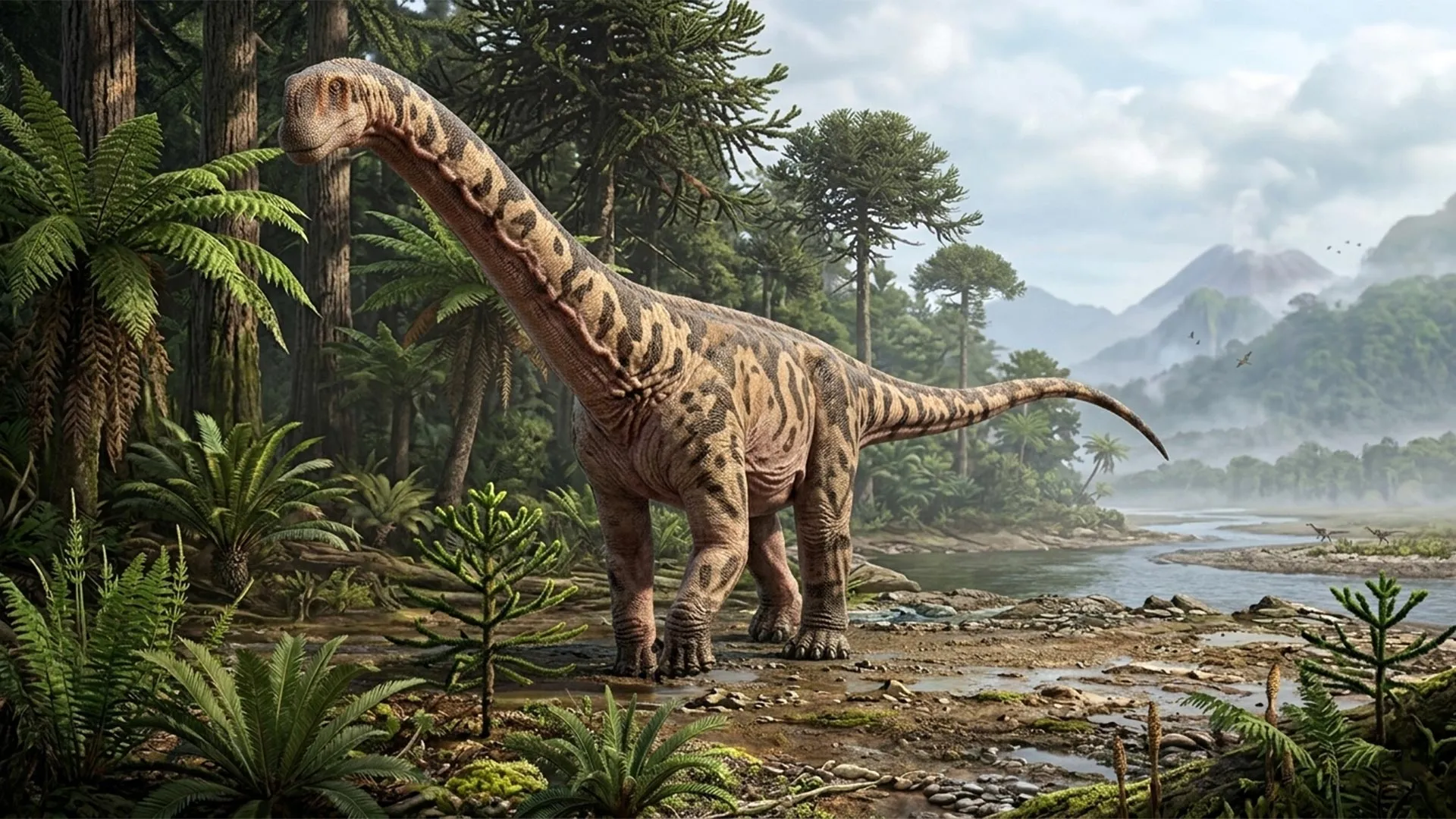
Long necks, enormous bodies, tiny heads, and sweeping tails have made sauropods some of the most recognizable dinosaurs ever discovered. These plant eating giants included the largest land animals in Earth's history, with some species reaching lengths of nearly 130 feet (40 meters). Famous examples include Diplodocus and Brachiosaurus.
Now, researchers studying fossils from southern Argentina have identified a new member of this iconic group. The dinosaur, named Bicharracosaurus dionidei, was smaller than the largest sauropods but still measured an estimated 65 feet (20 meters) long.
Giant Dinosaur Fossil Found in Patagonia
Scientists recovered parts of the dinosaur's spine, including more than 30 vertebrae from the neck, back, and tail, along with several ribs and part of the pelvis. The bone structure showed that the remains belonged to an adult animal that lived about 155 million years ago on Gondwana, the ancient southern supercontinent.
What makes the fossil especially intriguing is its unusual mix of features. Some parts of the skeleton closely resemble those of Giraffatitan, a brachiosaurid dinosaur discovered in Tanzania. Other traits, especially in the back vertebrae, are more similar to Diplodocus and related species from North America.
"Our phylogenetic analyses of the skeleton indicate that Bicharracosaurus dionidei was related to the Brachiosauridae, which would make it the first Brachiosauridae from the Jurassic of South America," says LMU doctoral student Alexandra Reutter, the study's first author. The paleontologist examined the fossils as part of her doctoral research.
New Clues About Jurassic Dinosaur Evolution
The discovery could help scientists better understand how giant sauropods evolved across the Southern Hemisphere during the Late Jurassic period.
"Our knowledge of the evolution of sauropods from the Late Jurassic has so far been based almost entirely on numerous fossil findings from North America and other sites in the Northern Hemisphere. For a long time, there was only a single significant site on the southern continents, in Tanzania. The fossil site in the Argentine province of Chubut, from which Bicharracosaurus dionidei originates, provides us with important comparative material, allowing us to continuously supplement and reevaluate our understanding of the evolutionary history of these animals, particularly in the Southern Hemisphere," says leader of the study and dinosaur expert Prof. Oliver Rauhut of the Bavarian State Collections of Natural History (SNSB).
Dinosaur Named After Local Shepherd
The first fossils of Bicharracosaurus dionidei were discovered on a farm by shepherd Dionide Mesa. Researchers honored him by using his name for the species designation. The genus name comes from "bicharraco," a colloquial Spanish term meaning "big animal."
The fossils were uncovered in the Cañadón Calcáreo rock formation in Patagonia's Chubut province. Today, the remains are housed at the Museo Paleontológico Egidio Feruglio in Trelew, Argentina.
Story Source:
Materials provided by Staatliche Naturwissenschaftliche Sammlungen Bayerns. Note: Content may be edited for style and length.
Journal Reference:
- Alexandra Reutter, José Luis Carballido, Guillermo José Windholz, Diego Pol, Oliver W.M. Rauhut. Bicharracosaurus dionidei, gen. et sp. nov., a new macronarian (Dinosauria, Sauropoda) from the Late Jurassic Cañadón Calcáreo Formation of Argentina and the problematic early evolution of macronarians. PeerJ, 2026; 14: e20945 DOI: 10.7717/peerj.20945
Cite This Page: