
Scientists just solved a 160-million-year fossil mystery “I’ve never seen anything like it”
A rare fossil reveals that Earth’s earliest sponges were hiding in plain sight—too soft to leave a trace.
- Date:
- April 15, 2026
- Source:
- Virginia Tech
- Summary:
- A rare fossil discovery is shedding light on the “missing years” of early sponge evolution. Scientists found a 550-million-year-old sponge that likely lacked hard skeletal parts, explaining why earlier fossils are so scarce. This supports the idea that the earliest sponges were soft-bodied and rarely preserved. The finding changes how researchers hunt for the origins of animal life.
- Share:
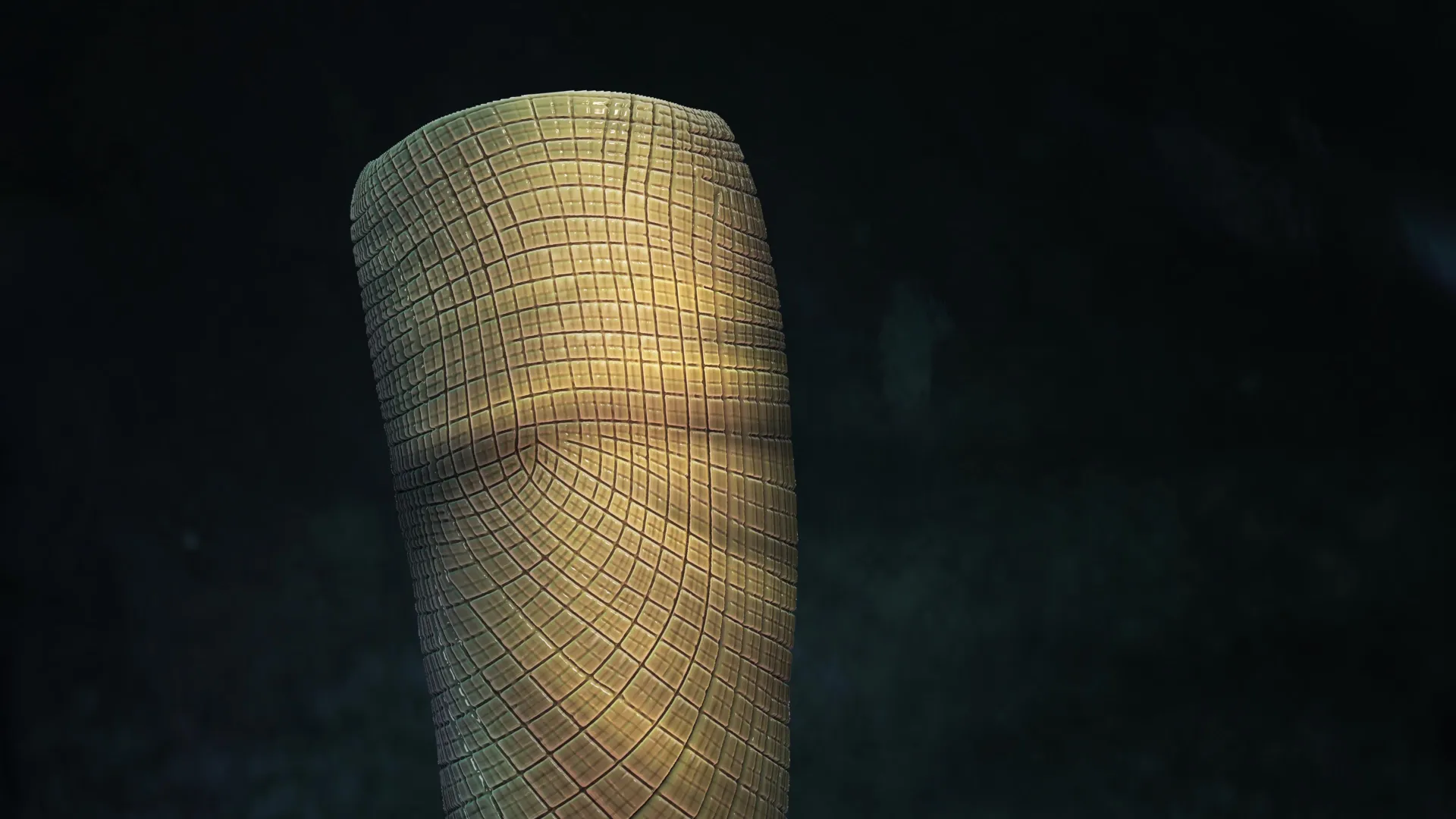
At first glance, sea sponges seem almost too simple to be mysterious.
They have no brain and no gut, and scientists have long believed they originated around 700 million years ago. Yet clear fossil evidence only dates back to about 540 million years ago, leaving a puzzling 160 million-year gap in the record.
A Fossil From the "Lost Years"
In a study published in the journal Nature, Virginia Tech geobiologist Shuhai Xiao and his collaborators describe a 550 million-year-old sea sponge fossil that falls squarely within this missing interval. The team also proposes a key explanation for the gap: the earliest sponges may not have had mineral skeletons, making them far less likely to fossilize.
This idea helps resolve a long-standing paradox in evolutionary science.
The Mystery of Missing Sponge Fossils
Scientists have used molecular clock estimates, which track the accumulation of genetic mutations over time, to suggest that sponges first evolved around 700 million years ago. However, rocks from that era have not yielded convincing sponge fossils.
This disconnect has fueled years of debate among zoologists and paleontologists.
The new discovery helps bridge that divide. It adds an important piece to the evolutionary history of one of Earth's earliest animals and offers an explanation for why older fossils have been so difficult to find. It also connects back to questions first raised by Darwin about when early animal life emerged.
A Surprising Discovery Along the Yangtze River
Xiao first encountered the fossil about five years ago when a collaborator sent him a photo of a specimen uncovered along the Yangtze River in China.
"I had never seen anything like it before," said Xiao, a faculty member in the College of Science. "Almost immediately, I realized that it was something new."
Working with researchers from the University of Cambridge and the Nanjing Institute of Geology and Paleontology, Xiao began testing different possibilities. The fossil did not match known features of sea squirts, sea anemones, or corals. That left one intriguing possibility: an ancient sea sponge.
Why Early Sponges Rarely Fossilized
In earlier work published in 2019, Xiao and his team suggested that the first sponges may not have produced the hard, needle-like structures called spicules that define modern sponges.
By examining the fossil record, the researchers found that sponge spicules become more mineralized over time. The further back they looked, the more organic and less mineral-based these structures appeared.
"If you extrapolate back, then perhaps the first ones were soft-bodied creatures with entirely organic skeletons and no minerals at all," Xiao said. "If this was true, they wouldn't survive fossilization except under very special circumstances where rapid fossilization outcompeted degradation."
Later in 2019, the team identified such a rare case. They found a sponge fossil preserved in a thin layer of marine carbonate rock known for capturing soft-bodied organisms, including some of the earliest animals capable of movement.
"Most often, this type of fossil would be lost to the fossil record," Xiao said. "The new finding offers a window into early animals before they developed hard parts."
A Unique Pattern and Unexpected Size
The newly described fossil stands out for its detailed surface pattern. It is covered in a grid of regular box-like shapes, each subdivided into smaller, repeating units.
"This specific pattern suggests our fossilized sea sponge is most closely related to a certain species of glass sponge," said Xiaopeng Wang, a postdoctoral researcher at the Nanjing Institute of Geology and Paleontology and the University of Cambridge.
Its size also surprised researchers.
"When searching for fossils of early sponges I had expected them to be very small," said Alex Liu, a collaborator from the University of Cambridge. "The new fossil is about 15 inches long with a relatively complex, conical body plan, which challenged many of our expectations for the appearance of early sponges."
Rethinking the Search for Early Animal Life
This discovery not only helps fill part of the missing fossil record but also changes how scientists search for early life.
If the first sponges were soft-bodied and lacked mineral skeletons, many may have disappeared without leaving a trace. That means researchers need to look beyond traditional fossil clues and focus on rare conditions where delicate organisms could be preserved.
"The discovery indicates that perhaps the first sponges were spongy but not glassy," Xiao said. "We now know that we need to broaden our view when looking for early sponges."
Story Source:
Materials provided by Virginia Tech. Note: Content may be edited for style and length.
Journal Reference:
- Xiaopeng Wang, Alexander G. Liu, Zhe Chen, Chengxi Wu, Yarong Liu, Bin Wan, Ke Pang, Chuanming Zhou, Xunlai Yuan, Shuhai Xiao. A late-Ediacaran crown-group sponge animal. Nature, 2024; 630 (8018): 905 DOI: 10.1038/s41586-024-07520-y
Cite This Page: