
Wildfires in carbon-rich tropical peatlands hit 2000-year high
After centuries of decline, tropical peatland fires are now surging to record levels—driven largely by human activity.
- Date:
- March 19, 2026
- Source:
- University of Exeter
- Summary:
- Tropical peatlands, some of the planet’s largest underground carbon stores, are now burning at levels never seen in at least 2,000 years. By analyzing charcoal preserved in peat across multiple continents, scientists discovered that fires had actually been declining for more than a thousand years, largely shaped by natural climate patterns like drought. That long trend suddenly reversed in the 20th century, with a sharp surge in wildfires—especially in Southeast Asia and Australasia.
- Share:
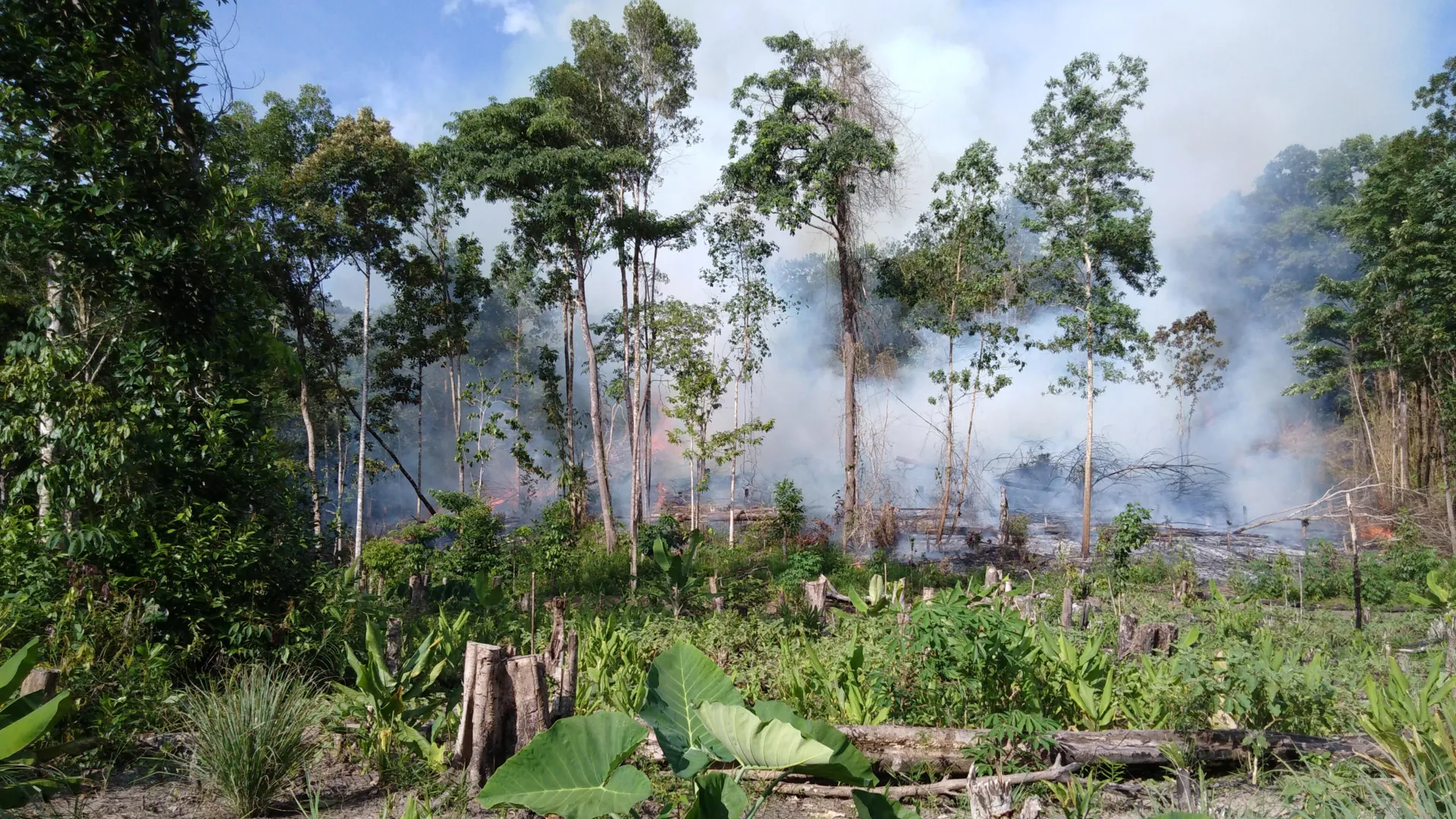
A new study has found a sharp and unusual rise in wildfires in tropical peatlands during the 20th century, marking a clear departure from long-term historical patterns.
Peatlands are massive underground carbon reservoirs, storing more carbon than all of the world's forests combined. When these areas burn, they release large amounts of that stored carbon into the atmosphere.
While wildfires have increased across tropical regions in recent decades, scientists have had limited insight into how fires in tropical peatlands behaved over longer periods.
Ancient Charcoal Records Reveal Fire History
To better understand past fire activity, researchers examined charcoal preserved in peat deposits from Central and South America, Africa, Southeast Asia, and Australasia. These records allowed them to reconstruct wildfire patterns going back more than 2,000 years.
The findings show that peatland fires have historically been closely tied to climate conditions, especially how long and severe droughts were.
Long-Term Decline Followed by Modern Spike
The study revealed that wildfire activity in tropical peatlands actually decreased for over 1,000 years. This decline tracked with shifts in global temperatures and other natural climate factors.
However, this long-term trend reversed in the 20th century, when wildfire activity rose sharply. Differences between regions suggest that human influence is the main reason for this sudden increase.
Human Activity Driving Peatland Fires
The rise in fires was most pronounced in Southeast Asia and parts of Australasia. In these regions, practices such as draining peatlands for agriculture, clearing forests, and converting land for development have made peat soils far more likely to ignite.
In contrast, more remote peatland areas in South America and Africa did not show the same increase. Still, lead author Dr. Yuwan Wang cautions that these regions could face growing wildfire risks as populations expand and agriculture and infrastructure spread.
Urgent Need to Protect Carbon-Rich Ecosystems
"To avoid large carbon emissions that further contribute to global warming, we urgently need to protect these carbon-dense ecosystems," said Dr. Wang from the University of Exeter.
"A reduction in tropical peatland burning could be achieved through peatland conservation and promoting sustainable resource management and ecosystem restoration, but this requires the collaboration of multiple groups and has to be carried out at a sufficiently large scale."
The study, titled "Unprecedented burning in tropical peatlands during the 20th century compared to the previous two millennia," is published in Global Change Biology.
Story Source:
Materials provided by University of Exeter. Note: Content may be edited for style and length.
Journal Reference:
- Yuwan Wang, Ted R. Feldpausch, Graeme T. Swindles, Patrick Moss, Hamish A. McGowan, Thomas G. Sim, Paul J. Morris, Adam Benfield, Colin Courtney‐Mustaphi, David Wahl, Encarni Montoya, Esther Githumbi, Eurídice N. Honorio Coronado, Femke Augustijns, Gert Verstraeten, Jess O\' Donnell (Roe), John Tibby, Juan C. Benavides, K. Anggi Hapsari, Karsten Schittek, Khairun Nisha Mohamed Ramdzan, Kunshan Bao, Lydia E. S. Cole, Lysanna Anderson, Mariusz Gałka, Orijemie Emuobosa Akpo, Paul Strobel, Prabhakaran Ramya Bala, René Dommain, Rob Marchant, Raman Sukumar, Sakonvan Chawchai, Sarath Pullyottum Kavil, Scott Mooney, Thomas J. Kelly, Yang Gao, Apostolos Voulgarakis, Arnoud Boom, Chantelle Burton, Juan Carlos Berrio, Kelly Ribeiro, Liana O. Anderson, Mark Hardiman, Molly Spater, Susan E. Page, Angela V. Gallego‐Sala. Unprecedented Burning in Tropical Peatlands During the 20th Century Compared to the Previous Two Millennia. Global Change Biology, 2026; 32 (3) DOI: 10.1111/gcb.70717
Cite This Page: