
Scientists finally solve the mystery of yeast’s tiny centromeres
- Date:
- March 10, 2026
- Source:
- Max Planck Institute of Molecular Physiology
- Summary:
- Scientists have uncovered how brewer’s yeast developed its unusually tiny centromeres, the DNA regions that guide chromosome separation during cell division. By studying related yeast species, researchers found centromeres that appear to represent evolutionary halfway points. These structures seem to have formed from retrotransposons—mobile “jumping genes” in the genome. The discovery shows how DNA once considered genomic junk can be transformed into essential chromosome machinery.
- Share:
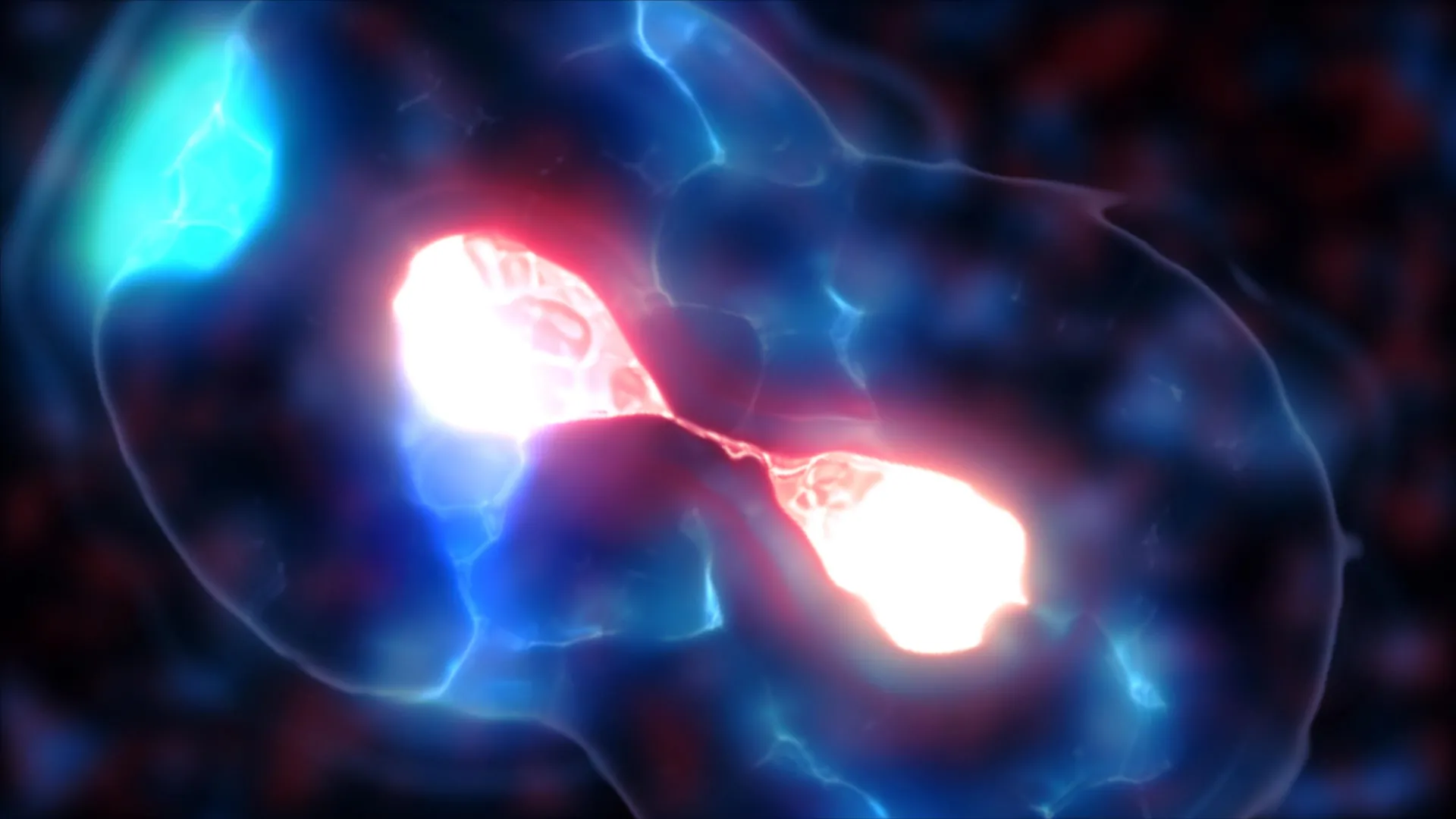
Centromeres serve the same fundamental purpose across nearly all forms of life. These regions of DNA ensure that chromosomes are properly separated when cells divide. Despite this shared role, centromeres vary dramatically in their structure. Some organisms have large stretches of repetitive DNA, while yeast uses extremely small and simple versions known as "point" centromeres. This striking diversity, combined with the fact that centromeres evolve quickly, has puzzled scientists for decades.
A research team led by Andrea Musacchio, Director at the Max Planck Institute of Molecular Physiology in Dortmund, together with Jef Boeke from the NYU Grossmann School of Medicine, has now uncovered the origin and evolutionary history of yeast centromeres. The scientists identified what they describe as a "proto-point" centromere, an intermediate form that connects today's tiny yeast centromeres to their more complex ancestors. Those earlier versions contained fragments of parasitic DNA. The discovery highlights one of the most dramatic examples of evolutionary change at the DNA level.
The Centromere Paradox
Centromeres are the specific sites on chromosomes where cellular machinery attaches during cell division. This machinery pulls each chromosome apart so that the two new daughter cells receive the correct genetic material. Because of this role, centromeres are essential for accurate chromosome segregation in all dividing cells, from yeast to humans.
Although the cellular machinery responsible for chromosome segregation has remained highly conserved throughout evolution, the DNA found at centromeres changes surprisingly quickly. Scientists call this puzzling pattern the "centromere paradox." Yeast provides one of the most striking examples of this phenomenon because its centromeres are unusually tiny and precisely defined. In the new study, researchers from the Max Planck Institute and NYU uncovered the first mechanistic explanation for how these distinctive yeast centromeres evolved and identified their genetic origins.
A Key Discovery in Yeast Evolution
First author Max Haase explains the new findings in detail in the following interview.
What is the discovery you made?
Our paper explains how a very important chromosome feature -- the centromere -- in brewer's yeast came to be. In yeast they are extremely small and precise -- a striking oddity in the tree of life that has puzzled chromosome biologists for decades. In this work, we show a likely intermediate stage in their evolution and trace where the DNA for these special centromeres originally came from.
Why is it so exciting?
We found previously unknown centromeres in related yeast species that look like halfway stages between large, repeat-rich centromeres and the tiny ones in brewer's yeast. The DNA at these centromeres is related to a class of "jumping genes" (mobile pieces of DNA) called retrotransposons, suggesting that these elements provided the raw material that evolution reshaped into modern yeast centromeres. This gives a concrete genetic explanation for how yeast ended up with this unusual centromere type.
Why are your findings important for the scientific community?
Yeast centromeres were the first centromeres whose functional DNA sequence was isolated and worked out in detail, beginning with work by Clarke and Carbon in the early 1980s, yet it has remained a mystery how such tiny, precisely defined centromeres could have evolved. By showing how one kind of centromere can be rebuilt from another, our work addresses this long-standing question and shows how bits of "selfish" or parasitic DNA can be tamed and turned into DNA that cells now rely on to organize their chromosomes. This provides a concrete example of how a core part of the chromosome can be completely restructured over evolution by repurposing DNA that once looked like genomic "junk."
What are the next steps you will take?
Next, we want to understand how the kinetochore -- the protein machinery that recognizes centromeres -- can accommodate such dramatic changes in centromere DNA over evolutionary time. As part of this, we are tackling the open question of how centromeres assemble the kinetochore. We are also looking for additional cases where transposons have been re-used to build chromosome structures like centromeres, to see how common this kind of genome innovation is.
Story Source:
Materials provided by Max Planck Institute of Molecular Physiology. Note: Content may be edited for style and length.
Journal Reference:
- Max A. B. Haase, Luciana Lazar-Stefanita, Lyam Baudry, Aleksandra Wudzinska, Xiaofan Zhou, Antonis Rokas, Chris Todd Hittinger, Boris Pfander, Andrea Musacchio, Jef D. Boeke. Ancient co-option of LTR retrotransposons as yeast centromeres. Nature, 2026; DOI: 10.1038/s41586-025-10092-0
Cite This Page: