
Scientists discover hidden species among Borneo’s “fanged frogs”
Genetic sleuthing is uncovering hidden species—but sometimes the boundaries between them are far blurrier than scientists expected.
- Date:
- March 9, 2026
- Source:
- Michigan State University
- Summary:
- DNA is revealing that many animals once thought to be a single species may actually be several hidden ones. But research on Bornean fanged frogs shows the line between species can be blurry—an important challenge when deciding what wildlife needs protection most.
- Share:
When people hear about the discovery of a new species, they often picture a scene straight out of an adventure story, according to Chan Kin Onn of Michigan State University.
"Most people have this image of an intrepid explorer braving an isolated mountain or some other remote place, and stumbling across a creature that no one has ever seen before," Chan said.
That scenario still happens from time to time. However, Chan noted that the reality is usually much less dramatic. "But most of the time it's far less glamorous," he added.
In many cases, scientists identify new vertebrate species by revisiting animals that are already known to science. With improved tools and fresh data, researchers sometimes discover that populations once considered the same species are actually more distinct than previously recognized.
The Mystery of Borneo's Fanged Frogs
Chan is a herpetologist, meaning he studies amphibians and reptiles such as frogs, turtles, lizards, and snakes. Worldwide, scientists have identified more than 9,000 amphibian species, and about 100 to 200 new ones are added each year, he said.
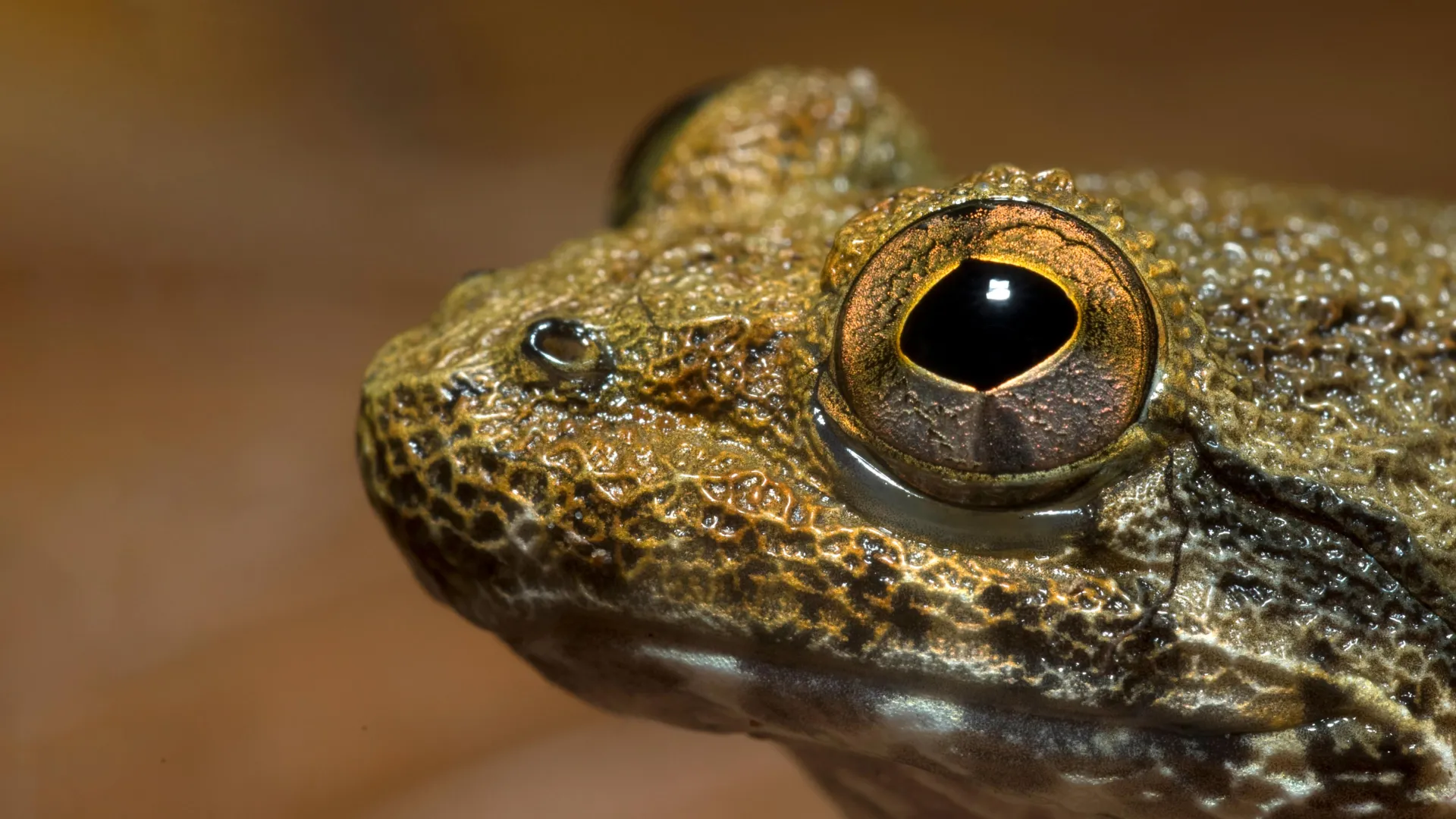
One example involves a group of small brown frogs in Southeast Asia known as Bornean fanged frogs. Their name comes from the tooth like projections along their jaws. One member of this group, Limnonectes kuhlii, has been known to scientists since 1838. Yet over the past two decades, genetic research has suggested that what appears to be a single species might actually represent as many as 18.
"Animals that look similar but are genetically distinct are called cryptic species," said Chan, who also serves as Curator of Vertebrate Collections and a core faculty member in MSU's Ecology, Evolution and Behavior program.
Advances in genetic sequencing have made it much easier to uncover these hidden lineages. As Chan explained, "a ton of cryptic species are being discovered left and right."
DNA Analysis Reveals Fewer Species Than Expected
To determine whether these frogs had been significantly underestimated, Chan and his colleagues collected DNA from specimens gathered across the mountainous rainforests of Malaysian Borneo. The team examined more than 13,000 genes across the frogs' genomes.
Their findings, published in the journal Systematic Biology, showed that the frogs separate into several genetic groupings. However, the results did not support the idea that there are as many as 18 species. Instead, the evidence suggests that about six or seven of those clusters qualify as distinct species.
"It's not just one species. But it's not 18 species, either," Chan said.
Why Species Counts Matter for Conservation
Determining exactly how many species exist is not just an academic debate. It has real consequences for conservation.
Amphibians are currently facing serious threats worldwide. A 2023 analysis of roughly 8,000 amphibian species found that two out of five are threatened with extinction, making amphibians the most endangered group of vertebrates.
Chan, who contributed to that study, emphasized that recognizing species is essential for protecting them.
"There are so many species in the world that we still haven't discovered, and that could go extinct before we can give them a name," Chan said.
At the same time, there can be downsides to dividing species too aggressively.
"But there's a flip side to that coin too," he added.
If scientists split one species into many smaller ones too quickly, it can make each newly defined species appear to occupy a very small geographic range. That can make their conservation status seem more severe than it actually is.
"We cannot possibly conserve everything, so we have to triage and decide how to allocate limited resources towards what we think are the highest priorities," Chan said. "We could be putting names on things that shouldn't be prioritized."
A Blurry Line Between Species
The researchers also detected significant interbreeding among the frogs.
"We found a ton of gene flow going on," Chan said.
This exchange of genetic material between groups can blur the boundaries that scientists use to define species. Because of this, Chan noted that some of the growing number of proposed cryptic species could result from how scientists analyze the data rather than reflecting clear biological divisions.
The fanged frogs of Borneo illustrate that the formation of new species is rarely an abrupt event.
"It's not like all of a sudden, boom. It's more of a continuum," Chan said.
Hidden Species Across the Tree of Life
Fanged frogs are only one example of a broader pattern scientists are uncovering. Over the past two decades, genetic research across many groups of animals, including insects, fish, birds, and mammals, suggests that a large number of species may be hiding in plain sight.
Earlier estimates placed the total number of species on Earth at about 8.7 million. More recent models that factor in cryptic species suggest the true number could be far higher, possibly ranging from 7 to 250 times that figure.
So where does the real total fall?
"This study shows that there's a speciation 'gray zone' that can make it hard to draw the line," Chan said.
This research was supported by grants from the U.S. National Science Foundation (GRFP 1540502, 1451148, 0907996 and 1654388).
Story Source:
Materials provided by Michigan State University. Note: Content may be edited for style and length.
Journal Reference:
- Kin Onn Chan, Dario N Neokleous, Shahrul Anuar, Rafe M Brown, Carl R Hutter, Indraneil Das, Stefan T Hertwig. A Genomic Perspective on Cryptic Species Reveals Complex Evolutionary Dynamics in the Gray Zone of the Speciation Continuum. Systematic Biology, 2026; DOI: 10.1093/sysbio/syag001
Cite This Page: