
Tiny clump of moss helped solve a shocking cemetery crime
- Date:
- March 6, 2026
- Source:
- Field Museum
- Summary:
- A tiny piece of moss helped expose a cemetery scandal in Illinois, where workers allegedly dug up graves and resold burial plots. By identifying the moss and analyzing its chlorophyll to estimate its age, scientists proved the remains had been moved recently—evidence that helped secure convictions.
- Share:
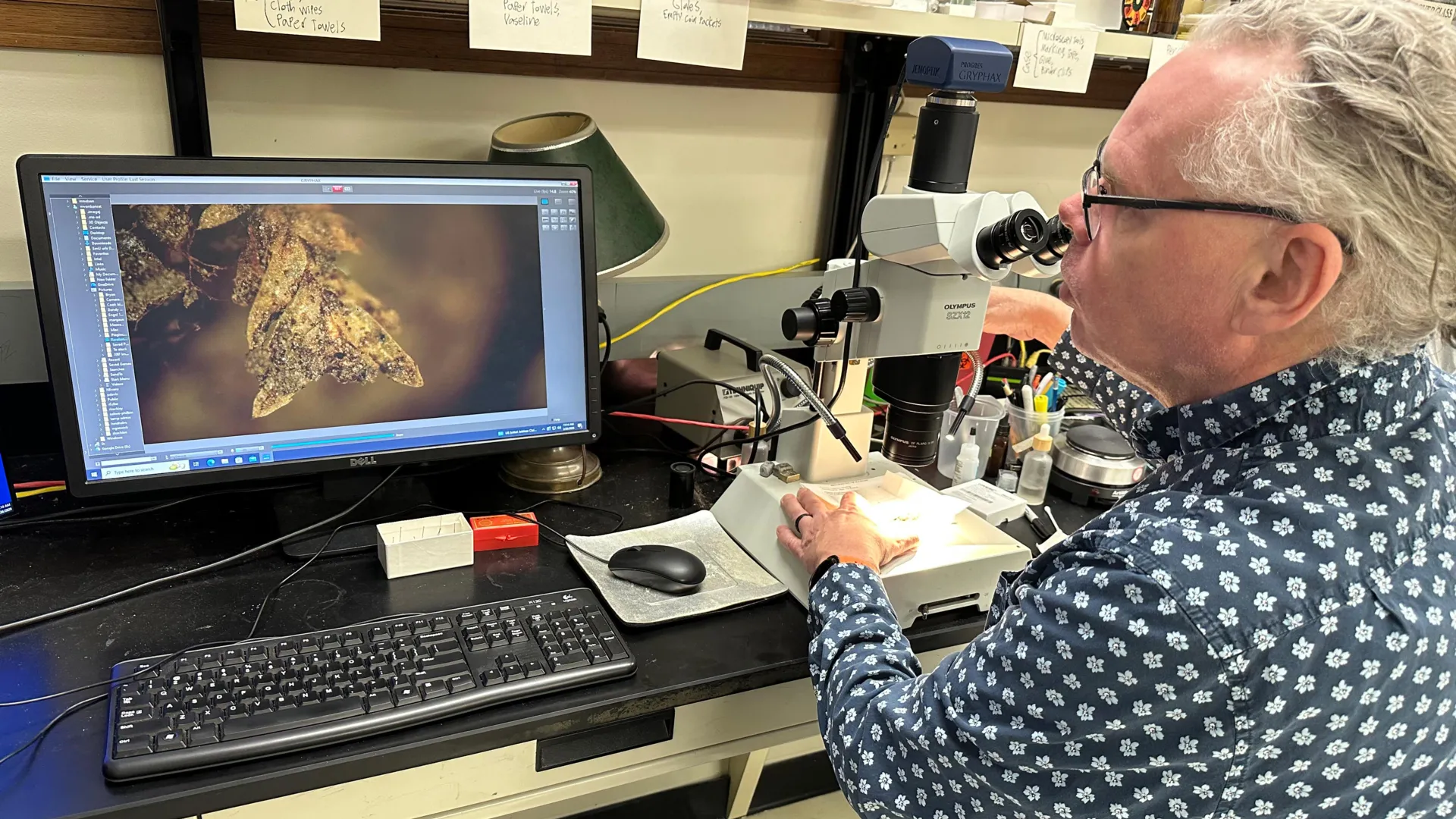
In 2009, investigators uncovered a disturbing scandal at a cemetery outside Chicago. Employees at Burr Oak Cemetery in Alsip, Illinois, were accused of digging up older graves, relocating the remains to other areas within the cemetery, and then selling the newly emptied burial plots again. When the case finally went to trial in 2015, one surprisingly small piece of evidence played a critical role: a tiny clump of moss.
A new study published in the journal Forensic Sciences Research now provides the first detailed scientific account of the investigation. The researchers explain exactly how the moss helped demonstrate that the alleged crime had taken place.
A Moss Expert Gets an Unexpected Call
Matt von Konrat, the study's lead author and head of the botany collections at the Field Museum in Chicago, enjoys watching detective shows on television (the new paper is named after the BBC's Silent Witness). Even so, he never expected his expertise in moss to become part of a real criminal investigation.
"One day in 2009, I answered the phone, and it was the FBI, asking if I could help them identify some plants," says von Konrat.
Agents later brought a small moss sample to the Field Museum. The plant fragment had been discovered about eight inches beneath the soil alongside human remains that had apparently been buried again in a different location within the cemetery.
"The investigators wanted to know what kind of moss it was, and how long it had been buried in the soil," says von Konrat.
Identifying the Moss Species
To answer the first question, von Konrat and his colleagues analyzed the sample under a microscope and compared it with preserved moss specimens stored in the museum's collections. The plant was identified as Fissidens taxifolius, commonly called common pocket moss.
The researchers then examined the types of moss growing around the site where the remains were found. Interestingly, this particular species was not present there.
"We did a survey of the different kinds of mosses growing near the crime scene, and that species of moss was not growing there," says von Konrat. "But when I surveyed the rest of the cemetery, we found a huge colony of that species of moss growing in the same area where the investigator suspected the bones had been dug up from. So that gave us pretty strong evidence that the remains had come from this other section of the cemetery."
Determining How Long the Moss Was Buried
Identifying the moss species helped investigators trace where the remains had likely originated, but prosecutors also needed to establish when the bones had been moved. The defendants argued that someone else might have disturbed the graves and reburied the remains before they began working at the cemetery.
Because the moss was buried along with the relocated remains, estimating how long the plant had been underground could help establish a timeline.
"Moss is a little bit freaky," says von Konrat. "Mosses have an interesting physiology, where even if they're dry and dead and preserved, they can still have an active metabolism, a few cells that are still active. The amount of metabolic activity deteriorates over time, and that can tell us how long ago a moss sample was collected."
Chlorophyll Analysis Reveals the Timeline
Scientists can estimate a plant's metabolic activity by examining its chlorophyll, the green pigment that allows plants to carry out photosynthesis. As plant tissue breaks down and cells stop functioning, chlorophyll gradually deteriorates.
The team measured how much light the chlorophyll absorbed in moss samples of known ages. These included freshly collected specimens as well as moss that had been stored in the museum's collections for 14 years. They then performed the same analysis on the moss recovered from the cemetery.
The results showed that the evidence moss had likely been underground for only one or two years. That finding strengthened the case against the cemetery workers, who were ultimately convicted in 2015 of desecrating human remains.
Moss Evidence in a Rare Forensic Case
"Every once in a while, a case comes along where the FBI has to call in experts to aid in the collection of evidence, do analyses, present the evidence to the prosecutors, and testify about their work if necessary to secure a conviction. The Burr Oak Cemetery case was one of those cases where we reached out to the Chicago Field Museum Botanical Program, which proved to be extremely invaluable because plant material inside the cemetery was key to charging four individuals and securing their convictions," says Doug Seccombe, a former FBI agent who worked on the case and was a co-author on the new paper.
After the Burr Oak Cemetery investigation, von Konrat was asked to assist with several other cases involving moss. Still, examples like this remain uncommon in forensic science. In 2025, he and several co-authors published another study examining the use of mosses and other bryophytes as evidence in criminal investigations. Their review uncovered only about a dozen such cases over the past century.
The Untapped Forensic Potential of Moss
"Mosses are often overlooked, and we hope that our research will help raise awareness that there are other plant groups out there, apart from flowering plants, and that these serve a very important role in society and around us," says von Konrat. "But most importantly, we want to highlight this microscopic group of plants as a tool for law enforcement. If we can elevate mosses as potential evidence, maybe it could help some families somewhere in the future."
Story Source:
Materials provided by Field Museum. Note: Content may be edited for style and length.
Journal Reference:
- Matt von Konrat, Llo Stark, Jenna Merkel, Anne Grauer, Wayne Jakalski, Paul Kiefer, Danny Kreider, Eric Leafblad, Alan Lichamer, Gary Merrill, Jason Moran, Gavin Quinn, Doug Seccombe, Kathryn Sodetz, Matthew Thrun. Silent witnesses: mosses provide important evidence in solving a cemetery crime. Forensic Sciences Research, 2025; DOI: 10.1093/fsr/owaf038
Cite This Page: