
Forests are changing fast and scientists are deeply concerned
Forests may be growing faster—but they’re also becoming weaker, simpler, and far more vulnerable.
- Date:
- February 9, 2026
- Source:
- Aarhus University
- Summary:
- Forests around the world are quietly transforming, and not for the better. A massive global analysis of more than 31,000 tree species reveals that forests are becoming more uniform, increasingly dominated by fast-growing “sprinter” trees, while slow-growing, long-lived species are disappearing. These slower species act as the backbone of forest ecosystems, storing carbon, stabilizing environments, and supporting rich webs of life—especially in tropical regions where biodiversity is highest.
- Share:
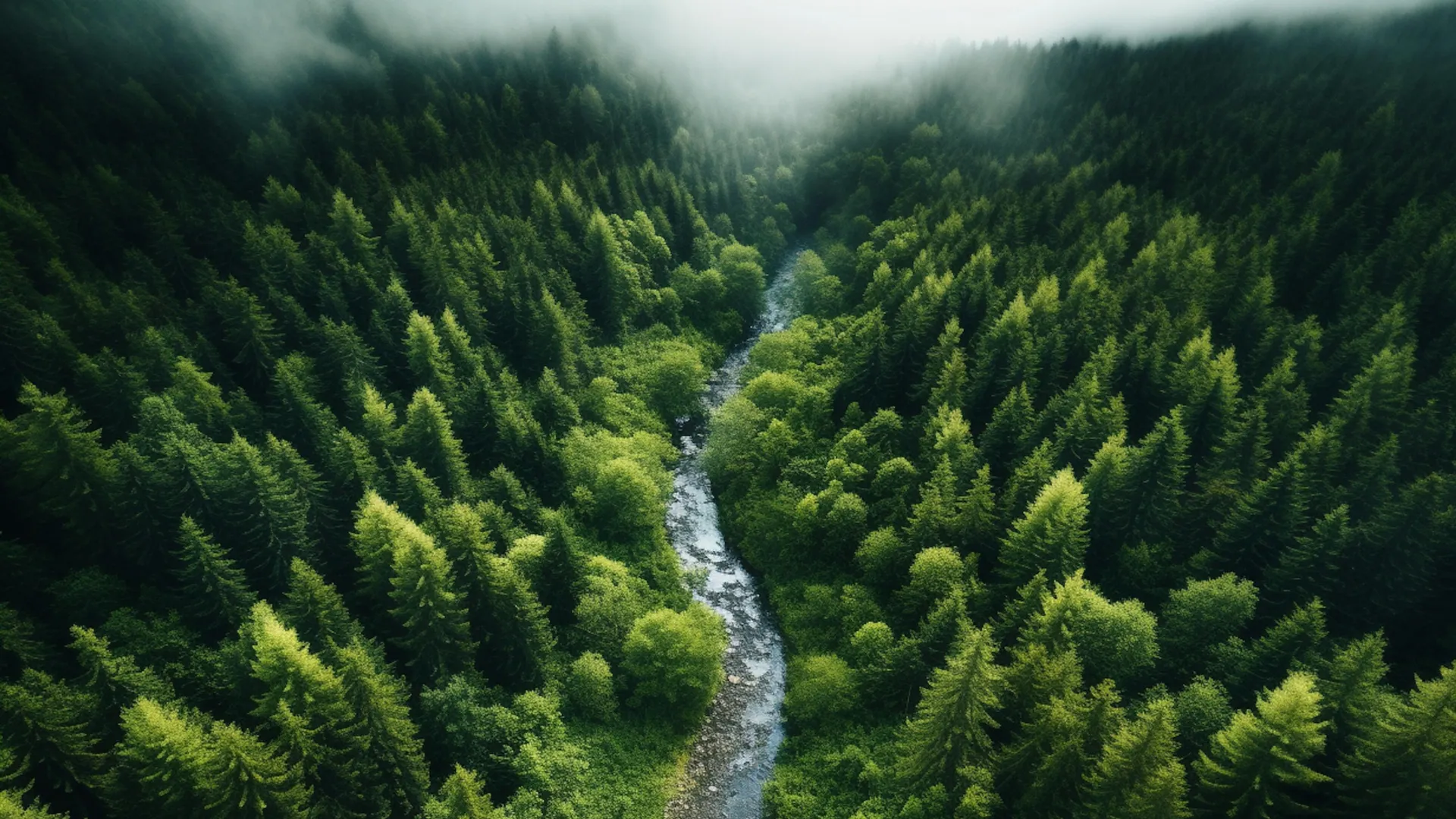
Trees are essential to life on Earth. They absorb and store CO2, support animals, fungi, and insects, hold soil in place, manage water cycles, and provide people with vital resources such as wood, food, and cooling shade during hot weather.
Despite their importance, forests around the world are undergoing a major shift. New research shows that many forest ecosystems are becoming more uniform, losing biodiversity, and growing less resilient. These findings come from a large international study published in the journal Nature Plants.
By examining more than 31,000 tree species across the globe, scientists were able to map how forests are likely to change in the coming decades. Their analysis focused on shifts in species makeup, long-term stability, and how forests function as ecosystems.
Forests Are Shifting Toward Fast Growing Species
The study found that fast-growing tree species are becoming increasingly dominant. At the same time, slower-growing trees with specialized traits face a growing risk of decline or extinction.
Jens-Christian Svenning, Professor and Director of the Danish National Research Foundation's Center for Ecological Dynamics in a Novel Biosphere (ECONOVO) at the Department of Biology, Aarhus University, and a senior author of the study, says this trend is deeply concerning.
He points especially to the danger faced by tree species that exist only in small, isolated regions of the world.
"We are talking about highly unique species, especially concentrated in tropical and subtropical regions, where biodiversity is high and ecosystems are tightly interconnected. When specialized, native species disappear, they leave gaps in ecosystems that alien species rarely fill, even if those species are fast-growing and highly dispersive," says Jens-Christian Svenning.
The Trees That Support Forest Stability Are at Risk
The species under the greatest threat are slow-growing trees that thrive in stable environments. According to Svenning, these trees often have thick leaves, dense wood, and long lifespans, and they are especially common in moist tropical and subtropical forests.
"They form the backbone of forest ecosystems and contribute to stability, carbon storage, and resilience to change," says Jens-Christian Svenning.
If climate change and forest exploitation continue at current levels, forests are likely to favor fast-growing trees with lighter leaves and lower wood density. These traits allow rapid growth over short periods. Common examples include species of acacia, eucalyptus, poplar, and pine.
"Although these species establish and grow well, they are more vulnerable to drought, storms, pests, and climatic shocks. This makes forests less stable and less effective at storing carbon over the long term," says Jens-Christian Svenning.
Why Non Native Trees Are Spreading
The research also highlights the growing role of naturalized tree species, meaning trees that originated elsewhere but now grow wild in new regions. Nearly 41 percent of these species share traits like rapid growth and small leaves, which help them survive in disturbed environments.
However, Svenning notes that these trees rarely replace the ecological roles of native species.
"Moreover, in landscapes affected by today's and tomorrow's disturbances, naturalized species can make it even harder for native trees to survive, because competition for light, water, and nutrients intensifies," he adds.
Tropical Forests Face the Greatest Losses
The study shows that tropical and subtropical regions are likely to experience the most severe impacts from forest homogenization. These areas are expected to see the largest increases in tree species endangerment.
"This is where many slow-growing tree species with naturally small ranges occur. Because they are confined to very limited areas, these species are especially vulnerable and risk disappearing entirely if their habitats are destroyed or taken over by fast-growing species," explains the study's first author, young professor Wen-Yong Guo from the School of Ecological and Environmental Sciences, East China Normal University, Shanghai.
Guo also notes that fast-growing and naturalized species are expected to continue spreading worldwide as environmental disturbances increase.
"At the same time, we forecast rising number of naturalized and fast-growing tree species adapted to increasing disturbance throughout the world. Hence, in the colder parts of the Northern Hemisphere, the likely dominant dynamic is the invasion of such species," says Wen-Yong Guo.
Human Activity Is Driving Forest Change
According to the researchers, human actions are the main force behind these changes in forest composition.
"Human-driven climate change, deforestation for infrastructure, intensive forestry, logging, and global trade in tree species all play a role. Fast-growing trees are often actively promoted because they produce timber or biomass quickly. But ecologically, they are often fragile and more prone to disease," explains Wen-Yong Guo.
Why Forest Management Needs to Change
Using future modeling scenarios, the researchers examined how tree species are likely to spread or decline over time. Their results show that naturalized species already present in forests are expected to become even more dominant in the decades ahead.
This makes protecting slow-growing tree species increasingly urgent, says Jens-Christian Svenning. He emphasizes the need for forest management strategies that actively support these species and prioritize ecosystem restoration.
"When establishing new forests, far more emphasis should be placed on slow-growing and rare tree species. This would make forests more diverse and resilient. These species should also be actively promoted in conservation and restoration efforts, where they often interact positively with the recovery of richer communities of large animals, which themselves are also important for future ecosystem functioning," concludes Jens-Christian Svenning.
Story Source:
Materials provided by Aarhus University. Note: Content may be edited for style and length.
Journal Reference:
- Wen-Yong Guo, Josep M. Serra-Diaz, Kun Guo, Coline C. F. Boonman, Franziska Schrodt, Brian S. Maitner, Cory Merow, Cyrille Violle, Madhur Anand, Hans Henrik K. Bruun, Chaeho Byun, Jane A. Catford, Bruno E. L. Cerabolini, Eduardo Chacón-Madrigal, Daniela Ciccarelli, Anh Tuan Dang-Le, Arildo S. Dias, Aelton B. Giroldo, Alvaro G. Gutiérrez, Steven Jansen, Jens Kattge, Roeland Kindt, Tamir Klein, Koen Kramer, Christopher H. Lusk, Adam R. Martin, Sean T. Michaletz, Vanessa Minden, Akira S. Mori, Ülo Niinemets, Yusuke Onoda, Josep Peñuelas, Jan Pisek, Bjorn J. M. Robroek, Brandon Schamp, Nadejda A. Soudzilovskaia, Nelson Thiffault, Fons van der Plas, Brian J. Enquist, Jens-Christian Svenning. Global functional shifts in trees driven by alien naturalization and native extinction. Nature Plants, 2026; DOI: 10.1038/s41477-025-02207-2
Cite This Page: