
Scientists uncover why psoriasis can turn into joint disease
A hidden immune cell journey from skin to joints may explain psoriatic arthritis.
- Date:
- February 5, 2026
- Source:
- Friedrich-Alexander-Universität Erlangen-Nürnberg
- Summary:
- Researchers have figured out how psoriasis can quietly turn into joint disease for some patients. Immune cells formed in inflamed skin can travel through the blood and reach the joints, where they sometimes trigger inflammation. The key difference lies in the joint’s ability to keep those cells in check. This insight could help doctors identify warning signs early and prevent lasting joint damage.
- Share:
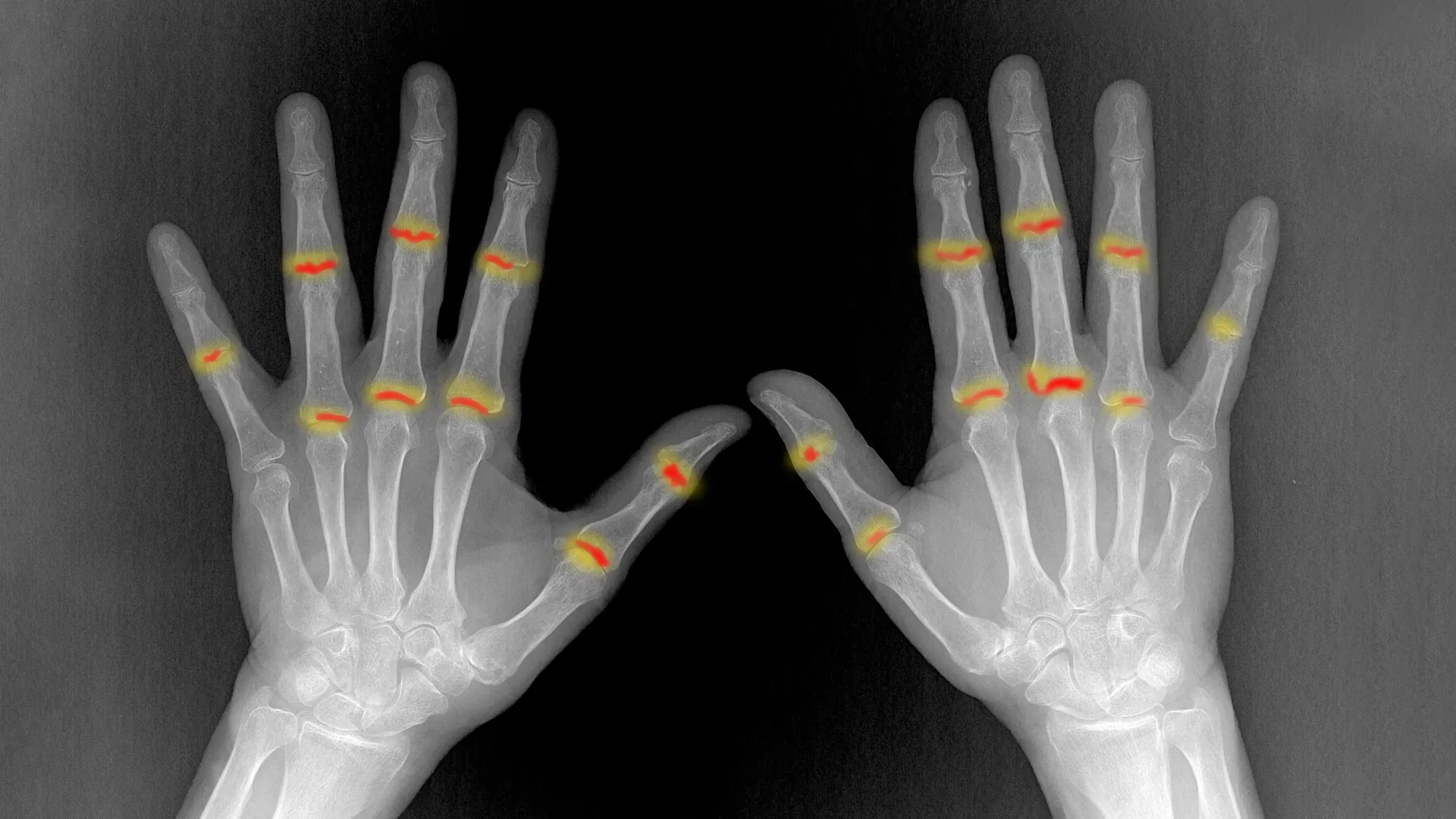
Roughly 20 to 30 percent of people with psoriasis eventually develop painful joint inflammation. This condition, known as psoriatic arthritis, can cause lasting damage to bones and joints if it is not treated. For years, doctors did not fully understand why psoriasis progressed to joint disease in some patients but not in others.
Researchers from the Department of Medicine 3 - Rheumatology and Immunology at Uniklinikum Erlangen, Friedrich-Alexander-Universität Erlangen-Nürnberg (FAU), have now identified the specific immune cells responsible and uncovered how they move from the skin into the joints. Their findings point toward new ways to detect and prevent psoriatic arthritis before permanent joint damage occurs. The study has been published in Nature Immunology.
How Immune Cells Travel From Skin to Joints
Psoriasis causes inflammation in the skin that leads to the formation of specialized immune precursor cells. These cells do not stay confined to the skin. According to the researchers, they can enter the bloodstream and later reach the joints.
"These cells can migrate from the skin to the bloodstream and from there to the joints," explains Dr. Simon Rauber, head of the working group at Department of Medicine 3. However, he notes that their presence alone does not automatically cause joint inflammation. "It is interesting that the mere migration of immune cells into the joint is not sufficient to trigger inflammation there."
Why Joint Inflammation Develops in Some Patients
What happens inside the joint itself plays a critical role. Once immune cells arrive, they interact with fibroblasts, which are connective tissue cells that normally help maintain balance and protect the joint. In people who go on to develop psoriatic arthritis, this protective response is weakened.
"The protective function of these connective tissue cells is usually considerably reduced in people who develop psoriatic arthritis," says Prof. Dr. Andreas Ramming, team leader and deputy head of department at Department of Medicine 3. "As a result, the inflammatory cells that enter the joint cannot be brought into check, and go on to trigger an inflammatory reaction in the joint." This breakdown helps explain why joint disease develops in some psoriasis patients but not others.
Early Warning Signs and New Prevention Strategies
The researchers also found that these migratory immune cells can be detected in the blood before joint inflammation begins. This discovery could make it possible to identify patients at higher risk earlier than ever before.
In the future, treatments may focus on targeting these immune cells before they reach the joints, stopping inflammation before it starts. Such approaches could help prevent psoriatic arthritis rather than treating damage after it has already occurred.
Research Funding and Support
The research is being funded by the German Research Foundation (DFG) within the framework of the CRC/TRR 369 - "DIONE: Degeneration of bone due to inflammation," by the European Research Council (ERC) as part of the project "Barrier Break," and by the Interdisciplinary Center for Clinical Research in Erlangen (IZKF) as part of the project "Tissue imprinting of skin-derived immune cells in psoriatic arthritis."
Story Source:
Materials provided by Friedrich-Alexander-Universität Erlangen-Nürnberg. Note: Content may be edited for style and length.
Journal Reference:
- Maria G. Raimondo, Hashem Mohammadian, Mario R. Angeli, Stefano Alivernini, Vladyslav Fedorchenko, Kaiyue Huang, Richard Demmler, Peter Rhein, Cong Xu, Yi-Nan Li, Raphael Micheroli, Zoltán Winter, Aleix Rius Rigau, Charles G. Anchang, Alina Soare, Markus Luber, Hannah Labinsky, Jiyang Chang, Claudia Günther, Ursula Fearon, Douglas J. Veale, Francesco Ciccia, Jürgen Rech, Michael Sticherling, Tobias Bäuerle, Jörg H. W. Distler, Mariola S. Kurowska-Stolarska, Matthias Mack, Arif B. Ekici, Adam P. Croft, Oliver Distler, Hans M. Maric, Caroline Ospelt, Juan D. Cañete, Maria A. D’Agostino, Georg Schett, Simon Rauber, Andreas Ramming. Skin-derived myeloid precursors and joint-resident fibroblasts spread psoriatic disease from skin to joints. Nature Immunology, 2026; 27 (1): 35 DOI: 10.1038/s41590-025-02351-z
Cite This Page: