
Scientists Found a Way to Supercharge the Immune System Against Cancer
Scientists have engineered next-generation antibodies that rally the immune system to hit cancer harder and more effectively.
- Date:
- January 9, 2026
- Source:
- University of Southampton
- Summary:
- Researchers have developed a new class of antibodies that amplify the immune system’s ability to fight cancer. By clustering immune receptors that normally receive weak signals from tumors, these four-pronged antibodies push T cells into full attack mode. In early studies, they outperformed conventional antibodies at activating cancer-killing immune cells. The work opens the door to more effective immunotherapy treatments.
- Share:
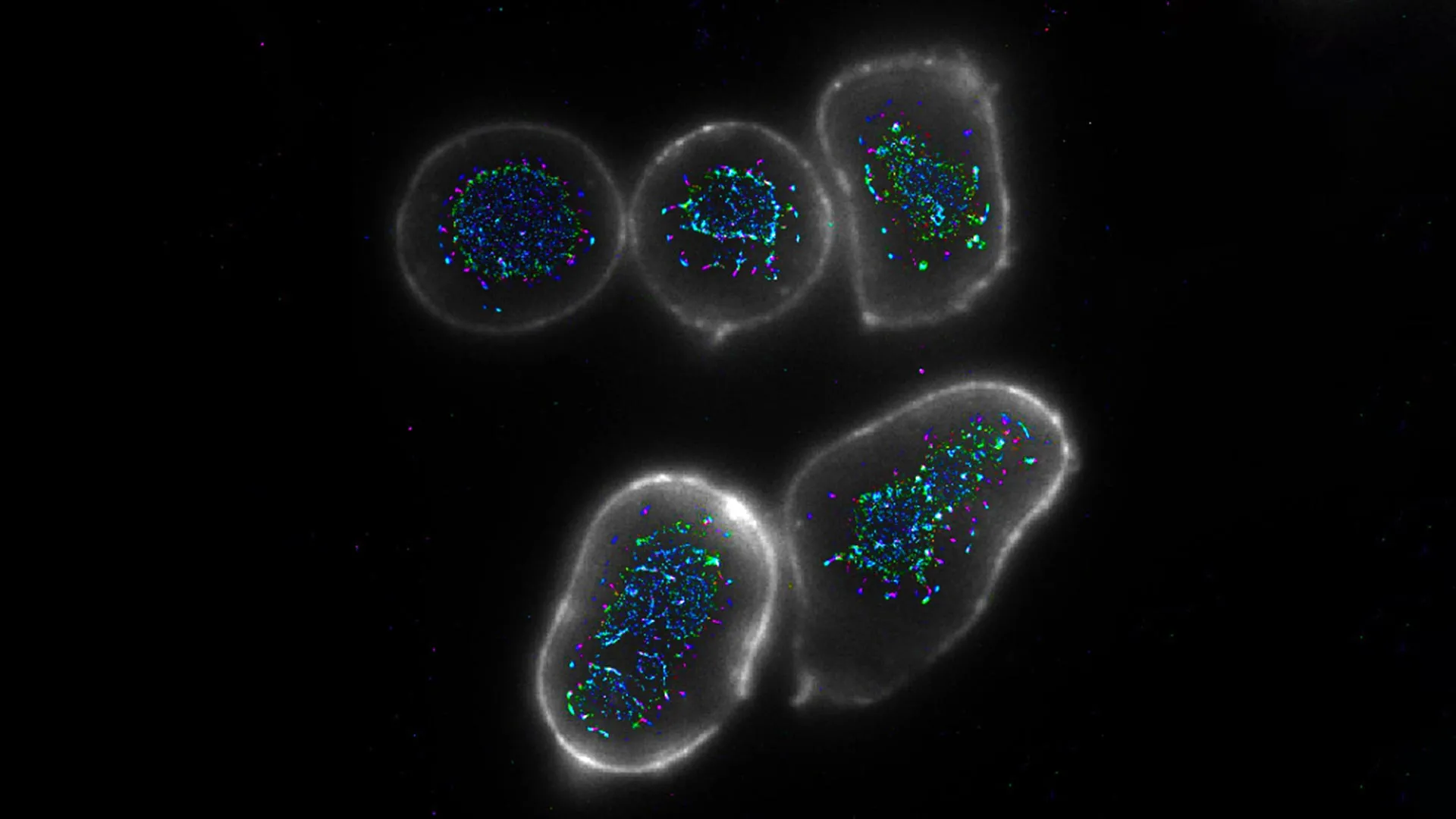
Scientists at the University of Southampton have developed a new strategy designed to strengthen how the immune system responds to cancer. The approach aims to help immune cells recognize and attack tumors more effectively.
The findings were reported in the journal Nature Communications. In the study, researchers tested specially engineered antibodies designed to more strongly activate T cells, the immune cells responsible for killing cancer cells.
How Antibodies Can Boost Immune Signals
These antibodies work by grabbing and clustering several immune cell receptors at once, which increases the strength of the signal that tells a T cell to attack cancer. When these signals are stronger, T cells are more likely to launch a full immune response.
The research team from the University of Southampton's Centre for Cancer Immunology focused on a receptor called CD27. This receptor needs a matching key (ligand) to activate T cells. During infections, the body naturally produces this ligand, but cancer cells do not. Without it, T cells receive only a weak activation signal and struggle to attack tumors effectively.
Why Traditional Antibodies Fall Short
Antibodies can sometimes act like a master key, helping trigger immune responses. However, most antibodies used in medicine today have a Y shaped structure with two arms, which limits them to binding just two receptors at a time.
Although antibody based treatments have transformed cancer care, they do not work for every patient. In some cancers, T cells still fail to become fully active because they are missing the combination of signals needed to mount a strong attack.
A Four Pronged Antibody Design
The antibodies developed in this study were built with four binding arms instead of two. This allows them to attach to more receptors simultaneously. They also recruit a second immune cell, which forces all the CD27 receptors being held to gather together. This clustering greatly amplifies the activation signal and closely mimics how CD27 is triggered naturally in the body.
Professor Aymen Al Shamkhani at the University of Southampton, who led the research, said: "We already understood how the body's natural CD27 signal switches on T cells, but turning that knowledge into a medicine was the real challenge. Antibodies are reliable molecules that make excellent drugs. However, the natural antibody format was not powerful enough, so we had to create a more effective version."
Stronger Activation of Cancer Fighting T Cells
Laboratory tests using mice and human immune cells showed that the new antibodies were much better at activating CD8+ T cells than standard Y shaped antibodies. CD8+ T cells are often described as the special forces of the immune system because of their ability to directly destroy cancer cells. The enhanced activation led to a stronger anti tumor response.
By making CD27 easier to target with therapy, the research offers a roadmap for developing new immunotherapy treatments that better harness the immune system's natural power.
Professor Al Shamkhani added: "This approach could help improve future cancer treatments by allowing the immune system to work closer to its full potential."
The study was funded by Cancer Research UK and highlights the Centre for Cancer Immunology's role in advancing innovative approaches to cancer immunotherapy.
Story Source:
Materials provided by University of Southampton. Note: Content may be edited for style and length.
Journal Reference:
- Marcus A. Widdess, Anastasia Pakidi, Hannah J. Metcalfe, H. T. Claude Chan, Tatyana Inzhelevskaya, Chris A. Penfold, C. Ian Mockridge, Steven G. Booth, Sonya James, Sean H. Lim, Stephen A. Beers, Mark S. Cragg, Aymen Al-Shamkhani. Harnessing multivalency and FcγRIIB engagement to augment anti-CD27 immunotherapy. Nature Communications, 2025; DOI: 10.1038/s41467-025-67882-3
Cite This Page: