
These nanoparticles kill cancer cells while sparing healthy ones
- Date:
- December 24, 2025
- Source:
- RMIT University
- Summary:
- Researchers have created tiny metal-based particles that push cancer cells over the edge while leaving healthy cells mostly unharmed. The particles work by increasing internal stress in cancer cells until they trigger their own shutdown process. In lab tests, they killed cancer cells far more effectively than healthy ones. The technology is still early-stage, but it opens the door to more precise and gentler cancer treatments.
- Share:
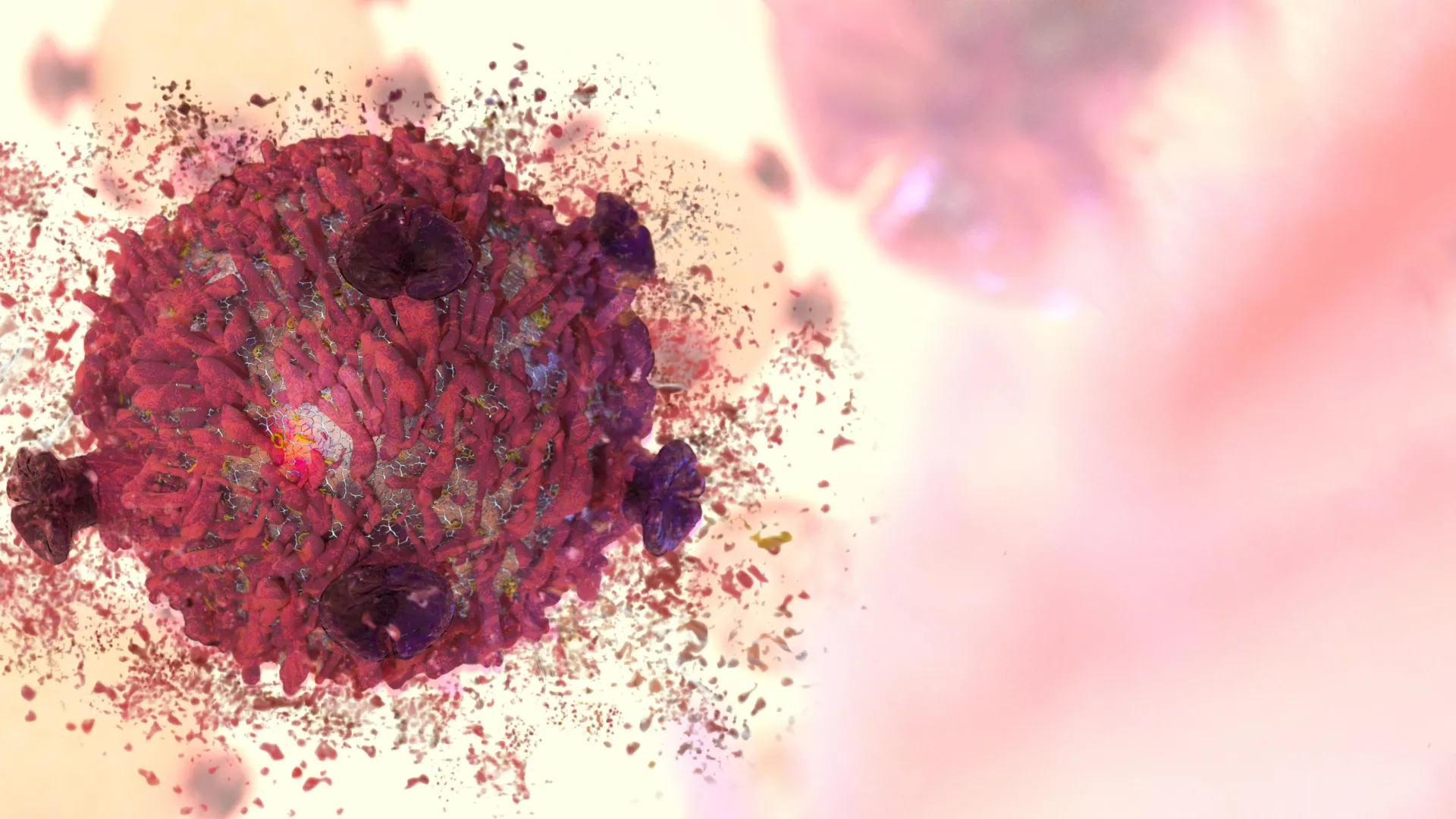
Researchers led by RMIT University have developed extremely small particles called nanodots that can destroy cancer cells while largely leaving healthy cells unharmed. The particles are made from a metal-based compound and represent a possible new direction for cancer treatment research.
The work is still in its early stages and has only been tested in laboratory-grown cells. It has not yet been studied in animals or humans. Even so, the findings suggest a promising strategy that takes advantage of vulnerabilities already present in cancer cells.
A Metal Compound With Unusual Properties
The nanodots are created from molybdenum oxide, a compound derived from molybdenum. This rare metal is commonly used in electronics and industrial alloys.
According to the study's lead researcher Professor Jian Zhen Ou and Dr. Baoyue Zhang from RMIT's School of Engineering, small changes to the chemical structure of the particles caused them to release reactive oxygen molecules. These unstable oxygen forms can damage vital cell components and ultimately trigger cell death.
Lab Tests Show Strong Cancer Selectivity
In laboratory experiments, the nanodots killed cervical cancer cells at three times the rate seen in healthy cells over a 24-hour period. Notably, the particles worked without requiring light activation, which is uncommon for similar technologies.
"Cancer cells already live under higher stress than healthy ones," Zhang said.
"Our particles push that stress a little further -- enough to trigger self-destruction in cancer cells, while healthy cells cope just fine."
International Collaboration Behind the Research
The research involved scientists from multiple institutions. Contributors included Dr. Shwathy Ramesan from The Florey Institute of Neuroscience and Mental Health in Melbourne, as well as researchers from Southeast University, Hong Kong Baptist University, and Xidian University in China. The work was supported by the ARC Centre of Excellence in Optical Microcombs (COMBS).
"The result was particles that generate oxidative stress selectively in cancer cells under lab conditions," she said.
How the Nanodots Trigger Cell Death
To create the effect, the team carefully adjusted the composition of the metal oxide by adding very small amounts of hydrogen and ammonium.
This precise tuning altered how the particles managed electrons, allowing them to produce higher levels of reactive oxygen molecules. These molecules push cancer cells into apoptosis -- the body's natural process for safely removing damaged or malfunctioning cells.
In a separate experiment, the same nanodots broke down a blue dye by 90 percent in just 20 minutes, demonstrating how powerful their chemical reactions can be even in complete darkness.
A Path Toward Gentler Cancer Treatments
Many existing cancer therapies damage healthy tissue along with tumors. Technologies that can selectively increase stress inside cancer cells may lead to treatments that are more targeted and less harmful.
Because the nanodots are made from a widely used metal oxide rather than costly or toxic noble metals such as gold or silver, they may also be more affordable and safer to manufacture.
Next Steps Toward Real-World Use
The COMBS research team at RMIT is continuing to advance the technology. Planned next steps include:
- Targeting delivery systems so the particles activate only inside tumors.
- Controlling release of reactive oxygen species to avoid damage to healthy tissue.
- Seeking partnerships with biotech or pharmaceutical companies to test the particles in animal models and develop scalable manufacturing methods.
Organizations interested in collaborating with RMIT researchers can contact: [email protected]
Story Source:
Materials provided by RMIT University. Note: Content may be edited for style and length.
Journal Reference:
- Bao Yue Zhang, Farjana Haque, Shwathy Ramesan, Sanjida Afrin, Muhammad Waqas Khan, Haibo Ding, Xin Zhou, Qijie Ma, Jiaru Zhang, Rui Ou, Md Mohiuddin, Enamul Haque, Yichao Wang, Azmira Jannat, Yumin Li, Robi S. Datta, Kate Fox, Guolang Li, Hujun Jia, Jian Zhen Ou. Ultrathin Multi‐Doped Molybdenum Oxide Nanodots as a Tunable Selective Biocatalyst. Advanced Science, 2025; 12 (41) DOI: 10.1002/advs.202500643
Cite This Page: