
Hidden brain maps that make empathy feel physical
- Date:
- December 23, 2025
- Source:
- Netherlands Institute for Neuroscience - KNAW
- Summary:
- When we watch someone move, get injured, or express emotion, our brain doesn’t just see it—it partially feels it. Researchers found eight body-like maps in the visual cortex that organize what we see in the same way the brain organizes touch. These maps help us instantly understand actions, emotions, and intentions in others. The discovery sheds light on human empathy and opens doors for new brain-based therapies and AI systems that better understand the body.
- Share:
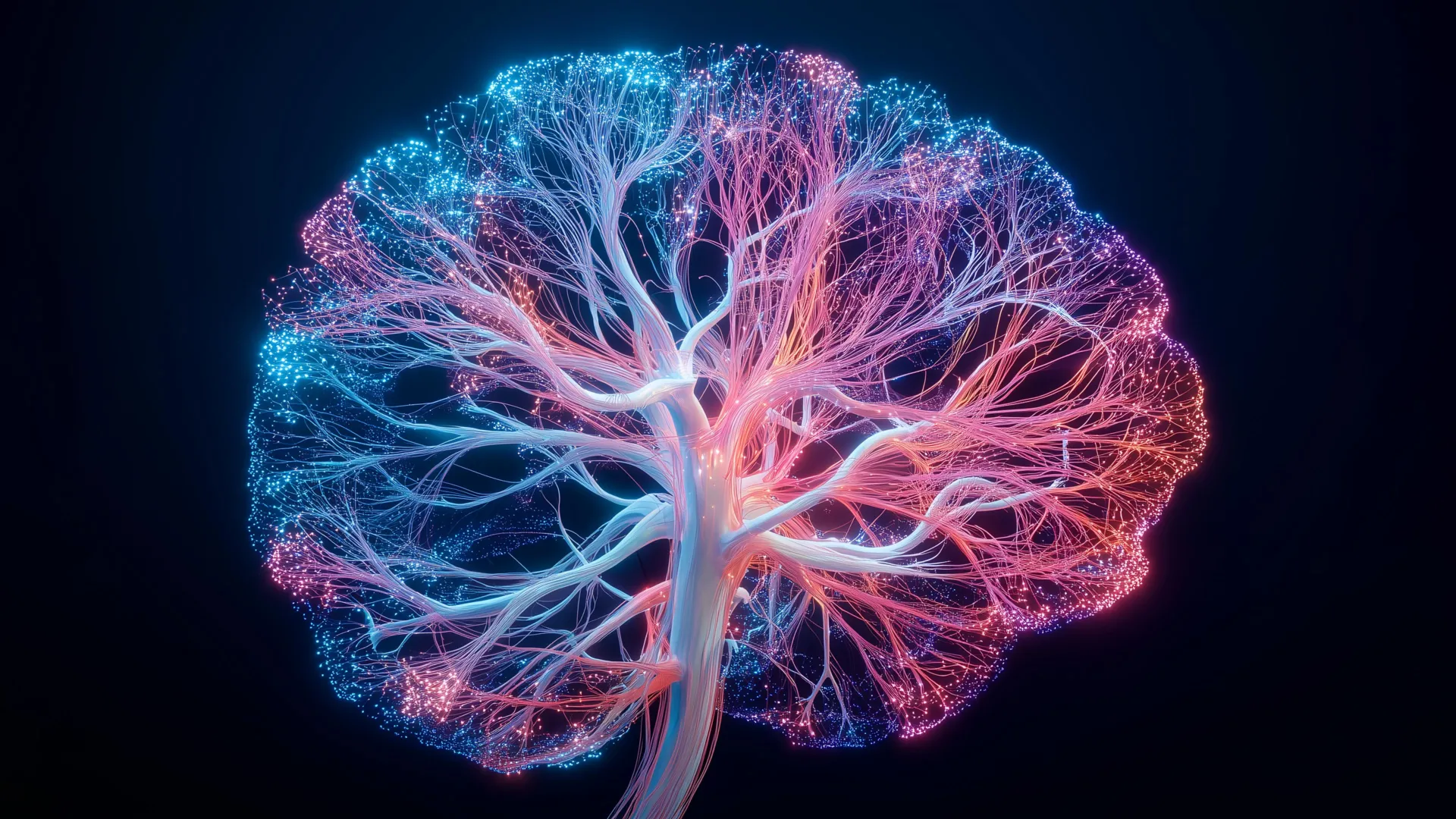
In a global research collaboration, neuroscientists Nicholas Hedger (University of Reading) and Tomas Knapen (Netherlands Institute for Neuroscience & Vrije Universiteit Amsterdam) set out to better understand how humans experience the world. Their work revealed how the brain converts visual information into sensations of touch, helping create a lived, physical sense of reality. As Knapen notes, "This aspect of human experience is a fantastic area for AI development."
Picture yourself cooking with a friend when they suddenly cut their finger. Almost instantly, you might wince, make a face, or even pull your own hand away. These reactions happen within milli-seconds and are not imagined. They reflect real activity in your brain's touch-processing region, known as the somatosensory cortex.
This raises a fascinating question. How can simply watching someone else trigger your own sense of touch?
Studying Touch Through Movies
To investigate this mystery, researchers from the UK, USA, and VU, NIN (KNAW) in Amsterdam turned to an unexpected tool: Hollywood films. Instead of controlled lab tasks, they analyzed how the brain responds during natural viewing experiences.
Tomas Knapen (last author) and Nicholas Hedger (first author) worked with a dataset in which participants lay in brain scanners while watching movie clips from films such as The Social Network and Inception. The researchers aimed to use these recordings to pinpoint the brain systems that allow us to deeply experience what we see.
Mapping the Body in the Brain
When scientists refer to "maps" in the brain, they are describing how different regions organize information about the body and surrounding space. In the somatosensory cortex, the entire body is laid out in an orderly way. One end processes sensations from the feet, while the other handles touch from the head. These maps help the brain identify where sensations originate.
Finding comparable maps in the visual cortex is especially exciting. It suggests that the brain connects visual input directly to bodily sensation, linking sight and touch at a fundamental level.
"We found not one, or two, but eight remarkably similar maps in the visual cortex!" Knapen explains. "Finding so many shows how strongly the visual brain speaks the language of touch."
These visual maps follow the same head-to-toe organization seen in the somatosensory cortex -- indicating that when we look at another person, the brain structures that information in much the same way it does when we physically feel something ourselves.
Why the Brain Uses Multiple Maps
If there are so many body maps, what purpose do they serve? According to the researchers, each map appears to support a different function. Some are more focused on recognizing specific body parts, while others help determine where those parts are located in space. "I think that there are many more purposes, but we just haven't been able to test them yet." Knapen adds.
Which map becomes most active can depend on what you are paying attention to. "Say you stand up and grab a cup of coffee. If I'm interested in what you're doing, I will probably focus on your hand grabbing the cup. Now imagine that I'm more interested in your emotional state. In that case, I might focus more on your overall posture or your facial expressions. Every time you look at a person, there are many different bodily translations that need to be conducted visually. We think that these maps are a fundamental ingredient in that exact process."
Although having overlapping maps might sound inefficient, Knapen argues the opposite. "This allows the brain to have many types of information in a single space, and make a translation in any way that is relevant in that moment," he explains.
Implications for Psychology Medicine and Technology
The discovery opens the door to a wide range of future studies. Because these body maps appear to play a role in emotional understanding, they may help advance research in social psychology and clinical care. "People with autism can struggle with this sort of processing. Having this information could help us better identify effective treatments," Knapen explains.
Over time, the findings could also influence the development of neurotechnology. "Training sets for brain implants often start off with instructions like 'try to think of a movement'. If these bodily processes can be activated in much broader ways, then there might be much broader possibilities to train and develop those brain computer interfaces."
Knapen also sees major potential for artificial intelligence. "Our bodies are deeply intertwined with our experiences and understanding of the world. Current AI primarily relies on text and video, lacking this bodily dimension. This aspect of human experience is a fantastic area for AI development. Our work shows the potential for very large, precision brain imaging datasets to fuel this development: a beautiful synergy between neuroscience and AI."
Despite these future possibilities, Knapen emphasizes that the core motivation remains deeply human. "I just want to understand the depths of the human experience, and it really feels like we just found this central ingredient for it."
Story Source:
Materials provided by Netherlands Institute for Neuroscience - KNAW. Note: Content may be edited for style and length.
Journal Reference:
- Nicholas Hedger, Thomas Naselaris, Kendrick Kay, Tomas Knapen. Vicarious body maps bridge vision and touch in the human brain. Nature, 2025; DOI: 10.1038/s41586-025-09796-0
Cite This Page: