
After the LA fires hospitals saw a sudden surge in illness
The LA wildfires ended, but a surge in illness, heart attacks, and lung problems followed soon after.
- Date:
- December 29, 2025
- Source:
- Cedars-Sinai Medical Center
- Summary:
- After the January 2025 LA wildfires, hospitals recorded a surge in serious health problems. Emergency visits for heart attacks, lung illness, and general sickness rose sharply in the following three months. Researchers believe fine particles from wildfire smoke, along with stress, may have triggered these effects. Unusual blood test changes point to hidden health impacts that lingered well beyond the fires themselves.
- Share:
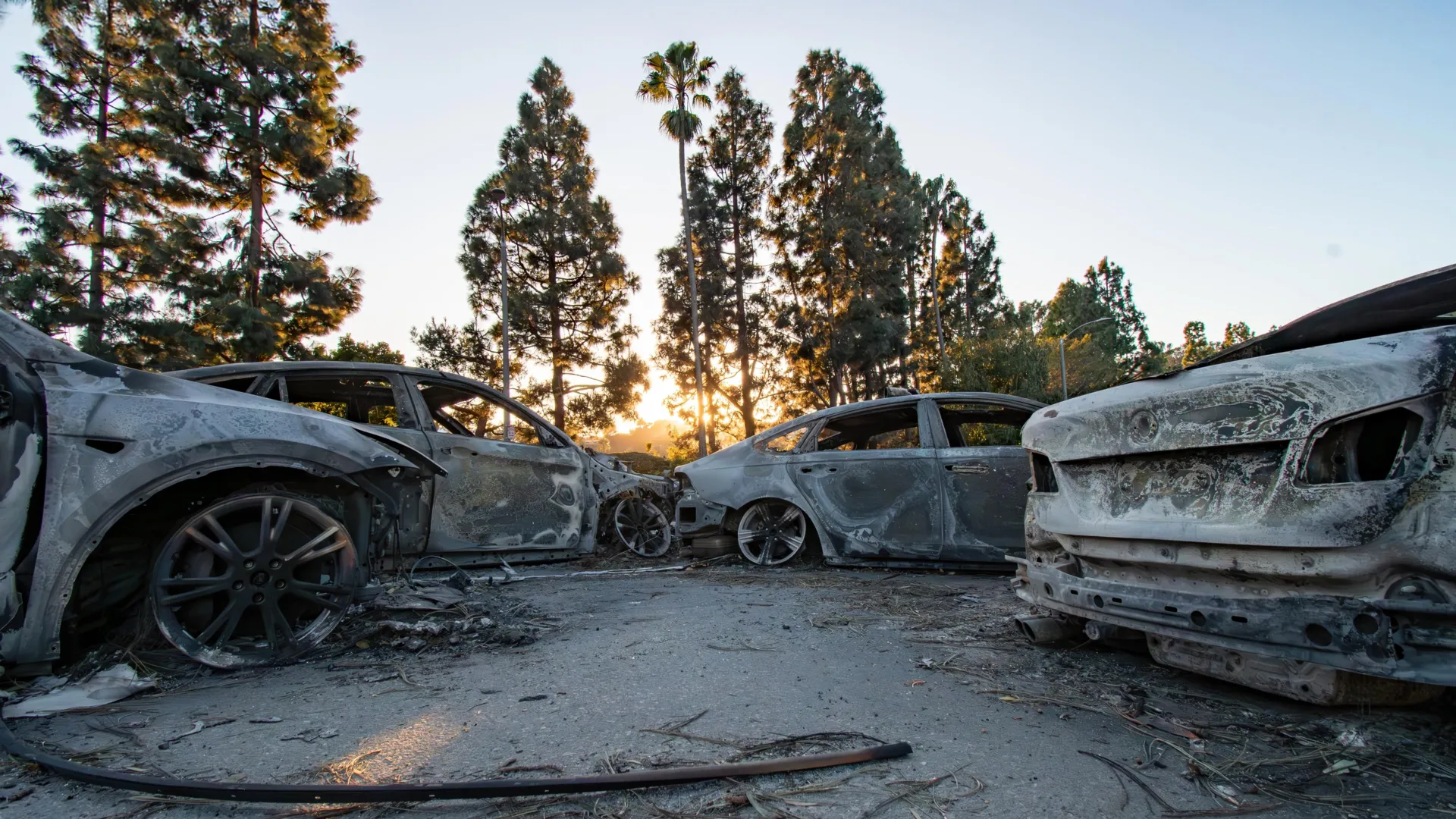
A new study from Cedars-Sinai reports a sharp rise in serious health problems in the months following the January 2025 wildfires in Los Angeles. Researchers found that an unusually high number of people experienced heart attacks, lung-related complications, or general illness within 90 days after the fires began.
"Wildfires that spread into urban areas have proven to be extremely dangerous because of how quickly they move and what they burn and release into the environment," said Susan Cheng, MD, MPH, director of Public Health Research at Cedars-Sinai and senior author of the study, published in JACC. "Our research suggests the Eaton and Pacific Palisades fires had an immediate effect on people's health."
How the researchers analyzed emergency visits
The Cedars-Sinai Emergency Department is located on the academic medical center's main campus, about 10 miles from Pacific Palisades and roughly 20 miles from Altadena, where the largest fires ignited in January 2025. Investigators examined emergency department visits during the 90 days after the fires began, from Jan. 7 to April 7, 2025. These data were compared with emergency visit records from the same calendar period in each year from 2018 through 2024.
Overall, the total number of emergency department visits during this 90-day window in 2025 did not differ significantly from previous years. However, visits tied to specific medical conditions rose sharply.
Spikes in illness, heart attacks, and lung problems
Compared with the average rates observed over the prior seven years, researchers identified a 118% increase in emergency visits for general illness. Visits related to heart attacks rose by 46%, while visits for pulmonary illness increased by 24%.
"Fine particles released by wildfires can enter the body and cause injury, particularly to the heart and lungs," said Cheng, who is also the Erika J. Glazer Chair in Cardiovascular Health and Population Science in the Smidt Heart Institute at Cedars-Sinai. "Stress related to the fires may also contribute to a broad range of health issues."
Blood test abnormalities linked to wildfire exposure
The study also revealed another concerning trend. Abnormal blood test results associated with general illness more than doubled during the 90-day period in 2025 compared with the same timeframe in earlier years. According to the investigators, this type of finding has not previously been reported following major wildfire events.
"Abnormal blood test results could indicate that the body is responding to an external stressor such as toxins in the air," said Joseph Ebinger, MD, MS, associate professor in the Department of Cardiology and first author of the study. "This study is an important step toward understanding how the Eaton and Palisades fires may have affected Angelenos' health. We need more research to determine what we can do to mitigate any remaining risks and protect people from fire harm in the future."
A long-term effort to track wildfire health impacts
This research is part of the broader LA Fire HEALTH Study, a collaborative effort focused on understanding the long-term health consequences of the fires that ignited in January 2025 across L.A. County. Scientists from Cedars-Sinai; the Harvard T.H. Chan School of Public Health; the Keck School of Medicine of the University of Southern California (USC); Stanford University; UCLA; the University of California, Davis (UCD); the University of California, Irvine (UCI); the University of Texas at Austin; and Yale University plan to continue studying these impacts over the next 10 years.
Additional Cedars-Sinai authors include Tzu Yu Huang, MS; Sandy Joung, MSHS, MBA; Juliane Kwong, BS; Wasay Warsi, MS, BS; Nancy Sun, MPS; Jesse Navarrette, MPA; Patrick Botting, DHSc; Zaldy S. Tan, MD, MPH; and Alan C. Kwan, MD.
Other authors include Brian L. Claggett, PhD, of Brigham and Women's Hospital in Boston.
This work was partially supported by the Spiegel Family Fund, the Smidt Heart Foundation, and the Erika J. Glazer Family Foundation.
Story Source:
Materials provided by Cedars-Sinai Medical Center. Note: Content may be edited for style and length.
Journal Reference:
- Joseph E. Ebinger, Tzu Yu Huang, Sandy Y. Joung, Juliane Louise F. Kwong, Wasay Warsi, Nancy Sun, Jesse Navarrette, Patrick Botting, Zaldy S. Tan, Brian L. Claggett, Alan C. Kwan, Susan Cheng. Emergency Encounters for Illness During and After the Los Angeles Wildfires. JACC, 2025; DOI: 10.1016/j.jacc.2025.10.079
Cite This Page: