
Small root mutation could make crops fertilize themselves
A tiny protein tweak may unlock nitrogen-fixing super-crops that slash global fertilizer demand.
- Date:
- December 9, 2025
- Source:
- Aarhus University
- Summary:
- Scientists discovered a small protein region that determines whether plants reject or welcome nitrogen-fixing bacteria. By tweaking only two amino acids, they converted a defensive receptor into one that supports symbiosis. Early success in barley hints that cereals may eventually be engineered to fix nitrogen on their own. Such crops could dramatically reduce fertilizer use and emissions.
- Share:
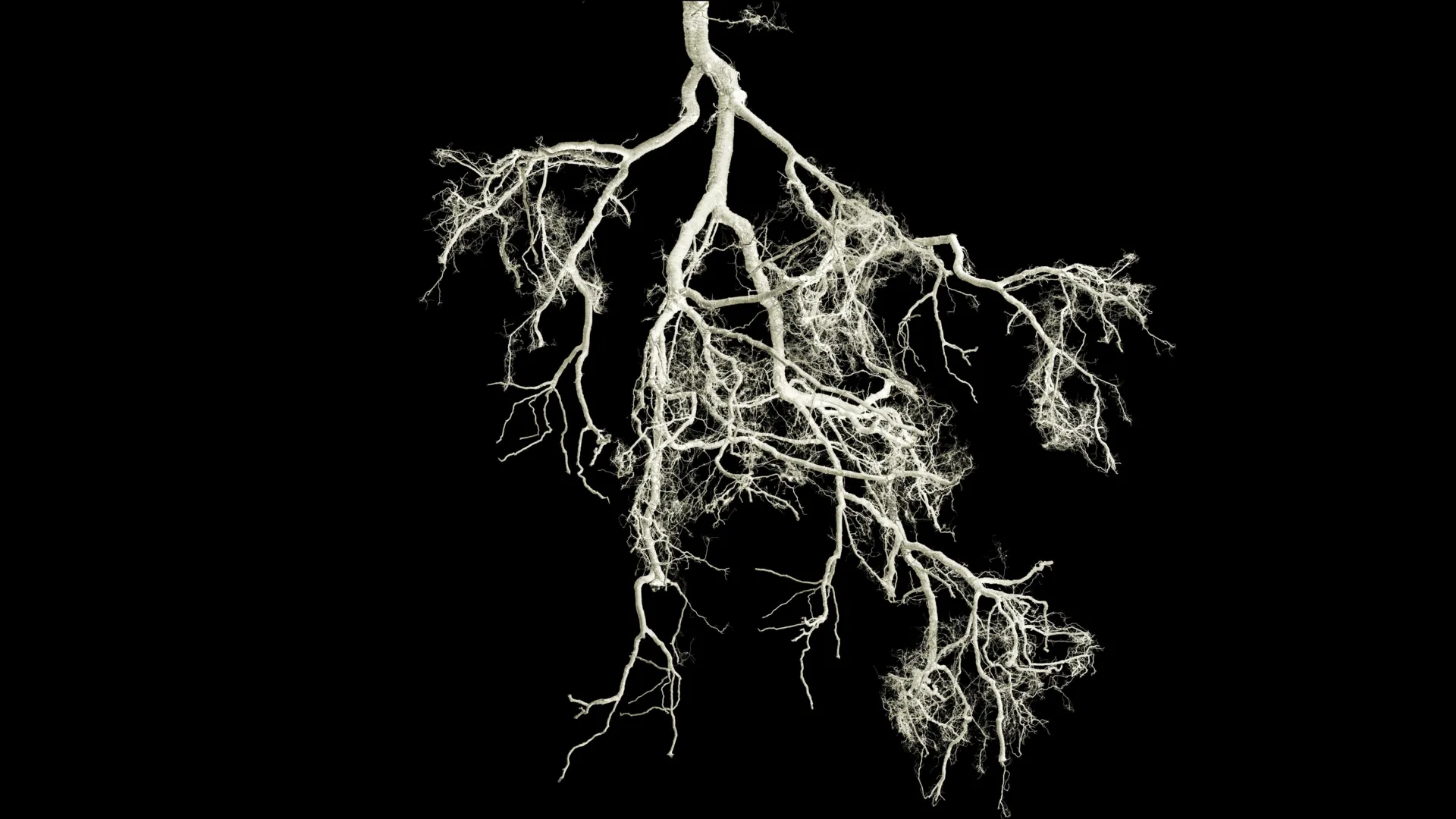
"We are one step closer to a greener and climate-friendlier food production."
That is the conclusion reached by Kasper Røjkjær Andersen and Simona Radutoiu, professors of molecular biology at Aarhus University.
Their new research highlights an important biological clue that could help reduce agriculture's heavy reliance on artificial fertilizer.
Plants require nitrogen to grow, and most crop species can obtain it only through fertilizer. A small group of plants, including peas, clover, and beans, can grow without added nitrogen. They do this by forming a partnership with specific bacteria that turn nitrogen from the air into a form the plant can absorb.
Unlocking the Secrets Behind Natural Nitrogen Fixation
Scientists worldwide are working to understand the genetic and molecular basis of this natural nitrogen-fixing ability. The hope is that this trait could eventually be introduced into major crops such as wheat, barley, and maize.
If achieved, these crops could supply their own nitrogen. This shift would reduce the need for synthetic fertilizer, which currently represents about two percent of global energy consumption and produces significant CO2 emissions.
Researchers at Aarhus University have now identified small receptor changes in plants that cause them to temporarily shut down their immune defenses and enter a cooperative relationship with nitrogen-fixing bacteria.
How Plants Decide Between Defense and Cooperation
Plants rely on cell-surface receptors to sense chemical signals from microorganisms in the soil.
Some bacteria release compounds that warn the plant they are "enemies," prompting defensive action. Others signal that they are "friends" able to supply nutrients.
Legumes such as peas, beans, and clover allow specialized bacteria to enter their roots. Inside these root tissues, the bacteria convert nitrogen from the atmosphere and share it with the plant. This partnership, known as symbiosis, is the reason legumes can grow without artificial fertilizer.
Aarhus University researchers found that this ability is strongly influenced by just two amino acids, which act as small "building blocks" within a root protein.
"This is a remarkable and important finding," says Simona Radutoiu.
The root protein functions as a "receptor" that reads signals from bacteria. It determines whether the plant should activate its immune system (alarm) or accept the bacteria (symbiosis).
The team identified a small region in the receptor protein that they named Symbiosis Determinant 1. This region functions like a switch that controls which internal message the plant receives.
By modifying only two amino acids within this switch, the researchers changed a receptor that normally triggers immunity so that it instead initiated symbiosis with nitrogen-fixing bacteria.
"We have shown that two small changes can cause plants to alter their behavior on a crucial point -- from rejecting bacteria to cooperating with them," Radutoiu explains.
Expanding the Potential to Major Food Crops
In laboratory experiments, the researchers successfully engineered this change in the plant Lotus japonicus. They then tested the concept in barley and found that the mechanism worked there as well.
"It is quite remarkable that we are now able to take a receptor from barley, make small changes in it, and then nitrogen fixation works again," says Kasper Røjkjær Andersen.
The long-term potential is significant. If these modifications can be applied to other cereals, it may ultimately be possible to breed wheat, maize, or rice capable of fixing nitrogen on their own, similar to legumes.
"But we have to find the other, essential keys first," Radutoiu notes.
"Only very few crops can perform symbiosis today. If we can extend that to widely used crops, it can really make a big difference on how much nitrogen needs to be used."
Story Source:
Materials provided by Aarhus University. Note: Content may be edited for style and length.
Journal Reference:
- Magdalini Tsitsikli, Bine Simonsen, Thi-Bich Luu, Maria M. Larsen, Camilla G. Andersen, Kira Gysel, Damiano Lironi, Christina Krönauer, Henriette Rübsam, Simon B. Hansen, René Bærentsen, Jesper Lundsgaard Wulff, Sarah Holt Johansen, Gülendam Sezer, Jens Stougaard, Kasper Røjkjær Andersen, Simona Radutoiu. Two residues reprogram immunity receptors for nitrogen-fixing symbiosis. Nature, 2025; DOI: 10.1038/s41586-025-09696-3
Cite This Page: