
Scientists gave worms magnetic bacteria. They lived 43% longer
- Date:
- September 24, 2026
- Source:
- Hefei Institutes of Physical Science, Chinese Academy of Sciences
- Summary:
- A magnet-producing bacterium extended the average lifespan of C. elegans worms by more than 43% while helping protect their neurological and intestinal health. Researchers traced much of the effect to suppression of ferroptosis, a damaging form of cell death linked to iron buildup and oxidative stress.
- Share:
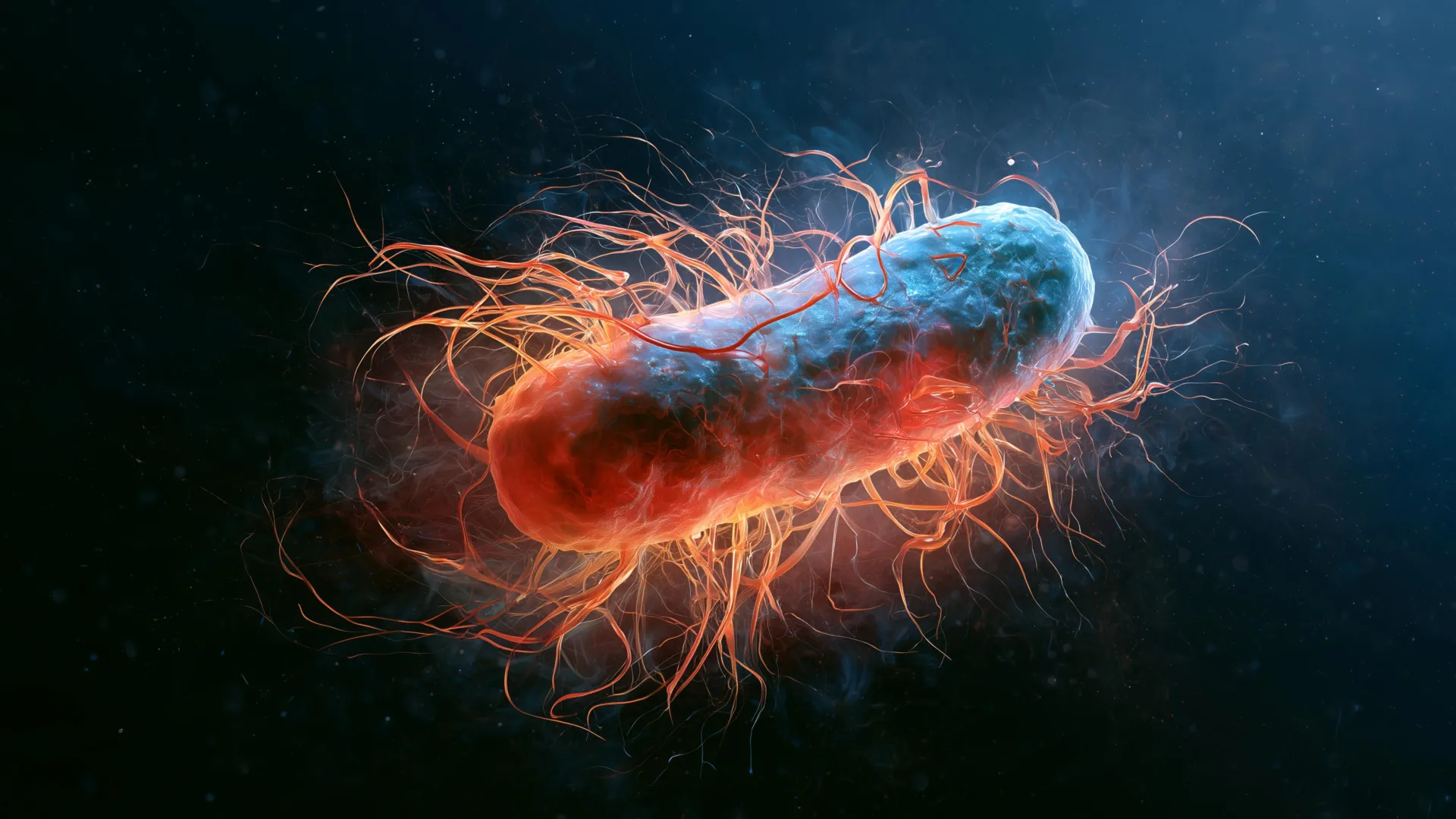
Researchers led by Prof. An Xu at the Hefei Institutes of Physical Science of the Chinese Academy of Sciences have found that a magnetotactic bacterium (MTB) called Magnetospirillum magneticum AMB-1 (AMB-1) can extend healthy lifespan in the Caenorhabditis elegans model. The team also identified the main mechanism behind the effect -- suppression of a form of cell death known as ferroptosis.
The findings were published in Free Radical Biology and Medicine.
Magnetic Bacteria and Healthy Aging
Aging gradually reduces normal physiological function and raises the risk of many chronic diseases. Researchers have explored drugs and genetic approaches as possible anti-aging strategies, but questions about safety and practical clinical use remain.
Magnetotactic bacteria (MTB) offer a very different approach. These microorganisms contain specialized structures called magnetosomes and have shown good biocompatibility. They have already attracted attention for potential uses including drug delivery and cancer treatment, but their possible influence on aging has received far less study.
To investigate that question, the researchers tested the MTB strain AMB-1 in C. elegans, a widely used model organism for aging research.
Lifespan Increased by More Than 43%
Worms treated with AMB-1 lived substantially longer. Their average lifespan increased by 43.39%, and the treatment also helped preserve neurological function and intestinal integrity in older worms.
The team then examined whether magnetosome production was important to this effect. Their results indicated that the ability to produce magnetosomes played a major role in extending lifespan.
Wild-type AMB-1 produced a stronger longevity effect than reversibly non-magnetotactic RNM-AMB-1. In contrast, non-magnetotactic NM-AMB-1 did not extend lifespan.
Blocking an Aging-Linked Form of Cell Death
Further experiments offered clues about how AMB-1 produces its effects. The bacteria reduced iron buildup and lowered lipid peroxidation in the worms, changes that suppressed aging-related ferroptosis.
Ferroptosis is a form of cell death associated with iron accumulation and oxidative damage to fats within cells. Genetic analysis showed that several ferroptosis-related pathways were involved in AMB-1-mediated lifespan regulation, including the genes ftn-1, bli-3, and ads-1.
According to the researchers, the findings establish a new microbial strategy for anti-aging intervention and provide foundational evidence that could support broader use of MTB in geriatric medicine.
Story Source:
Materials provided by Hefei Institutes of Physical Science, Chinese Academy of Sciences. Note: Content may be edited for style and length.
Journal Reference:
- Yuting Ding, Xinyao Huang, Yanan Zhao, Ruoyun Dong, Chenxi Zhou, Yuanyuan Wu, Hua Du, Juan Wan, Yun Liu, An Xu. A novel role for magnetotactic bacterium: Magnetospirillum magneticum AMB-1 prolonged healthy lifespan of Caenorhabditis elegans via regulating ferroptosis. Free Radical Biology and Medicine, 2026; 254: 434 DOI: 10.1016/j.freeradbiomed.2026.06.050
Cite This Page: