
Scientists discover the first diplodocus ever found outside North America
A 150-million-year-old Diplodocus found in Spain reveals that the iconic giant once roamed far beyond North America.
- Date:
- September 18, 2026
- Source:
- Taylor & Francis Group
- Summary:
- A 150-million-year-old dinosaur fossil from Spain has been identified as the first confirmed Diplodocus ever found outside North America. The giant sauropod measured about 25 meters long and was preserved well enough for researchers to match distinctive features in its tail bones to the famous genus. Its unexpected appearance in Europe suggests dinosaurs were moving between the continents during the Late Jurassic, possibly across temporary land connections.
- Share:
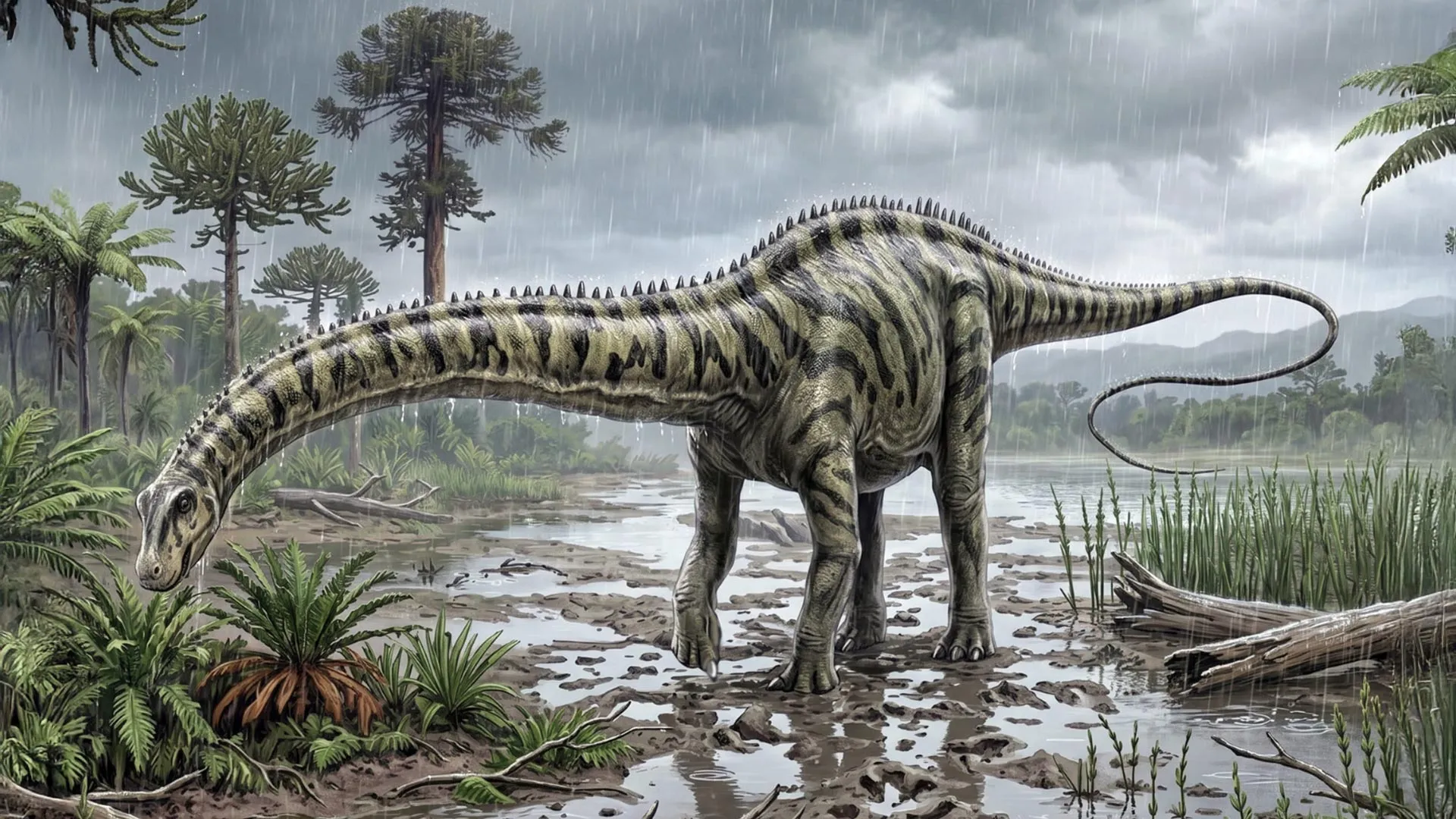
Paleontologists have identified the first known evidence of Diplodocus outside North America, a discovery that changes scientists' understanding of where the iconic dinosaur lived during the Late Jurassic.
The sauropod fossils were described by researchers from the Fundación Conjunto Paleontológico de Teruel-Dinópolis in the peer-reviewed Journal of Vertebrate Paleontology. The specimen is also among the most complete diplodocid skeletons ever uncovered in Europe.
First Diplodocus Found in Europe
The fossils were discovered at the La Tejería site in El Castellar, Teruel, Spain. During excavations, a team of paleontologists from the Fundación Dinópolis recovered 14 exceptionally well-preserved caudal (tail) vertebrae along with several chevron bones.
Before this discovery, every confirmed Diplodocus specimen had been found in the Morrison Formation of the western United States.
Sergio Sánchez Fenollosa, PhD student in biodiversity and evolutionary biology at Fundación Dinópolis and lead author of the study, explains: "We are delighted with this discovery.
"It was an exciting and continuous process of seeing the pieces of the puzzle gradually fall into place. From the early stages of the osteological study, we noticed strong similarities with several diplodocine sauropods. As we looked more closely at the anatomy, we began to identify a combination of features characteristic of Diplodocus species. Then, as we carried out different evolutionary analyses, they kept pointing in the same direction. With each new result, the picture became clearer: we were looking at a Diplodocus."
Sergio adds: "And what is more, the outcome of the dig is some of the strongest paleontological evidence for episodes of dispersal and faunal exchange between the two continents across the proto-Atlantic Ocean during the Late Jurassic.
"Essentially, this discovery allows us to better understand Iberian Mesozoic ecosystems and the diversity of sauropod dinosaurs that inhabited the European Jurassic."
A Jurassic Connection Between Continents
The Spanish Diplodocus lived roughly 150 million years ago, near the end of the Jurassic Period. Its presence in Europe provides strong evidence that dinosaurs were able to move between North America and Europe during this time.
Researchers believe these animals may have crossed temporary land bridges that appeared when sea levels fell during regressive phases of the proto-North Atlantic Ocean.
The finding therefore offers more than a new location for Diplodocus. It also provides evidence of periods when dinosaur populations and other animals could move between the two continents.
A 25 Meter Giant in Spain
Co-author Dr Alberto Cobos, managing director of Fundación Dinópolis, points out: "The Diplodocus from El Castellar was approximately 25 meters long (comparable in size to its North American relatives), making it another of the giant sauropods of the Spanish Jurassic, alongside other sauropod dinosaurs from Teruel with characteristics very different from those of diplodocids, such as Turiasaurus and Losillasaurus, among others.
"The fossils of all these dinosaurs, including those of the new Diplodocus specimen, make Teruel a reference place for understanding this great diversity."
The newly identified Diplodocus therefore joins an already impressive collection of enormous sauropods known from the Spanish Jurassic. Together, these fossils reveal just how varied the giant dinosaurs living in the region once were.
Exceptionally Preserved Diplodocus Fossils
The excellent preservation of the specimen allowed the researchers to recognize several anatomical traits associated with Diplodocus, including:
- Large pneumatic cavities inside the vertebrae
- Deep longitudinal grooves along the underside of the tail bones
- Distinctive forked chevron bones with unique medial fossae
- Elongated vertebral centra without lateral ridges
The team combined traditional anatomical comparisons with advanced phylogenetic analyses (including maximum parsimony and Bayesian inference methods). Their results placed the specimen securely within the Diplodocus genus and identified it as a close relative of Diplodocus hallorum.
The fossils are now displayed for continued research and public education in the dinosaur hall of the Museo Aragonés de Paleontología at Dinópolis in Teruel, a city in eastern Spain located roughly between Madrid and Valencia.
One of the World's Most Famous Dinosaurs
Diplodocus ranks among the most recognizable dinosaurs ever discovered. It is known for its enormous length (up to 25 meters), long whip-like tail, and relatively small head.
Since Diplodocus was first discovered in the United States in 1878, casts of its skeleton have appeared in major natural history museums around the world, particularly during the early 20th century. Those displays helped turn Diplodocus into an international symbol of paleontology and one of the most familiar dinosaurs in popular culture.
Its frequent appearances in museum exhibitions and audiovisual productions about dinosaurs have also helped make it one of the best-known "terrible lizards" among the general public.
A Diverse Dinosaur Ecosystem in Jurassic Iberia
The discovery also adds new information about the remarkable dinosaur diversity of eastern Iberia during the Late Jurassic.
The area surrounding the fossil site has produced remains from numerous dinosaur groups, including sauropods, theropods, stegosaurs, and ornithopods. Together, these fossils suggest that the ancient coastal environments of the region supported complex and highly diverse dinosaur ecosystems.
Story Source:
Materials provided by Taylor & Francis Group. Note: Content may be edited for style and length.
Journal Reference:
- Sergio Sánchez-Fenollosa, Josué García-Cobeña, Alberto Cobos. Intercontinental evidence of the iconic genus Diplodocus Marsh, 1878 (Dinosauria, Sauropoda). Journal of Vertebrate Paleontology, 2026; DOI: 10.1080/02724634.2026.2718423
Cite This Page: