
A hidden compound in healthy foods may worsen IBD
- Date:
- September 12, 2026
- Source:
- The University of North Carolina at Chapel Hill
- Summary:
- A natural compound found in foods such as spinach, almonds, and sweet potatoes may aggravate gut inflammation in people with Crohn’s disease and ulcerative colitis because their intestines appear to handle it differently. Researchers say the finding could open the door to lower-oxalate diets or microbiome treatments tailored specifically to people with IBD.
- Share:
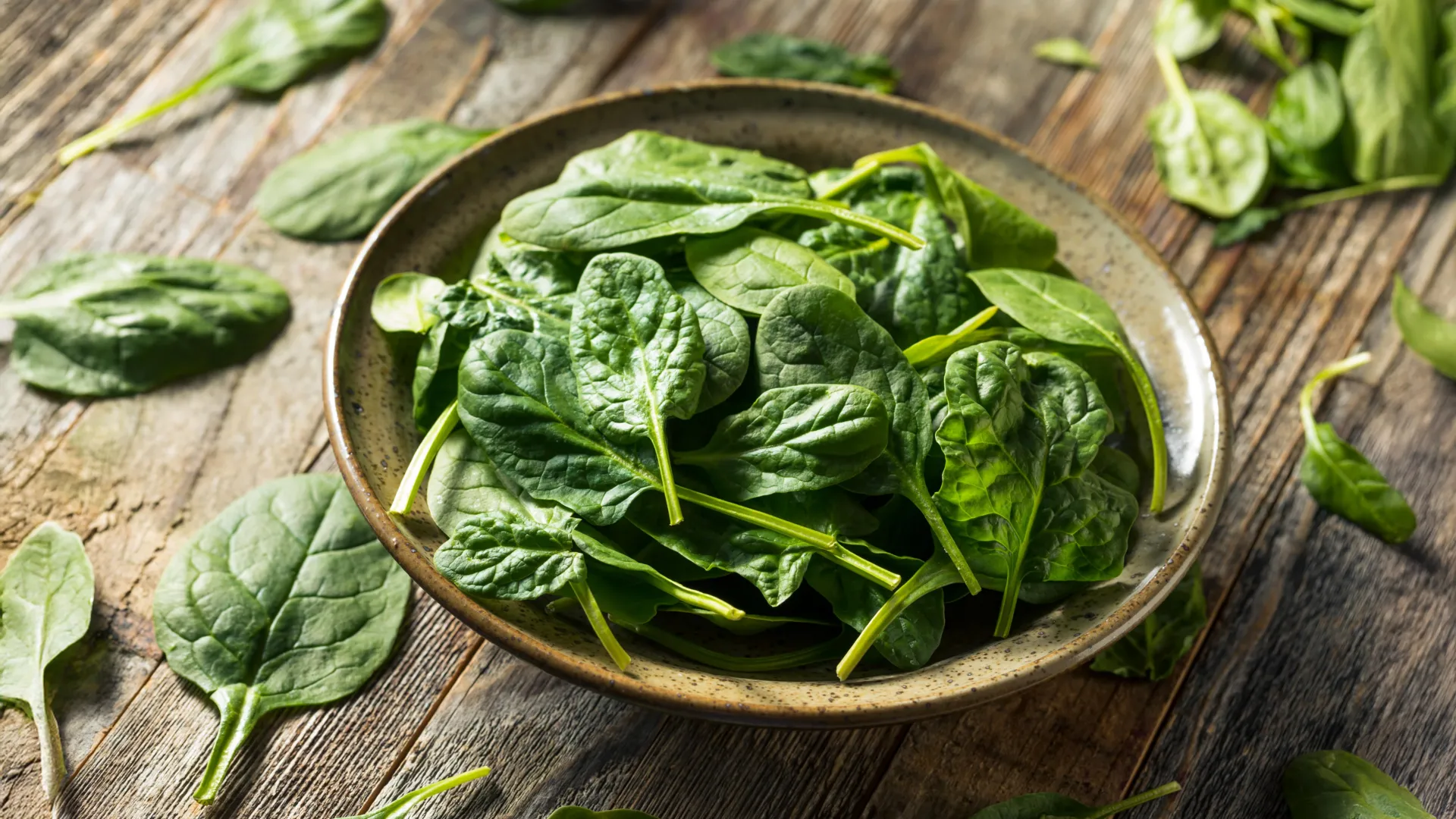
Spinach, almonds, and sweet potatoes are often praised for their nutritional value. But new research from the UNC School of Medicine suggests that for people with inflammatory bowel disease (IBD), a naturally occurring compound in these foods may contribute to intestinal inflammation.
The study, published August 13, 2026 in Cellular and Molecular Gastroenterology and Hepatology (CMGH), was led by postdoctoral scholar Anna Salvador, PhD, RD, LDN, in the lab of Shehzad Z. Sheikh, MD, PhD, Professor of Medicine and Genetics.
Researchers examined gene activity, oxalate levels in stool, and dietary patterns in people with IBD and in people without the disease. They also carried out experiments in mice and cultured cells to investigate how dietary oxalate might influence inflammation in the intestinal lining.
IBD May Disrupt the Gut's Ability to Handle Oxalate
Oxalate is a natural compound found in all plant foods. Even in a healthy digestive system, most oxalate from the diet passes through the body and is eliminated in stool.
The researchers found, however, that two transporter proteins involved in moving oxalate out of the gut, SLC26A2 and SLC26A3, were consistently present at lower levels in intestinal tissue from patients with both ulcerative colitis and Crohn's disease.
This reduction appeared across affected tissues regardless of whether active inflammation was present. The researchers also found that the more inflamed the tissue became, the lower the expression of these transporters tended to be.
When these transport systems are impaired, less dietary oxalate is absorbed. That leaves more oxalate behind in the intestinal environment, where the new findings suggest it may amplify the inflammation already associated with IBD.
Crohn's Patients Had More Oxalate Despite Similar Diets
One of the most striking findings involved people with Crohn's disease. They had significantly higher levels of oxalate in their stool than people without IBD, even though the two groups regularly consumed similar amounts of plant-based foods.
Researchers reached that conclusion using two separate approaches. One was a validated dietary questionnaire (Diet History Questionnaire III). The other was DNA metabarcoding, a molecular method that detects plant species represented in stool samples.
According to the researchers, this is the first time DNA metabarcoding has been used to evaluate diet in a population with IBD.
"For the first time, we observed that IBD patients and healthy controls were eating similar amounts of plant-based foods yet CD patients still had more oxalate in their stool," said Dr. Salvador. "That told us this isn't just about what patients eat. Something is fundamentally different about how their gut handles oxalate."
The result suggests that elevated oxalate in the intestines may be driven less by the quantity of oxalate a person eats and more by a biological problem in how the gut processes it.
Animal Experiments Strengthen the Link
The researchers also tested the effects of oxalate in several animal models.
Mice that received an oxalate-supplemented diet together with a substance that induces colitis were 60 percent less likely to survive than mice that did not receive additional dietary oxalate.
In two separate mouse models genetically prone to developing spontaneous colitis, dietary oxalate also caused the disease to appear sooner and become more severe.
Importantly, the genes responsible for oxalate transport were already less active in these susceptible mice before oxalate was added to their diets. That pattern closely resembled what researchers observed in people with IBD.
Cell culture experiments produced another clue. Oxalate intensified inflammatory responses in macrophages and dendritic cells, immune cells that play important roles in protecting and regulating the intestine.
A Possible Marker of More Severe Crohn's Disease
The team also explored whether oxalate-related genes might provide clues about how Crohn's disease progresses.
In an exploratory analysis, low expression of another transporter called SLC26A6 was associated with stricturing Crohn's disease. This is a more aggressive form of the condition in which scar tissue builds up, causing parts of the intestine to narrow.
Nearly 75 percent of patients with low SLC26A6 expression had stricturing disease.
That raises the possibility that oxalate transporter activity could eventually help doctors identify patients at greater risk of developing more severe disease. However, the researchers emphasize that the finding needs to be confirmed in larger groups of patients.
"Dr. Salvador really conceptualized and drove this work from the beginning," said Dr. Sheikh. "She asked a question that hadn't been asked before: What if a specific dietary molecule is an active driver of gut inflammation in IBD, not just a bystander? The rigor she brought to answering it is what makes these findings so compelling."
What the Findings Mean for People With IBD
The results do not suggest that people with IBD should eliminate plant foods from their diets.
Instead, the findings indicate that in people who are genetically susceptible, even moderate amounts of oxalate may contribute to inflammation of the intestinal lining. The researchers also suggest that previous studies of diet and IBD may have been complicated by differences in how individual patients are exposed to or process oxalate.
It is still possible to follow a nutritionally complete plant-based diet while reducing total oxalate intake.
The gut microbiome could also provide another path for treatment. Certain intestinal bacteria, including Oxalobacter formigenes, can break down oxalate. These bacteria are less abundant in people with IBD.
That raises the possibility that future microbiome-based treatments could improve oxalate breakdown inside the gut, potentially offering an alternative to relying only on dietary restriction.
More Research Is Needed Before Diet Guidelines Change
The researchers caution that the findings are not yet sufficient to support formal recommendations about oxalate intake for people with IBD.
Future studies will need to follow larger groups of patients over time while combining measurements of stool oxalate, carefully documented dietary intake, molecular profiling and microbiome analyses.
"For patients living with Crohn's disease or ulcerative colitis, this research opens a genuinely new therapeutic angle one that connects the food on their plate to the inflammation in their gut," said Dr. Sheikh. "Diet is one of the most powerful, modifiable levers we have in medicine, and this study gives us a molecular framework to start using it more precisely."
The study was supported by the Helmsley Charitable Trust, the National Institute of Diabetes and Digestive and Kidney Diseases (NIDDK), the Chan Zuckerberg Initiative, Schmidt Sciences, the Burroughs Wellcome Fund, and additional National Institutes of Health sources. Co-authors span UNC-Chapel Hill, Texas A&M University and Duke University.
Story Source:
Materials provided by The University of North Carolina at Chapel Hill. Note: Content may be edited for style and length.
Journal Reference:
- Anna C. Salvador, Zena Khaled, Ayesh Awad, Benjamin Huan, Gwen Lau, Sophie Silverstein, David Weaver, Lee-Ching Zhu, Surekha Bantumilli, Viguna Thomas, Emanuele Baldassarri, Jace McGovern, Ezan Chaudhry, Nathan VanLandingham, Dorothy K. Superdock, Brady Furey, Gloria Hayun Lee, Benjamin McMichael, Samantha Hicks, Erin C. Steinbach, Matthew R. Schaner, Jeremy Herzog, Leslie Garry Adams, W. June Brickley, P.Y. Jenny Ting, Lawrence A. David, David W. Threadgill, Terrance S. Furey, Shehzad Z. Sheikh. Dietary Oxalate and Intestinal Inflammation: Evidence From Experimental Colitis and Inflammatory Bowel Disease Patient Cohorts. Cellular and Molecular Gastroenterology and Hepatology, 2026; 101861 DOI: 10.1016/j.jcmgh.2026.101861
Cite This Page: