
Ancient teeth reveal humans were getting high 25,000 years ago
- Date:
- September 10, 2026
- Source:
- Griffith University
- Summary:
- Ancient human remains from Sulawesi suggest people were habitually using the psychoactive betel nut as far back as 25,000 years ago. Researchers found both unusual tooth wear and traces of arecoline, the nut’s mind-altering compound, in the teeth of prehistoric hunter-gatherers. The practice may have started partly as pain relief for toothaches, but prolonged use severely damaged their teeth. The discovery could represent the earliest known evidence of habitual drug use anywhere in the world.
- Share:
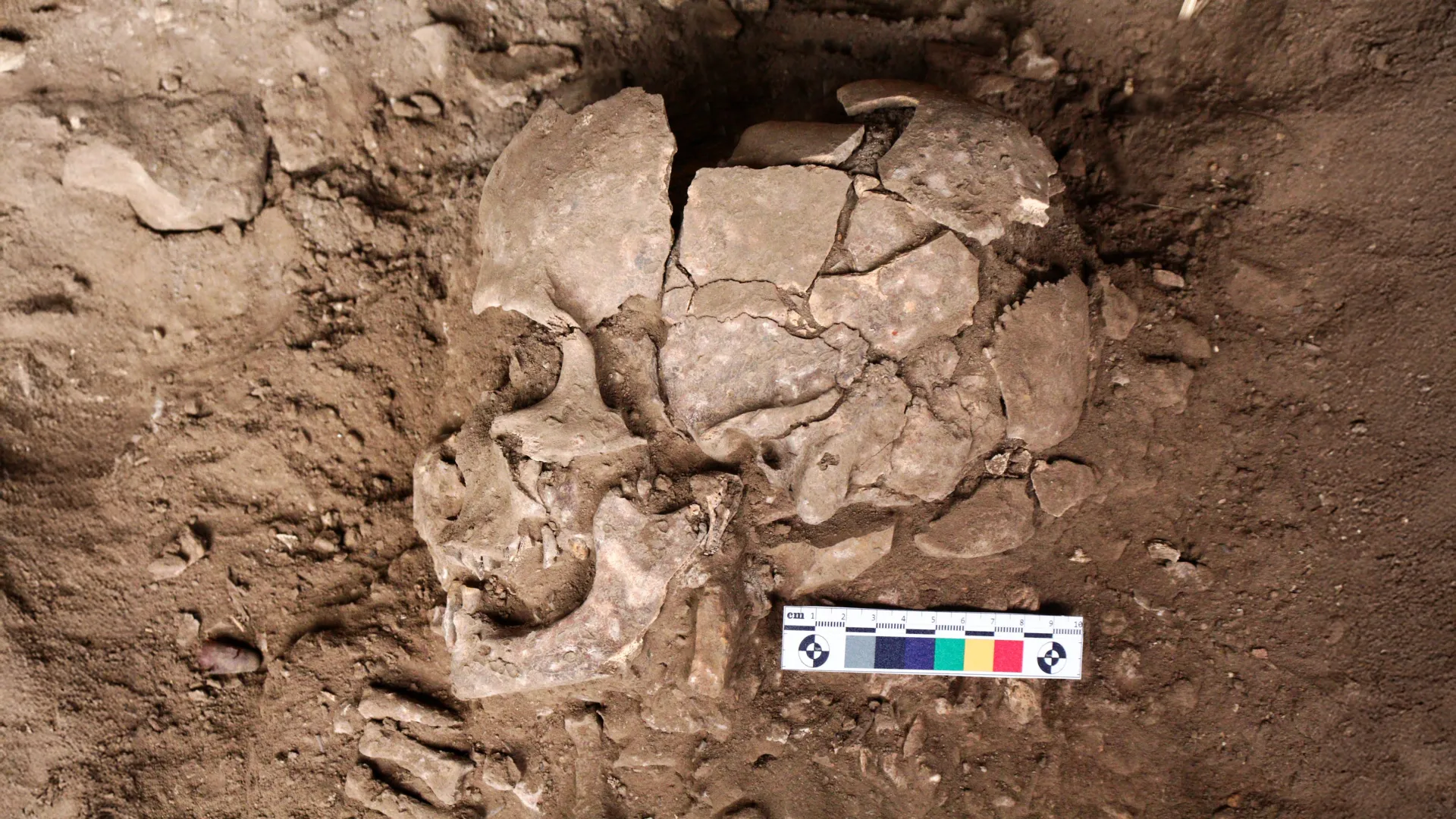
Archaeologists from Griffith University have found evidence suggesting that humans were using mind-altering substances much earlier in time than scientists once thought.
The research was led by Professor Adam Brumm of Griffith's Australian Research Centre for Human Evolution (ARCHE), together with ARCHE colleagues Associate Professors Carney Matheson and Michelle Langley. By combining archaeological evidence with biochemical testing, the team traced the deep history of "betel nut," one of the world's most widely used addictive stimulants and a long-established psychoactive substance across much of the Asia Pacific region.
Working with Indonesian archaeologists from Makassar's University of Hasanuddin and the National Research and Innovation Agency (BRIN), the researchers found evidence that some communities in Indonesia were using betel nut as a drug as far back as 25,000 years ago. That pushes the practice far beyond earlier estimates that placed its beginnings in the Neolithic or Bronze Age (~3500 years ago).
Rethinking the Origins of Psychoactive Drug Use
One common theory holds that widespread traditions of psychoactive drug use emerged only after humans began farming during the Neolithic period. Among the earliest known examples are fermented alcoholic drinks (barley beer) produced about 13,000 years ago in Israel.
"However, this theory fails to account for the possibility that very ancient drug-taking lies at the roots of our most commonly used psychoactive substances," Professor Brumm said.
Brumm and his colleagues instead focused on the origins of betel nut use, a practice found among hundreds of millions of people from India to the South Pacific (about one in 10 of the modern global population).
Betel nut can produce mild euphoria, increased alertness, and other psychoactive effects.
"Although poorly known in Western societies, it is the world's fourth most widely used psychoactive substance, after alcohol, caffeine and nicotine," Professor Brumm said.
Today, users typically prepare betel nut by combining a processed seed from the Areca catechu palm (the betel "nut") with slaked lime - commonly made by grinding burnt shells into a fine powder - and additional ingredients. The mixture forms a "quid," which is then chewed to produce its psychoactive effects.
"Slaked lime is an essential ingredient because it causes a chemical reaction that releases the nut's psychoactive compounds into the bloodstream more rapidly," Professor Brumm said.
Exactly when people first began using betel nut in this way has been difficult to establish because areca seeds rarely survive in the archaeological record.
Ancient Teeth Reveal a Lost Drug Habit
In the new study, published in Science Advances, the Griffith researchers examined exceptionally rare skeletal remains belonging to two early human foragers from Sulawesi, Indonesia. One individual lived about 25,000-16,000 years ago, while the other dates to 7600-6300 years ago.
Both hunter-gatherers showed an unusual form of dental wear (deep, rounded tooth grooves). The researchers identified this pattern as a new bioarchaeological marker linked to a previously unrecognized behavior: repeatedly sucking whole betel nuts.
Earlier research had suggested that the betel nut's main neuroactive alkaloid, arecoline, becomes available primarily when the processed nut is chewed as part of a quid containing slaked lime. The lime converts arecoline into a free base form, which makes it easier for the body to absorb.
"But our team conducted experiments in which we soaked betel nuts in artificial saliva and tested the resultant broths against a panel of cloned human receptors expressed in frog egg cells, including specialized proteins that act as molecular switches, regulating neural activity," Professor Brumm said.
"This showed that just sucking on intact betel nuts will release arecoline in sufficient amounts to have a physiological effect, altering brain function."
Further evidence came from biochemical tests led by Associate Professor Carney Matheson. Those analyses detected arecoline inside the dental tissues of the ancient foragers, providing strong evidence that they had consumed betel nut.
Together, the chemical evidence and distinctive tooth damage suggest that hunter-gatherers in Sulawesi practiced habitual betel nut sucking over long periods, leaving striking physical changes in their teeth.
A Possible Painkiller With a Cost
The psychoactive "high" produced by sucking whole betel nuts may have been weaker than the effects experienced by people chewing modern betel quids. Even so, the researchers believe the behavior was frequent enough to contribute to severe periodontal disease.
Ancient foragers on Sulawesi generally suffered from poor dental health. Because arecoline also acts as a natural analgesic ("painkiller"), the researchers suspect that some people may initially have sucked betel nuts to ease toothache.
The possible remedy, however, could eventually have made the problem much worse.
"Over time, however, sucking these hard, abrasive seeds wore down the foragers' teeth so badly that in some cases the inner pulp chamber became completely exposed - this would have been extremely painful, caused difficulty eating, and greatly increased the rate of chronic tooth infection," Professor Brumm said.
"So while this habit may have been a remedy for toothache, years of prolonged nut-sucking eventually caused much worse dental health problems, creating a cycle of continued habitual use."
Drug Use May Reach Back to the Ice Age
The discovery significantly changes the timeline for the history of human drug use. Evidence for betel nut consumption can now be traced into the Late Pleistocene, long before the development of agriculture.
"Emerging by up to 25,000 years ago in Sulawesi, thus long preceding the onset of agriculture, betel nut-sucking may be the earliest evidence for drug use anywhere in the world," Professor Brumm said.
"By identifying the ancient practice underlying betel-nut chewing as we know it, the study implies that some modern drug-taking behaviors are deeply rooted in forager traditions."
The findings suggest that repeated use of psychoactive substances, along with the health consequences that could accompany such habits, was already part of life for some hunter-gatherers tens of thousands of years before farming began.
The study "Betel nut sucking is the earliest recorded evidence for the habitual use of a neuroactive plant drug" has been published in Science Advances.
Story Source:
Materials provided by Griffith University. Note: Content may be edited for style and length.
Journal Reference:
- Adam Brumm, Fakhri, Melandri Vlok, Roger L. Papke, Carney D. Matheson, Budianto Hakim, Clare Stokes, Basran Burhan, Suryatman, Andi Muhammad Saiful, Michelle C. Langley, Pratiwi Yuwono, Delta Bayu Murti, Sofwan Noerwidi, Marlon N. R. Ririmasse. Betel nut sucking is the earliest recorded evidence for the habitual use of a neuroactive plant drug. Science Advances, 2026; 12 (37) DOI: 10.1126/sciadv.aei1901
Cite This Page: