
Antarctica gained a record 695 billion tons of ice. Scientists found the surprising reason
- Date:
- September 6, 2026
- Source:
- Chinese Academy of Sciences Headquarters
- Summary:
- East Antarctica gained an astonishing 695 billion tons of ice between 2021 and 2023, temporarily slowing Antarctica’s long-term decline. Researchers found that warming thousands of miles away in the tropical ocean altered atmospheric circulation and funneled moisture toward the continent, triggering exceptionally heavy snowfall.
- Share:
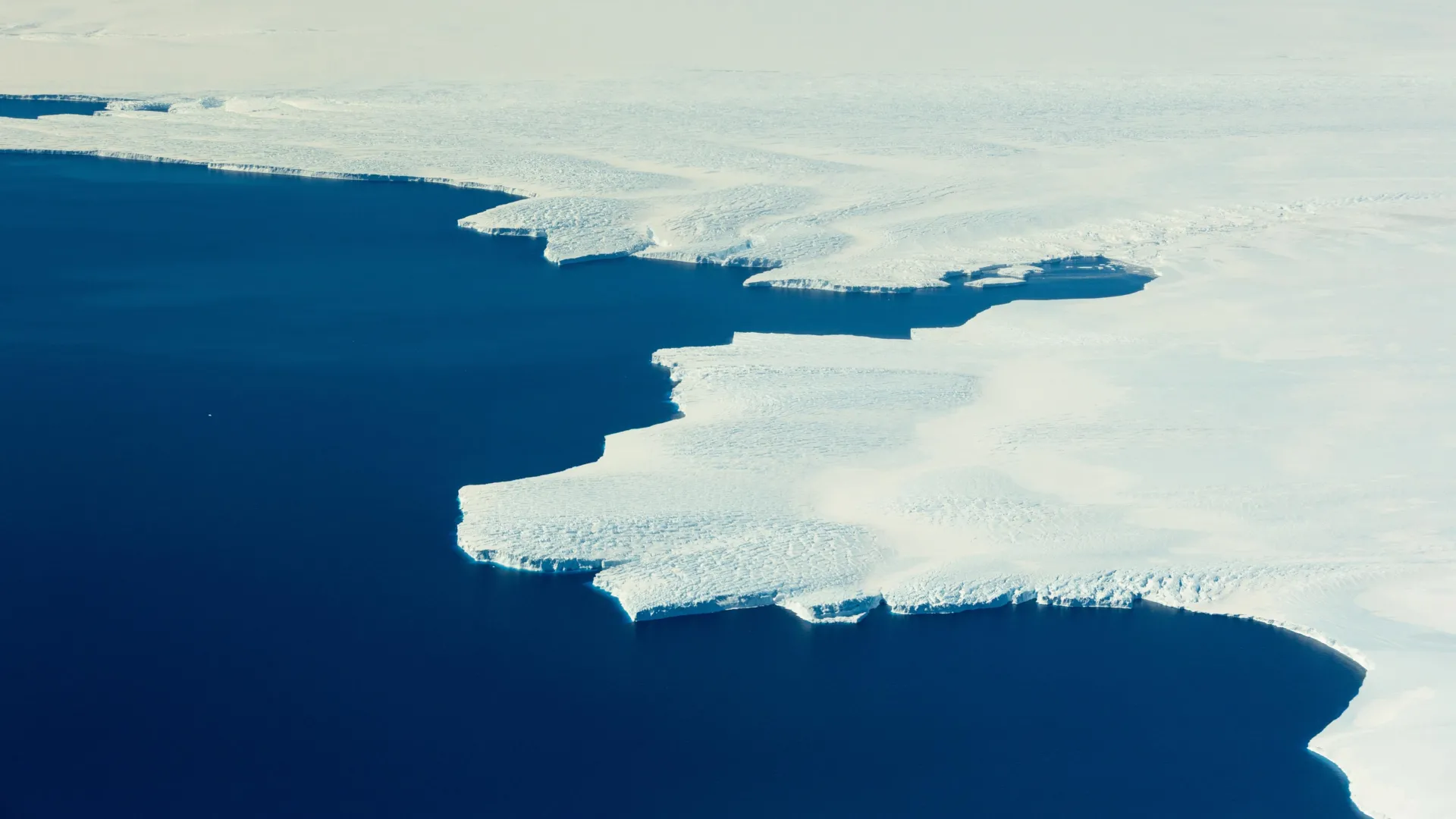
A persistent patch of unusually warm tropical ocean helped intensify snowfall over East Antarctica, contributing to a temporary net ice sheet mass gain of about 695 billion tons, according to a new study published in Nature on August 19.
Researchers found that sustained warming in the tropical warm pool during 2021-23 set off a chain of atmospheric changes that ultimately affected weather thousands of miles away in Antarctica. The warming generated a Rossby wave train that traveled toward the continent, helped establish a north-south circulation pattern over East Antarctica, altered the movement of moisture, and increased regional snowfall. Together, these changes temporarily slowed the Antarctic Ice Sheet's overall loss of mass.
A Remarkable Antarctic Ice Gain
The Antarctic Ice Sheet is a major source of uncertainty when scientists estimate how much global sea levels could rise in the future. During the past two decades, Antarctica has lost ice at an average rate of approximately 140.5 billion tons per year.
Yet between 2021-23, that pattern briefly shifted. The ice sheet gained about 695 billion tons of mass, making it the largest Antarctic mass gain observed by the GRACE satellite missions.
To understand what caused the unusual increase, researchers led by the Institute of Oceanology of the Chinese Academy of Sciences (IOCAS) brought together several types of evidence. They analyzed gravity satellite measurements, snow accumulation records preserved in ice cores, and simulations of atmospheric circulation. Their goal was to determine where the extra moisture came from and how weather patterns delivered it to East Antarctica.
A Climate Signal From the Tropics
The team identified sustained warming in the tropical warm pool during 2021-23. This region lies where the tropical western Pacific meets the eastern Indian Ocean and contains some of the planet's warmest ocean waters.
That warming triggered what scientists call a Rossby wave train, a large-scale pattern of atmospheric waves capable of transmitting changes in weather and circulation across enormous distances. The disturbance traveled toward the high southern latitudes and helped reorganize atmospheric conditions around Antarctica.
Eddy mean flow feedbacks strengthened and prolonged the resulting circulation pattern. This produced a north-south dipole, with unusual low pressure south of Australia and unusual high pressure along the East Antarctic coast.
The resulting pressure pattern changed the routes taken by moisture moving through the atmosphere. In particular, it strengthened the transport of water vapor from the midlatitude Indian Ocean toward East Antarctica through atmospheric rivers.
Atmospheric Rivers Fueled Heavy Snowfall
Atmospheric rivers are relatively narrow corridors in the atmosphere that can carry enormous amounts of water vapor over long distances. When they reach cold regions such as Antarctica, that moisture can fall as heavy snow.
Water vapor tracking simulations showed that the dipole circulation directed moist air from the midlatitude Indian Ocean toward East Antarctica and allowed more atmospheric rivers to reach the continent. This produced sustained heavy snowfall across the Queen Mary Land-Wilkes Land region, adding substantial mass to the ice sheet.
Atmospheric circulation model experiments provided further evidence that warming of the tropical warm pool directly drove both the circulation changes and the increase in snowfall.
The researchers also examined how much of the snowfall increase could be attributed to anthropogenic forcing. They found that this contribution was equivalent to only 9% of the observed snowfall anomaly. That result suggests that the general increase in atmospheric moisture associated with global warming was not the main explanation for this particular event.
A Remote Antarctic "Regulator"
Additional observations and simulations indicate that comparable periods of sustained warming in the tropical warm pool occur approximately once every decade.
The researchers therefore describe the tropical warm pool as a remote "regulator" that can influence snowfall and ice mass in East Antarctica over periods lasting several years. Changes in tropical ocean temperatures can alter atmospheric circulation in ways that ultimately affect how much snow falls on the distant Antarctic continent.
The findings reveal a long-distance climate connection in which conditions in the tropics can have major consequences for Antarctica.
Antarctica Is Still Losing Ice Over the Long Term
Despite the striking 695 billion-ton increase, the researchers emphasize that the event was temporary and does not reverse the long-term decline of the Antarctic Ice Sheet.
The West Antarctic Ice Sheet continues to lose mass. Some outlet glaciers in East Antarctica also remain vulnerable as warm ocean water melts ice shelves from below and contributes to faster ice flow.
The study shows how sustained warming in the tropical warm pool can temporarily increase the mass of the Antarctic Ice Sheet through changes in atmospheric circulation and snowfall. It also identifies the north-south dipole circulation over East Antarctica as an important link connecting tropical climate conditions with changes in Antarctic ice mass.
"We found a previously underrecognized 'tropical warm pool-East Antarctic Ice Sheet' teleconnection pathway," said Yunhe Wang from IOCAS, first author of the study. "Our research provides a theoretical basis for understanding Antarctic ice-sheet mass changes and conducting future research on the East Antarctic climate."
Story Source:
Materials provided by Chinese Academy of Sciences Headquarters. Note: Content may be edited for style and length.
Journal Reference:
- Yunhe Wang, Qinghua Ding, Xiaofeng Li, Thomas J. Ballinger, Yoshihiro Nakayama, Dániel Topál, Eric J. Steig. Multiyear tropical warm pool warming drives slowdown in Antarctic mass loss. Nature, 2026; 656 (8129): 897 DOI: 10.1038/s41586-026-10912-x
Cite This Page: