
A surprising triple treatment completely clears hiv in newborn primates
A surprising three-part therapy completely cleared HIV after early exposure in newborn primates, raising hopes for a future one-time treatment.
- Date:
- August 13, 2026
- Source:
- Oregon Health & Science University
- Summary:
- Researchers have found a striking new way to potentially eliminate HIV soon after infection using a one-time combination of three therapies. In newborn nonhuman primates treated within three days of exposure, the regimen—standard antiretroviral drugs, broadly neutralizing antibodies, and the experimental antibody leronlimab—completely cleared the virus, even though none of the treatments could do so alone.
- Share:
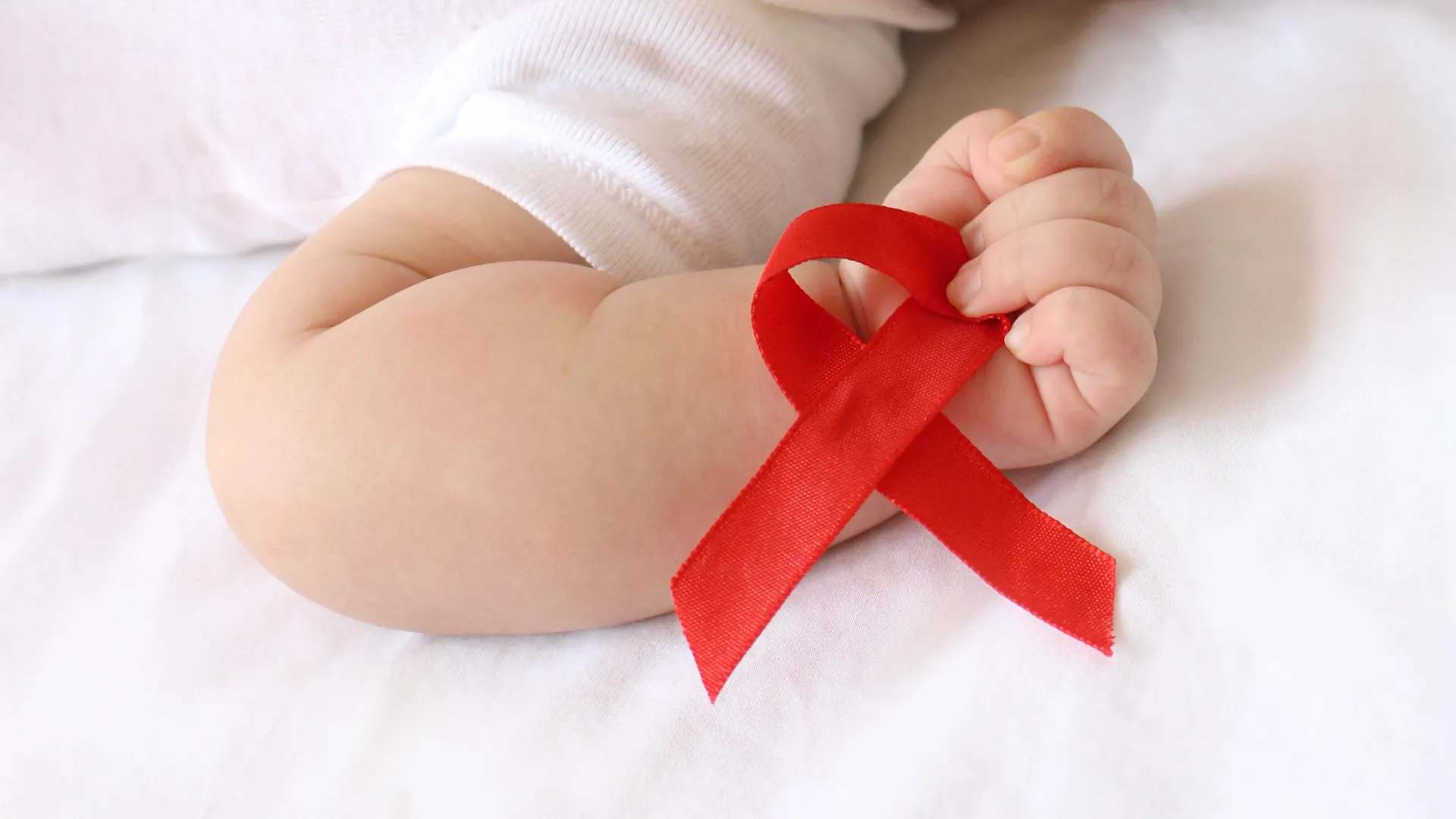
More than 120,000 babies around the world acquire HIV each year. For millions of people living with the virus, controlling the infection means taking treatment for life, provided those medications are accessible and affordable.
A new study led by Oregon Health & Science University points to a potentially very different approach. Researchers found that a combination of therapies administered to newborns within three days of birth could permanently eliminate the virus.
The findings were published in Nature Microbiology.
"The really exciting part is that it could go to clinical trials immediately to eliminate HIV infection in newborns," said co-lead author Jonah Sacha, Ph.D., professor and chief of pathobiology and immunology at OHSU's Oregon National Primate Research Center and Vaccine and Gene Therapy Institute. "The next step after that is to test if this can work in newly exposed adults."
The work brought together numerous collaborators and involved nonhuman primates at both the Oregon and California national primate research centers.
Three HIV Treatments Used Together
For several weeks, the researchers administered three different therapies: neutralizing antibodies, standard antiretroviral therapy, and an experimental monoclonal antibody called leronlimab.
All three approaches had been tested individually before, but none had succeeded in permanently clearing the virus. Sacha was initially skeptical that simply combining them would produce a better outcome.
For years, Sacha has helped develop leronlimab, which is intended to prevent HIV from entering immune cells by blocking a surface protein known as CCR5. His longtime OHSU colleague and coauthor Nancy Haigwood, Ph.D., believed that pairing leronlimab with existing HIV therapies could prove more effective.
The new results supported her idea.
Haigwood, a former professor and ONPRC director, is a virologist and immunologist who has spent decades studying HIV antibodies.
"We were astounded and overjoyed, actually," Haigwood said. "It's a remarkable result."
A Potential Path Toward Human Trials
Antiretroviral therapy is already approved for use in people. Broadly neutralizing antibodies and leronlimab, meanwhile, are each being evaluated separately in clinical trials.
Before the newly identified three-part treatment could become widely available for newborns, it would first need to be tested in human clinical trials. The researchers expect those initial studies would most likely involve adults who were recently exposed to HIV.
If successful, the strategy could eventually offer a new way to combat an HIV epidemic that still kills about 600,000 people worldwide every year.
The scientists say there is reason for optimism because nonhuman primates and humans share important anatomical similarities.
"There was no reason to think this would completely clear the virus," Sacha said. "It's one of those things where you test it and, holy cow, it works and you've discovered something new."
Blocking HIV From Entering Immune Cells
Researchers do not yet know exactly why the combined treatment worked so well. Sacha and Haigwood said the three therapies appear to become much more powerful when used together than when any one of them is used by itself.
Leronlimab may play a particularly important role. The antibody blocks CCR5, a surface protein that HIV commonly uses as a route into immune cells.
"For reasons we don't understand, HIV really wants to use CCR5 receptors to infect cells," Sacha said. "By blocking access, it's like you've kept fuel away from the fire."
Haigwood describes the three treatments with another analogy:
Turning off the faucet: Antiretroviral therapy doesn't eliminate HIV altogether, but it minimizes its ability to replicate.
Mopping up: Neutralizing antibodies effectively corral HIV so there is less virus circulating in the body's blood supply.
Sealing off: Leronlimab blocks what's left of the virus from infecting immune cells -- the equivalent of sealing off the room with a water-tight valve.
The First Days of HIV Infection May Be Critical
Haigwood believes the treatment combination may be particularly powerful when given very early after infection.
"There's a lot more going on during the first week of infection than we previously thought," she said. "From this experiment, it looks like there's a dynamic interaction between the virus and antibodies that takes place as the virus begins to spread."
The researchers now want to determine how long that early treatment window might remain open. In this study, the combined regimen was tested only within 72 hours of the initial infection.
"We only tested out to three days," Sacha said. "Could it work a week after infection? Two weeks? How far can you go after infection, and still purge the virus?"
Answering those questions could reveal whether the treatment remains effective when given later, potentially expanding the number of people who could benefit from the approach.
Research Support
The research was supported by the National Institutes of Health under Award Numbers R01HD080459 from the Eunice Kennedy Shriver National Institute of Child Health and Human Development (NICHD); R01AI154559, R01AI166969, and R01AI129703 from the National Institute of Allergy and Infectious Diseases (NIAID); K01OD036063 from the Office of the Director (OD), NIH; P51OD011092 and U42OD010426 from the Office of Research Infrastructure Programs (ORIP), NIH, to the Oregon National Primate Research Center; and P51OD011107 from ORIP, NIH, to the California National Primate Research Center.
The content is solely the responsibility of the authors and does not necessarily represent the official views of the NIH.
Story Source:
Materials provided by Oregon Health & Science University. Note: Content may be edited for style and length.
Journal Reference:
- Jonah B. Sacha, Tracy Ordonez, Shilpi Pandey, Gabriela Webb, Philip Barnette, Cleiton Pessoa, Matthew C. Humkey, Jason Reed, Anden Morehead, Jennifer K. Watanabe, Jodie L. Usachenko, Shrivaas Vijayan, Altair Fazio, Heather Sidener, Anne D. Lewis, Gabrielle Pastenkos, Sohita Ojha, Aaron Barber-Axthelm, Bella Swan, Rachele Bochart, John R. Mascola, Amarendra Pegu, Emily J. Fray, Rachael M. Wolters, Janet D. Siliciano, Robert F. Siliciano, Scott G. Hansen, Koen K. A. Van Rompay, Ann J. Hessell, Nancy L. Haigwood. Combination therapy with broadly neutralizing antibodies, antiretroviral therapy and CCR5 blockade limits viral reservoir seeding in infant macaque model of HIV. Nature Microbiology, 2026; DOI: 10.1038/s41564-026-02444-x
Cite This Page: