
New hydrogen breakthrough turns waste heat into clean fuel
A newly developed catalyst could slash the cost and temperature requirements of hydrogen production, opening the door to cleaner, locally generated fuel.
- Date:
- June 2, 2026
- Source:
- University of Birmingham
- Summary:
- A breakthrough hydrogen-production method could make clean fuel far cheaper and easier to generate. Researchers at the University of Birmingham developed a perovskite-based catalyst that splits water into hydrogen at much lower temperatures than existing technologies, potentially allowing factories, steel plants, cement works, and renewable energy sites to turn waste heat into valuable hydrogen.
- Share:
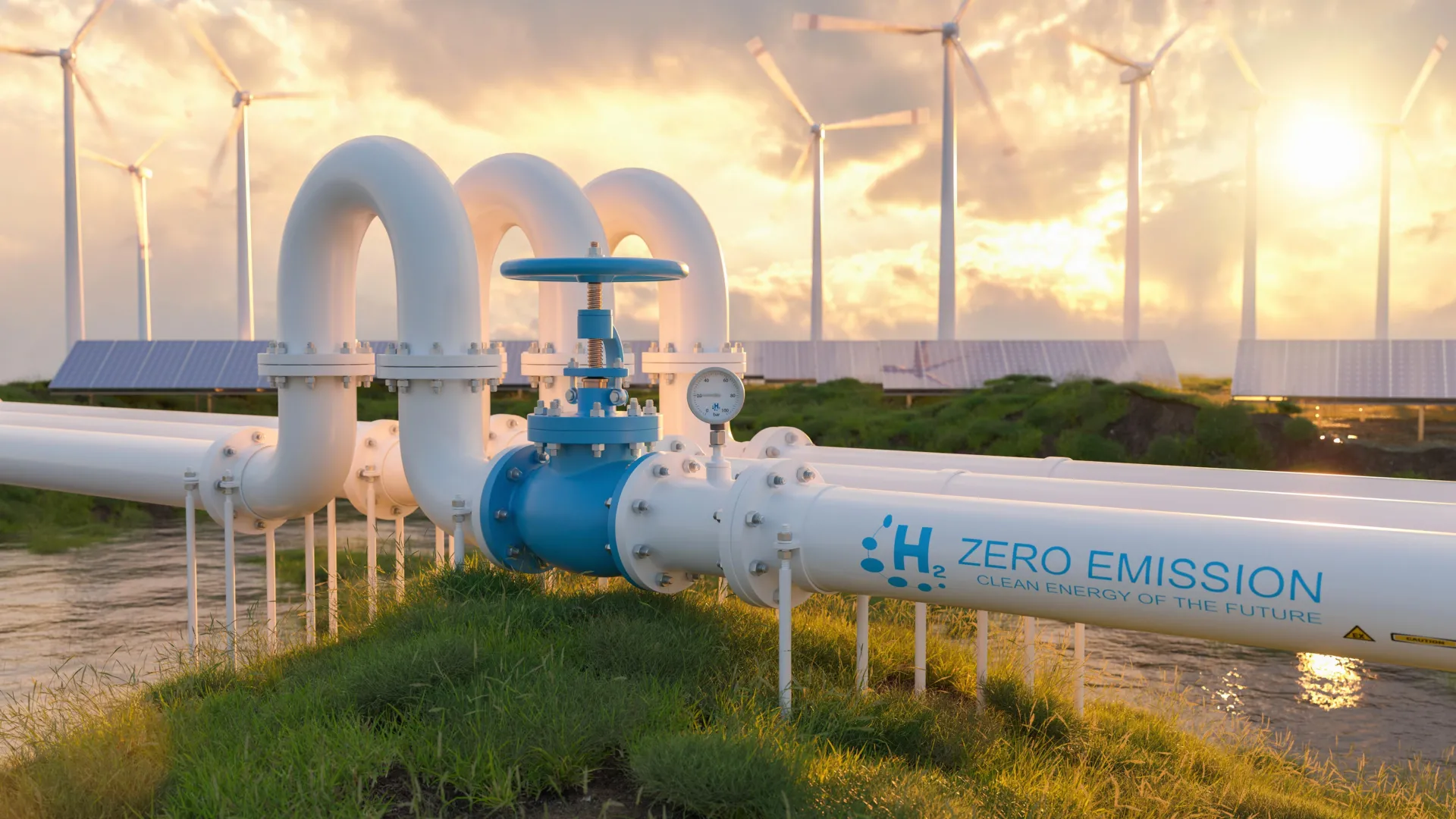
Researchers at the University of Birmingham have developed a new low-temperature approach to hydrogen production that could make the clean fuel cheaper and more practical to generate. The technique could be used both in large centralized facilities and in smaller local systems that take advantage of waste heat from major industrial operations.
Hydrogen is the most abundant element in the universe and is widely viewed as an important clean energy source. When used as a fuel, it produces only water and heat rather than carbon dioxide and other pollutants associated with fossil fuels. Hydrogen can also power fuel cells that generate electricity. Despite these advantages, around 95% of hydrogen production today still depends on fossil fuels.
New Catalyst Dramatically Lowers Hydrogen Production Temperatures
One promising way to produce hydrogen is through thermochemical water splitting, a process in which a catalyst separates water into hydrogen and oxygen. Existing thermochemical systems require extremely high temperatures. Water splitting typically occurs at 700-1000 oC, while the catalyst regeneration step often requires temperatures of 1300-1500 oC before another production cycle can begin.
A research team led by Professor Yulong Ding from the University of Birmingham's School of Chemical Engineering has shown that these temperatures can be significantly reduced by using a perovskite catalyst.
According to findings published in the International Journal of Hydrogen Energy, the new catalyst generated substantial amounts of hydrogen at temperatures between 150-500 oC. It could also be regenerated at temperatures ranging from 700-1000 oC, roughly 500 oC lower than current approaches.
Professor Ding said: "The lower overall temperature of the process could enable hydrogen to be produced nearby renewable energy generation plants, and foundation industry sectors such as steel, cement, glass and chemicals have an abundance of waste heat, which could be harnessed as the heat input for low-temperature hydrogen production. If the hydrogen is used locally, this would overcome the obstacles presented by storage and transport, so enabling the uptake of hydrogen fuel without the need for costly infrastructure."
Potential Cost Advantages Over Green and Blue Hydrogen
The researchers also conducted a preliminary economic analysis. Their results suggest that water splitting using the new perovskite catalyst could produce hydrogen at a lower cost than both green hydrogen (produced from water by electrolysis) and blue hydrogen (produced from methane with carbon capture and storage).
The economic benefit appeared especially strong in areas where renewable electricity is relatively inexpensive, including countries such as Australia.
The project was carried out in collaboration with the University of Science and Technology Beijing (USTB). The University of Birmingham is now working to commercialize the technology in the UK and Europe. University of Birmingham Enterprise has filed a patent application covering the use of BNCF catalysts for low-temperature water splitting and is seeking partners to help further develop the technology.
Why Thermochemical Water Splitting Matters
Although hydrogen is the most abundant element in the universe, pure hydrogen gas is uncommon on Earth. Instead, hydrogen is usually found bonded to other elements, most often in water and hydrocarbon fuels such as natural gas, coal, and oil. Producing hydrogen requires breaking these compounds apart.
Today, the dominant production method is steam reforming, which separates hydrogen from methane. This process accounts for nearly half of global hydrogen production. However, it also generates CO2, limiting its environmental benefits unless carbon capture and storage systems are added.
Electrolysis offers a cleaner alternative because it uses electricity to split water into hydrogen and oxygen. Even so, it remains more expensive than methane-based production and currently supplies only about 4% of global H2 demand.
Other emerging approaches rely on light-driven reactions to generate hydrogen from water. While promising, these photonic technologies are still at an early stage and face hurdles related to efficiency, scalability, and cost.
How the Perovskite Catalyst Works
Perovskites are materials with a lattice-like structure that can absorb oxygen into their framework and help break apart oxygen-containing compounds.
The Birmingham team focused on a specific group known as BNCF perovskites, which are made from barium, niobium, calcium, and iron. These materials are relatively abundant, do not require complex manufacturing processes, and contain no toxic ingredients.
The researchers found that BNCF perovskites can absorb oxygen at much lower temperatures than previously thought. Among the materials tested, a version known as BNCF100 delivered the best performance.
The study showed that BNCF100 could be regenerated at lower temperatures than existing water-splitting catalysts while continuing to produce hydrogen over 10 production cycles. X-ray diffraction analysis revealed very little structural change in the material during testing, indicating strong stability.
Professor Ding said: "Our research revealed a catalyst capable of produced substantial yields of hydrogen at relatively low temperatures, and a preliminary techno-economic study shows it is cost-effective compared to the established blue and green pathways for hydrogen production."
Story Source:
Materials provided by University of Birmingham. Note: Content may be edited for style and length.
Journal Reference:
- Biduan Chen, Wenyi Huang, Wei Guo, Lige Tong, Yulong Ding, Li Wang. Remarkable thermochemical water-splitting on Ba2Ca0.66Nb1.34-xFexO6-δ perovskites at medium temperatures for hydrogen production. International Journal of Hydrogen Energy, 2026; 236: 152637 DOI: 10.1016/j.ijhydene.2025.152637
Cite This Page: