
Ancient farmers accidentally created aggressive “warrior” wheat
- Date:
- April 8, 2026
- Source:
- University of Sheffield
- Summary:
- Early wheat didn’t just grow—it fought. When humans began cultivating fields, plants that could outcompete their neighbors for sunlight and space quickly took over, evolving upright leaves and aggressive growth. These ancient “warrior” traits helped wheat thrive for millennia. Ironically, modern farming now favors less competitive plants, prioritizing yield over survival battles.
- Share:
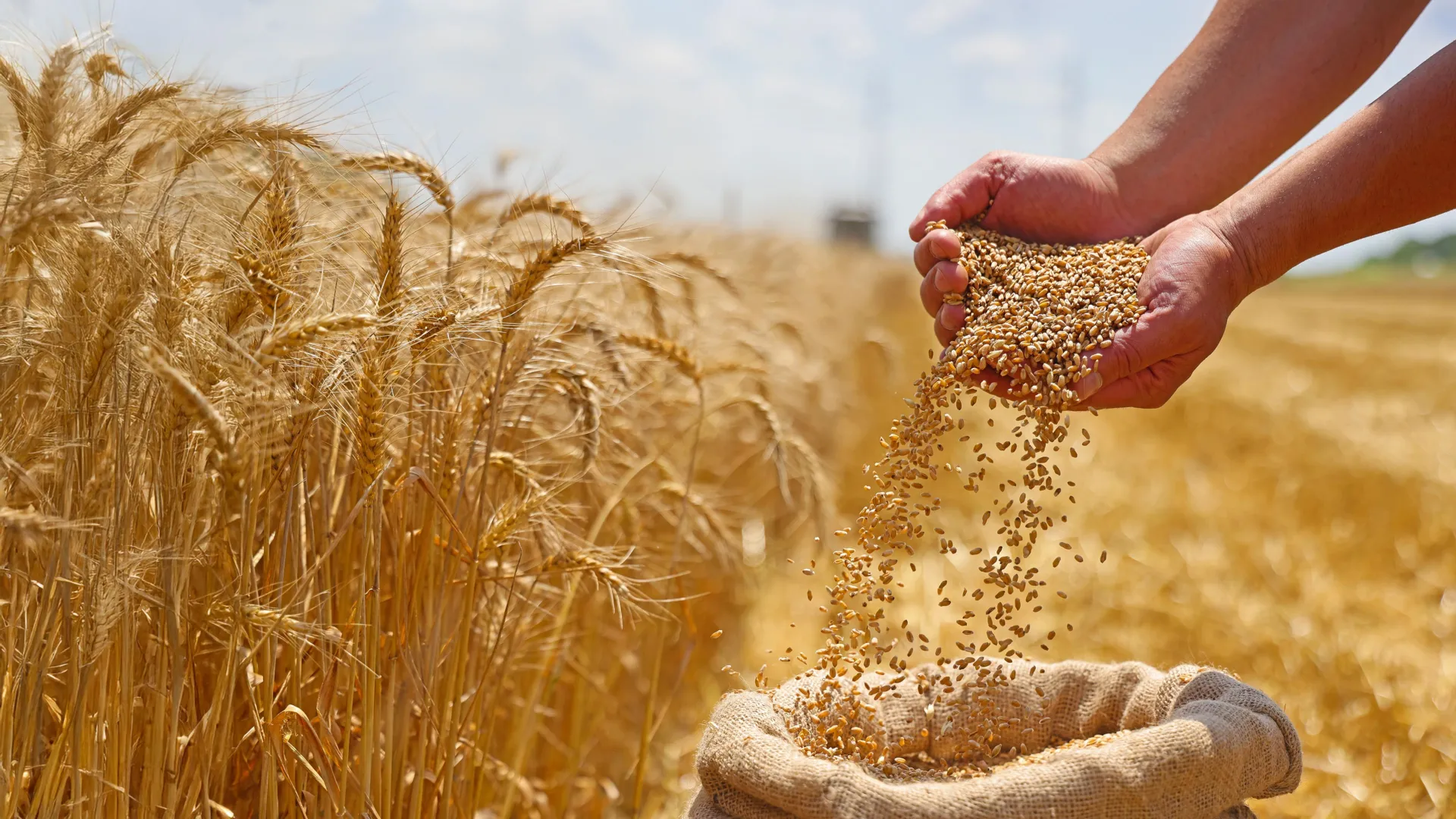
New research suggests that wheat domestication was shaped by an intense evolutionary struggle for light and space. This competition pushed early crops to develop traits that helped them outgrow and outcompete neighboring plants, offering new insight into how crops evolve and how they might be improved in the future.
The study, led by Dr. Yixiang Shan and Professor Colin Osborne at the University of Sheffield, involved collaborators from the Autonomous University of Madrid, King Juan Carlos University, and Wageningen University. The team investigated how wild plants responded to early human cultivation and found that farming practices strongly favored individuals that could compete more effectively than their wild ancestors.
Published in Current Biology, the research shows that planting seeds in organized fields created a highly competitive environment. Over roughly 1,000 to 2,000 years, plants that could grow faster and dominate their neighbors were more likely to survive and reproduce. This process led to the emergence of what researchers describe as "warrior" types in early wheat varieties.
The Rise of "Warrior" Wheat Traits
Compared to wild wheat, early domesticated varieties were far better at competing for resources in crowded fields. They developed physical traits that gave them an advantage, including larger leaves, more upright growth, and the ability to keep growing even when surrounded by other plants.
To better understand these changes, the researchers used a functional-structural plant (FSP) model to simulate how wheat grows. Their analysis showed that leaf angle played a key role. Plants with steeper, more upright leaves were able to rise above neighboring plants during early growth stages, capturing more sunlight while shading out competitors below.
Why Modern Wheat Is Less Competitive
"While evolution has favored strong competitors, modern farming packs crops tightly into fields for high yields. This practice needs crops that are able to cooperate not compete, and has meant modern breeders needed to reverse the unhelpful effects of evolution," said Professor Colin Osborne.
The study highlights a major shift in how wheat has evolved over time. While ancient varieties were shaped by intense competition, modern "elite" durum wheat has been bred to be less aggressive. In today's agricultural systems, farmers rely on herbicides and fertilizers to manage resources, reducing the need for plants to compete directly.
As a result, breeders have selected crops with smaller leaves and shorter stems. These traits help plants focus their energy on producing grain instead of competing for light and space.
From Competition to Cooperation in Modern Crops
The findings show that traits that once helped wheat succeed in early farming are not always useful in modern agriculture. Changes in farming practices have reshaped how wheat grows and behaves. The transition from ancient cultivation to large scale industrial farming has fundamentally altered the structure and strategy of one of the world's most important food crops.
Story Source:
Materials provided by University of Sheffield. Note: Content may be edited for style and length.
Journal Reference:
- Yixiang Shan, Alicia Gómez-Fernández, Jochem Evers, Robert P. Freckleton, Glynis E.M. Jones, Ruben Milla, Colin P. Osborne. Evolution of competitiveness during wheat domestication. Current Biology, 2026; 36 (5): 1329 DOI: 10.1016/j.cub.2026.01.061
Cite This Page: