
Scientists create a cancer flashlight that lights up tumors
A new “glowing antibody” could help doctors spot the right cancers—and the right treatments—much faster.
- Date:
- March 16, 2026
- Source:
- University of Missouri-Columbia
- Summary:
- Researchers have developed a tiny antibody that can find a common cancer protein and make tumors light up during PET scans. In tests with mice, tumors containing the protein EphA2 glowed clearly when the antibody was used. This could help doctors quickly identify patients who may benefit from new targeted cancer treatments. The method may also provide a faster and less invasive alternative to traditional testing.
- Share:
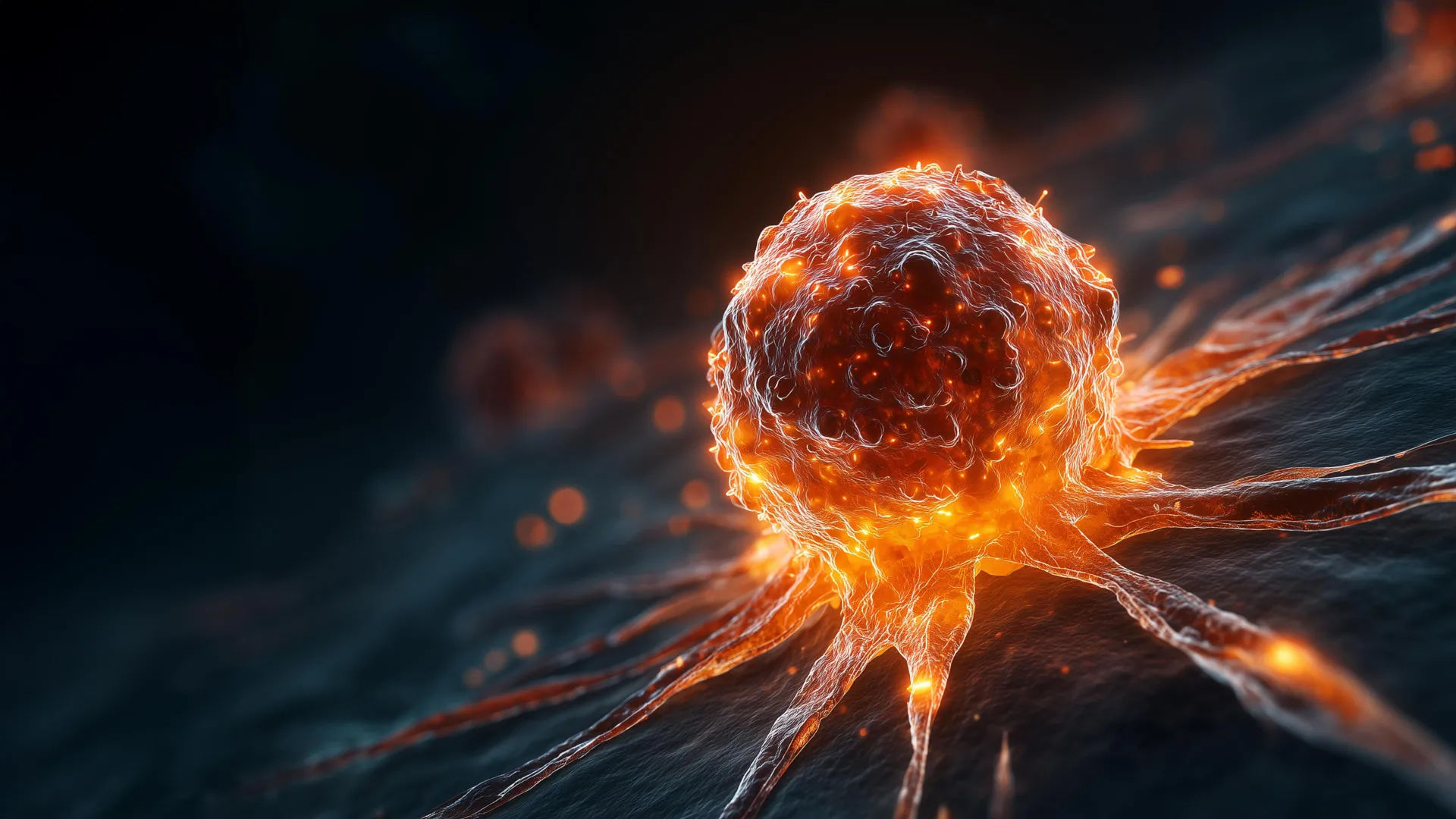
Researchers at the University of Missouri are developing a new way to determine which cancer patients are most likely to benefit from targeted therapies by illuminating tumors in medical scans.
Barry Edwards, an associate professor of biochemistry in the School of Medicine, recently designed a very small antibody that seeks out EphA2, a protein frequently present in cancer tumors. After creating the antibody, he attached a radioactive marker that makes the molecule visible during a positron emission tomography (PET) scan.
Antibody "Flashlight" Lights Up Cancer Tumors
In experiments using mice, Edwards showed that this cancer detecting "flashlight" clearly illuminated tumors that produced EphA2. The results suggest that tagging the antibody could help doctors detect cancers that contain this protein and determine which patients might respond to therapies designed to target EphA2-positive tumor cells while leaving healthy tissue unharmed.
"By finding out which patients have high or low amounts of EphA2, we can determine who is most likely to benefit from a targeted cancer treatment," Edwards, who also has an appointment in the College of Arts and Science, said. "There is no sense in giving a treatment that won't work to a patient, so this new process we created saves time and money while advancing precision medicine."
Faster and Less Invasive Than Traditional Methods
Doctors currently depend on biopsies and MRI scans to evaluate tumors in cancer patients. These methods can be invasive, require significant time, and often provide limited insight into the specific proteins found within cancer cells. Edwards, who uses advanced imaging technology at Mizzou's Molecular Imaging and Theranostics Center for his research, hopes to advance this technique from preclinical studies to human clinical trials within the next seven years.
"This new targeted approach is noninvasive, and you can get results from the imaging in hours rather than days, which can be huge for patients traveling long distances to seek treatment," Edwards said. "By making the process easier and faster for both patients and clinicians, we're showing that precision medicine is a win-win."
The study, titled "Preclinical evaluation of anti-EphA2 minibody-based immunoPET agent as a diagnostic tool for cancer," was published in Molecular Imaging and Biology.
Story Source:
Materials provided by University of Missouri-Columbia. Note: Content may be edited for style and length.
Journal Reference:
- Peggy A. Birikorang, H. E. G. Wedaarachchi, Jordan A. Smith, Gary Kohanbash, W. Barry Edwards. Preclinical Evaluation of an Anti-EphA2 Minibody-Based ImmunoPET Agent as a Diagnostic Tool For Cancer. Molecular Imaging and Biology, 2025; 27 (6): 993 DOI: 10.1007/s11307-025-02048-7
Cite This Page: