
One of Earth’s most abundant lifeforms has a fatal flaw
An evolutionary adaptation that allows one ocean bacteria to thrive could prove to be its Achilles Heel as oceans change, new study reveals.
- Date:
- February 2, 2026
- Source:
- University of Southern California
- Summary:
- SAR11 bacteria dominate the world’s oceans by being incredibly efficient, shedding genes to survive in nutrient-poor waters. But that extreme streamlining appears to backfire when conditions change. Under stress, many cells keep copying their DNA without dividing, creating abnormal cells that grow large and die. This vulnerability may explain why SAR11 populations drop during phytoplankton blooms and could become more important as oceans grow less stable.
- Share:
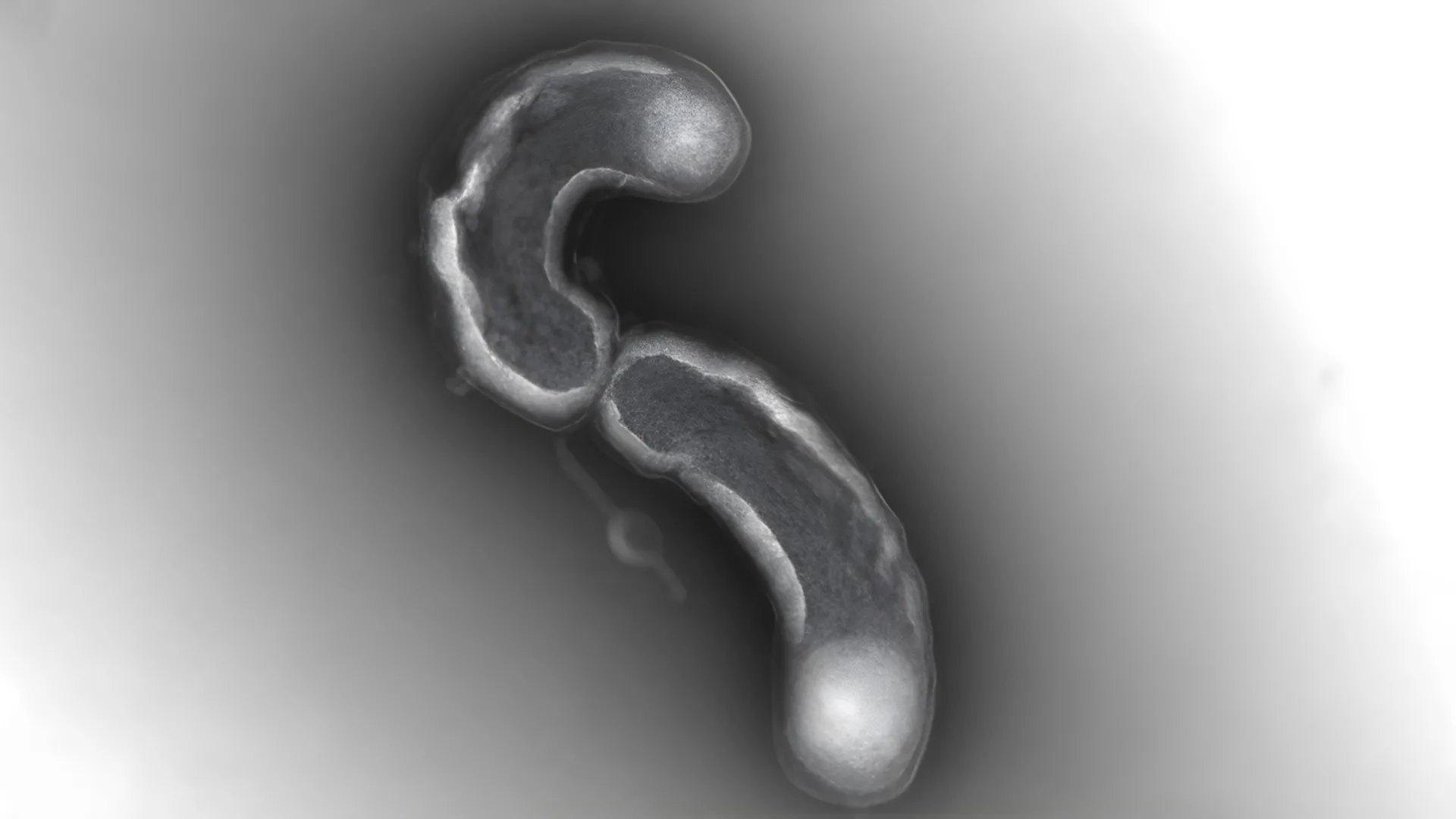
For decades, scientists believed a major group of ocean bacteria was ideally suited for life in waters with very little food. New research suggests that this assumption may be incomplete. These microbes appear to be far more sensitive to environmental change than previously thought.
The bacteria, called SAR11, are the most abundant life forms in surface seawater across the globe. In some regions, they account for up to 40% of all marine bacterial cells. Their dominance comes from genome streamlining, an evolutionary strategy in which organisms shed genes to conserve energy in nutrient-poor environments.
A study published in Nature Microbiology now shows that this extreme efficiency may also create serious limitations.
"SAR11's extraordinary evolutionary success in adapting to, and dominating, stable low-nutrient environments may have left them vulnerable to oceans that experience more change. They may have evolved themselves into a bit of a trap," says Cameron Thrash, professor of biological sciences and Earth sciences and corresponding author of the study.
Adaptation With a Built-In Weakness
To understand how SAR11 responds to environmental stress, researchers examined hundreds of SAR11 genomes. They found that many strains lack genes normally responsible for regulating the cell cycle, the system that controls DNA replication and cell division. In most bacteria, these genes are essential for normal growth and survival.
When environmental conditions shift, the absence of this regulation appears to create major problems. Scientists had already noticed that SAR11 populations are sensitive to changes in their surroundings. What stood out in this study was the unusual way the cells reacted under stress.
Instead of slowing their growth, many SAR11 cells continued copying their DNA but failed to divide.
"Their DNA replication and cell division became uncoupled. The cells kept copying their DNA but failed to divide properly, producing cells with abnormal numbers of chromosomes," says Chuankai Cheng, a PhD candidate in biological sciences and lead author of the study. "The surprise was that such a clear and repeatable cellular signature emerged."
Why Cellular Failure Slows Population Growth
Cells with extra chromosomes often grew larger than normal and eventually died. Even when nutrients were readily available, these failures reduced overall population growth. This finding challenges the common belief that microbes will always thrive when food becomes abundant.
The results also shed light on a long-standing puzzle in ocean ecology. SAR11 populations often drop during the later stages of phytoplankton blooms, a period marked by rising levels of organic matter in the water.
"We have known for a long time that these organisms are not particularly well suited to late stages of phytoplankton blooms," Thrash says. "Now we have an explanation: Late bloom stages are associated with increases in new, dissolved organic matter that can disturb these organisms, making them less competitive."
Implications for Climate Change and Ocean Health
The study carries important implications for understanding how marine ecosystems may respond to climate change. SAR11 bacteria play a central role in ocean carbon cycling, helping regulate how carbon moves through marine food webs. Their sensitivity to warming and sudden nutrient inputs could alter the balance of microbial communities as ocean conditions become less stable.
"This work highlights a new way environmental change can affect marine ecosystems, not simply by limiting resources, but by disrupting the internal physiology of dominant microorganisms," Cheng said. As environmental stability declines, he added, organisms with greater regulatory flexibility may gain an advantage.
Researchers plan to focus next on identifying the molecular processes behind these disruptions. Gaining a clearer picture of how SAR11 functions is critical, given how widespread and influential these bacteria are in the global ocean.
About the Study
Along with Cheng and Thrash, the research team includes Brittany Bennett, Pratixa Savalia, Hasti Asrari, Carmen Biel, and Kate Evans at USC Dornsife, as well as Rui Tang of the University of California, San Diego.
The work was supported by a Simons Foundation Early Career Investigator in Marine Microbial Ecology and Evolution Award and a Simons Foundation Investigator in Aquatic Microbial Ecology Award.
Story Source:
Materials provided by University of Southern California. Note: Content may be edited for style and length.
Journal Reference:
- Chuankai Cheng, Brittany D. Bennett, Pratixa Savalia, Hasti Asrari, Carmen Biel, Kate A. Evans, Rui Tang, J. Cameron Thrash. Cell cycle dysregulation of globally important SAR11 bacteria resulting from environmental perturbation. Nature Microbiology, 2026; DOI: 10.1038/s41564-025-02237-8
Cite This Page: